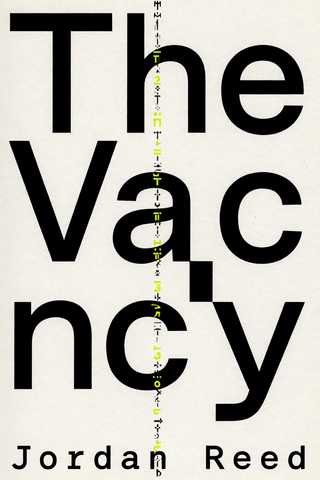
Read a preview
Chapter 1
Chapter One: 10:17
The last ordinary thing Logan Chambers did was signal a left turn onto State Route 9 with nobody behind him for a mile.
He did it because his father had taught him to, twenty-some years ago in the gravel lot behind the Willow Bend Municipal Water Plant, and because habit was the only religion Logan had ever gotten comfortable with. Saturday morning, October eleventh, six minutes past ten. Frost still silvering the shadowed side of the sagebrush. The mesas standing around the valley like a ring of old men who had agreed long ago not to speak.
He had the town truck, a white Ford with WILLOW BEND WATER & WASTEWATER stenciled on the door, and a thermos of coffee, and a clipboard with three items on it. Item one: check the pressure-reducing valve at the reservoir intake, five miles north, because Ronnie Fultz had been complaining that his hardware store's sprinklers hammered like a drum solo. Item two: pull a chlorine residual sample at the north hydrant. Item three, unwritten, the one he'd been carrying around all week: call Abigail and ask if he could take Jess to the Broncos game in Denver over Thanksgiving break, and do it without either of them saying the word "schedule" in that voice.
He was forty-one years old and he ran the water for four thousand two hundred and eleven people, and he had been divorced for two years and one month, and on the whole he had begun to believe the second thing was survivable.
Ahead of him, maybe three hundred yards up the highway, a freight truck was doing sixty-five.
It was a blue Kenworth pulling a dry van, hauling something to Grand Junction or Moab or anywhere that wasn't here. Logan noticed it the way you notice weather. Then the truck stopped.
That was the only word for it. It did not brake. It did not swerve. It stopped, at sixty-five miles an hour, and the front of it folded like a beer can under a boot heel, and the trailer kept coming and jackknifed and rose up on one set of wheels and slammed down on its side with a sound Logan felt in his molars. Glass went out across the asphalt in a bright spray. The rig's diesel tanks split and the highway went dark and wet.
Logan stood on the brake. The truck skidded, fishtailed, came to rest crossways in the northbound lane. His thermos hit the floorboard and came apart.
For a second he could not make his hands let go of the wheel.
There was nothing there. That was what his eyes reported and his brain refused. Two lanes of blacktop, the yellow line, the shoulder, the barbed wire fence marching off east and west, and beyond it more highway, more sage, the reservoir road turning off at the culvert. Nothing to hit. The Kenworth had hit it anyway, and it had won.
He got out. His legs felt borrowed.
"Hey!" he shouted, running. "Hey, buddy — "
And then he hit it too.
It was not like running into glass, and it was not like running into a wall, because a wall gives you the courtesy of existing. Logan's palms and forehead and left knee arrived at the same instant against a surface with no temperature and no texture and absolutely no give. It did not shudder. It did not ring. It simply refused him, completely, the way arithmetic refuses a wrong answer.
He went down on the asphalt, and his nose was bleeding, and above him the empty air held.
He knelt there for a long moment, breathing, tasting copper. Then he reached out and put his hand flat against nothing.
Smooth. Dry. Not warm, not cool. He slid his palm sideways and it glided as if on polished stone, and when he pushed with his shoulder, all his two hundred pounds, he felt no more flex than a man leaning on a mountain.
The truck cab was on the other side of it. Six feet away. Logan could see the driver slumped over the wheel, could see the ballcap, could see one arm hanging. A man dying six feet away, and Logan could no more reach him than he could reach the moon.
He hammered on the nothing with the heel of his fist. It made no sound at all. Not a thud, not a tap. His hand hit and stopped, and the world stayed silent, and that was somehow the most terrible part — that whatever it was did not even acknowledge being struck.
His phone said SOS ONLY. Then it said nothing at all.
The truck radio gave him a hiss like a shell held to the ear. He cycled through the county channels, the state channels, the plant's repeater. Hiss. Hiss. Hiss. He keyed the mic and said, "Any station, this is Willow Bend Water, we have a rollover with entrapment at mile eleven on State Nine," and heard his own voice come back to him flat and dead inside the cab, going nowhere.
A woman was screaming, faintly, from the east.
He found her sitting in the middle of the gravel walking trail that ran along the old rail bed, holding her face in both hands. Trish Bonner, who taught fifth grade and jogged that trail every morning of her life, including this one. Her nose was broken flat and both eyes were already swelling shut and there was blood down the front of a Willow Bend Cougars sweatshirt.
"There's something in the trail," she said, through the blood. "Logan. There's something in the trail."
"I know," he said. "I know. Let me see."
"I was looking right at it. There's nothing there. I was looking right at it."
He got her up. He was walking her back to the truck with her arm across his shoulders when the crop duster came over.
Everybody in the valley knew that engine. Ernie Kohl, seventy years old, a yellow Air Tractor and forty years of spraying the wheat and alfalfa on the flats south of town, flying low the way he always did because the man had never once in his life been afraid of the ground. He came up out of the south at four hundred feet, banking gently, and Logan lifted his hand to wave the way he had a thousand times.
The plane's left wing folded straight up.
It didn't clip a wire or a pole; there was nothing at four hundred feet but October. The wing bent back along the fuselage and the whole aircraft went end over end, once, twice, shedding pieces, and hit the wheat stubble a quarter mile inside the fence line and became a low orange bloom with black smoke standing up out of it, dead straight, and then — Logan watched this and did not understand it for another hour — the smoke reached a certain height and flattened. Spread sideways. Slid along an invisible curve overhead like paint under glass.
Trish Bonner made a sound against his shoulder.
Logan stood in the road with a bleeding schoolteacher and looked up at the smoke tracing out the shape of the sky.
It was a dome. The smoke showed him the inside of a dome.
He turned slowly, all the way around. Mesas on every side, the water tower on its hill, the grain elevator, the little grid of streets, the two church steeples, the high school with its wind-frayed bleachers, and above and around all of it, invisible, patient, absolute, something that had come down over Willow Bend the way a hand comes down over an insect on a tablecloth.
"Okay," he said out loud, to nobody. His voice did not sound like his. "Okay."
He helped Trish into the passenger seat. He drove south toward town at fifty-five, both hands on the wheel, and the sun came through the windshield exactly as it always had, warm on his knuckles, entirely normal, which he would later decide was the cruelest detail of the whole day. Whatever the thing was, it let the light in.
At the top of the rise where the highway came down into Main Street he could see the whole town laid out, and he could see people standing out in their yards and in the middle of the street in their bathrobes, all of them turned in different directions, all of them looking at nothing.
He checked the clock on the dash out of engineer's reflex, because a man who runs a water system learns that the first casualty of a disaster is the timeline.
10:31.
Fourteen minutes, he thought. Whatever this is, it started fourteen minutes ago and I will spend the rest of my life measuring from it.
He was closer to right than he knew.