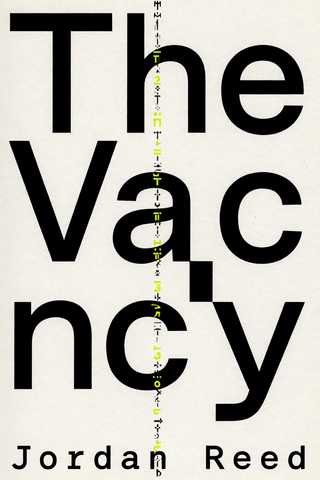
Read a preview
Chapter 1
Chapter One: The Lachlan Shelf
The ground had a smell that summer, and that was the first thing that frightened her.
Noor Kazemi crouched on the scraped bench of bedrock above the river and pushed her palm into the mud. Eleven field seasons in the high Arctic had taught her that permafrost smelled like nothing at all — like cold stone, like the inside of a chest freezer left open. This ground smelled like a cellar. Wet, brown, faintly sweet, with a mineral edge underneath. It smelled of things resuming.
"Forty-one centimetres of active layer when I first cored this valley," she said. "That was 2029. I measured a hundred and ninety this morning."
Amrit Bassi didn't look up from the drill head. He was on his knees on a rubber mat, coaxing a fouled bearing with a spanner and the patience of a man who had spent his adult life keeping machinery alive in places machinery did not want to be. "That's not a trend," he said. "That's a collapse."
"It's both."
Behind them the camp sat in the flat, shadowless light of an Arctic July: four orange tents guyed against the wind, a drill shed of aluminium ribs and canvas, a generator muttering under a tarp, and a line of yellow core boxes stacked like coffins for very small people. Below the bench, braided meltwater ran grey-white over gravel that had been under ice when Noor was a graduate student. The glacier margin was now nine hundred metres further inland than the map on her tablet. The map was three years old.
The valley had no name that anyone used. The stratum they had come for did. A survey geologist had flown this coast in the spring, seen a long dark seam exposed where a slump had sheared away the hillside, and called it the Lachlan Shelf after the pilot who put him close enough to photograph it. On the radar sections it read as a buried ice body, forty metres thick, wedged between till and bedrock and sealed there since the last glacial period. Not glacier ice. Not sea ice. Ground ice, formed in place, undisturbed, unsampled, and until this summer, unreachable.
Noor had written the proposal in nine days. She had wanted it badly, and she was honest enough with herself about why. Work was the only room in her life with the door still open.
"Core's coming," Amrit called.
The winch whined. The barrel came up streaming, and Amrit cracked it and slid the section out onto the cradle in one long practised motion, and Noor forgot the smell of the ground and everything else.
The ice was almost black.
Not dirty — she had handled plenty of debris-rich basal ice, brown with silt, gritty as sandpaper. This was clear and dense and nearly bubble-free, and the darkness in it was depth, the way deep water is dark. She ran her gloved fingers along it and felt the seams of ancient stress. Bands of tephra crossed the section, thin as pencil lines: volcanic ash, each one a datable moment.
"Beautiful," said Suki Pellerin, arriving with two mugs of coffee that had been terrible even before it went cold. "What's it going to tell you?"
"Air." Noor took a mug without looking at it. "Bubbles are the atmosphere of the day it froze. Ash layers give me the calendar. Isotopes give me temperature." She tapped the section, low down. "Somewhere in the last few metres I'll find the transition into a cold interval nobody has ever sampled on land in this hemisphere. Thirty-four thousand years, give or take a few centuries."
"Thirty-four thousand," Suki repeated. She was a microbiologist from Vancouver, small and round-shouldered, with a habit of squinting at people as though they were slightly out of focus and might resolve if she waited. She had come north on Noor's invitation to look for anything that had once been alive. "You know what I love about you, Kazemi? You say numbers like that the way other people say Tuesday."
"Tuesday is harder to date."
Suki laughed. It was, Noor thought, one of the reasons she had asked her: the woman laughed easily in a place where nothing was easy.
By the fourth day they had reached the base of the ice body, where it met the bedrock. That was where the drill misbehaved. The torque dropped away suddenly, the way it does when a bit finds a void, and Amrit swore and backed off and set the safety.
"Water," he said. "There's free water down there."
"At minus nine?" Noor said.
"Brine, maybe." He wiped his face with the back of his wrist. "Salt lens at the base. It happens."
It did happen, and Noor had read about it and never seen it: pockets of hypersaline water squeezed and concentrated over millennia until they refused to freeze, sealed beneath tonnes of ice, holding whatever had been dissolved in them when the world above was a cold steppe walked by animals that no longer existed.
They brought up two litres of it in a stainless canister. It was the colour of weak tea, and it was cold enough to ache through two pairs of gloves, and when Noor held the canister to the sky she saw something faintly fibrous suspended in it, drifting, like the ghost of a spider's web.
"Sediment," Amrit offered.
"Maybe." Noor rotated it slowly. The fibres turned with the water, then — she would remember this later with a coldness that had nothing to do with Greenland — kept turning a little after the water stopped.
Suki reached out and took the canister with both hands, the way you take an infant from someone who is holding it wrong.
"I'm going to put a drop of this under the scope," she said. "For fun."
That evening, Noor sat in the mess tent logging tephra depths while the sun crawled sideways along the ridge and never set. Amrit played cards with the two field assistants. Danielle Renaud, the palynologist, argued cheerfully with someone in Montreal over a satellite link that dropped every ninety seconds.
Noor's tablet held a photograph she had not opened in four months and did not open now. She knew its coordinates on the screen the way you know where a bruise is under a sleeve. A four-year-old in a red coat, laughing on a jetty at Dragør, one hand blurred because she had been waving.
Riya had been dead for three years, one month, and eleven days. Noor knew the number without counting, the way she knew the ash layers. Time had become a stratigraphy for her too: everything laid down before, everything laid down since, and a thin black line between.
At 02:40, Suki came into the tent without knocking, which was meaningless in a tent, and stood dripping in the doorway with her hood still up and her eyes enormous.
"Noor," she said. "You need to come and look at this."
"How bad?"
"I don't know if it's bad." Suki's voice did something Noor had never heard it do. It shook. "That's the problem. It's alive, and I don't know if it's bad."