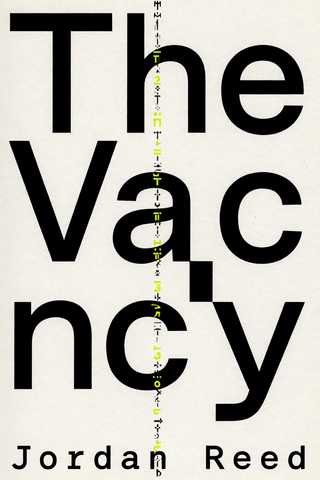
Read a preview
Chapter 1
Chapter 1: Black Water
The first thing you learned about Persephone Station was that it did not rest on anything.
It hung.
Nine hundred metres beneath the Ross Ice Shelf, suspended in subglacial ocean water by four mooring cables and a bundle of utility lines that climbed upward through the borehole like a technological umbilical cord connecting the station to the surface world—to weather, to sunlight, to the vast white indifference of Antarctica.
Below the station, there was only more water. Darker water. Water so deep and so thoroughly lightless that the mind refused to process it as a liquid and instead began treating it as a substance closer to geological: a stratum of black pressure with mass and intent.
Dr. Ellis Rowe had been aboard for one hundred and nineteen days, and he still could not sleep through the night without waking at least once to the hull's slow conversation with the ocean. Persephone talked. She creaked and pinged and occasionally produced a low harmonic groan that traveled through the frame like a cello note played too slowly. The engineers said it was thermal differential—the station's warm interior pressing outward against water that sat just above freezing. Physics. Nothing more.
Ellis believed them the way you believe a dentist who says this won't hurt.
He sat now in the wet lab, hunched over a stereoscope, and tried to make his hands stop shaking. Not from cold. From excitement, and from the particular terror that accompanies a discovery you are not yet certain you deserve.
The sample under the lens was alive.
Not dormant. Not fossilized. Not the ambiguous chemical signature that could be interpreted as biological if you squinted at the data and wanted it badly enough. This was motile, metabolically active, chemosynthetic life—organisms building themselves from mineral substrate and thermal energy in an ocean sealed beneath ice for what the geophysics suggested was fourteen million years.
Ellis adjusted the focus. The organisms were filamentous, translucent, branching in patterns that reminded him of mycelium but moved with a slow contractile rhythm that mycelium did not possess. They pulsed. Expanded. Drew nutrients from the sample water and converted them into structure with an efficiency that made terrestrial biology look wasteful.
He had run the contamination protocols three times. Negative. These were not hitchhikers from the surface. They were not artifacts of the drilling process. They were native to the subglacial ocean, and they were the most significant biological discovery since—
Since what? He didn't have a comparison. Nothing in the literature prepared you for this.
"You're still in here."
Jess Tran appeared in the wet lab's hatchway, holding two sealed drink pouches. She was twenty-eight, compact, dark-haired, with the kind of economy of movement that came from years of dive training. The youngest member of the crew and, in Ellis's private estimation, the most competent.
"I brought you coffee," she said. "And by coffee I mean the brown liquid Pete claims is coffee but which I suspect is a war crime."
Ellis took the pouch without looking up. "Thank you."
"You've been in here eleven hours."
"Has it been eleven hours?"
"Martha sent me to check whether you'd died. She said, and I quote, 'If he's dead, bring back the stereoscope. If he's alive, tell him dinner is in twenty minutes.'"
Ellis finally looked up. His eyes were bloodshot, and there was a crease across his forehead from pressing it against the scope's eyepiece housing.
"Jess," he said. "Come look at this."
She crossed the lab in three steps and bent to the scope. For a long moment she said nothing. Then she straightened up and looked at him with an expression he could not immediately read.
"Those are alive," she said.
"Yes."
"Like, alive alive."
"Yes."
"Ellis." She set down her drink pouch carefully, as if sudden movements might disturb the organisms through the sealed sample chamber. "This is—"
"I know."
"This is the thing. The actual thing. The reason we're down here."
"I know."
She exhaled. "Have you told Martha?"
"I wanted to run the contamination panels again first."
"You said three times."
"I wanted to be sure."
"Ellis." She put a hand on his shoulder. Her grip was surprisingly strong. "Tell Martha. Tell everyone. This is the discovery."
He nodded. But he did not move immediately. Instead he looked back at the scope, at the translucent filaments pulsing in their sealed chamber, and felt something he had not felt in two years: the sense that his work mattered. That he mattered.
It was a dangerous feeling. He knew that. The last time he had felt it, everything had come apart.
---
Ellis Rowe was thirty-six years old, and his biography could be divided cleanly into before and after.
Before: a rising career in marine microbiology, a faculty position at the University of Edinburgh, a marriage to a woman named Sarah who taught secondary school history and laughed at his jokes and once drove three hours in a storm to bring him dry socks at a field station in the Orkneys.
After: a plagiarism accusation, a university investigation, a marriage that did not survive the investigation, and a name that now appeared in search results alongside words like "misconduct" and "retracted."
The truth, as always, was more complicated than the headlines. Ellis had co-authored a paper with his doctoral supervisor, a man named Whitfield—no, not Whitfield. Gerald Pembroke. Pembroke had incorporated data from another lab without proper attribution. When the other lab complained, Pembroke pointed the finger downward, as supervisors do. Ellis had been the junior author. He had not known about the data's provenance. But "I didn't know" is a defense that works in courtrooms and almost nowhere else.
The university cleared him of intentional misconduct but noted "insufficient diligence in verifying source material." In academic terms, this was a flesh wound that somehow severed an artery. Funding dried up. Invitations stopped. Colleagues who had once forwarded him papers began routing their emails elsewhere.
Sarah tried. He tried. They tried together for eight months after the investigation closed, but the trying had the quality of two people pushing a boulder uphill while pretending the hill was flat. There were things neither of them could forgive—not the plagiarism, but the smaller failures that had accumulated around it like sediment. His absences. Her growing certainty that she had married a man who loved his work more than he loved her. His inability to deny it convincingly.
The divorce was quiet. Almost polite. Which made it worse.
Persephone Station had been a lifeboat. A posting so remote, so technically demanding, and so poorly funded that no one with options would take it. Ellis had options, technically. He could have taught. He could have pivoted to industry. He could have done any of the things that people with ruined academic careers do when they are still young enough to start over.
Instead he had applied to spend six months in a pressure hull beneath the Antarctic ice shelf, drilling for organisms that most biologists considered a long shot.
And now the long shot was pulsing under his stereoscope.
---
Dinner aboard Persephone was served in the galley module, a cylindrical space roughly the size of a large caravan, with a fold-down table, magnetic utensil strips, and a persistent smell of recycled air and rehydrated soup.
The crew gathered in the configuration they had settled into over four months: Martha Anhalt at the head of the table, because she was the commander and because she had a spine that did not permit slouching; Pete Lawrence across from her, already halfway through his meal and talking; Carl Braddock at the far end, eating slowly and checking his tablet between bites; Hugh Raskin at his usual corner, quiet, methodical, cutting his food into precise squares; and Jess beside Ellis, radiating a barely contained energy that the others had not yet noticed.
Ellis waited until Pete paused for breath—a rare event—and then said, simply, "The borehole samples are alive."
The table went quiet.
Martha set down her fork. She was fifty-one, silver-haired, with a face that had been weathered by decades of naval service into something that resembled carved driftwood: hard, smooth, and surprisingly beautiful in certain light. She had commanded a submarine before transitioning to polar operations, and she carried herself with the particular stillness of someone who had learned that panic was a luxury she could not afford.
"Define alive," she said.
"Motile. Metabolically active. Chemosynthetic. They're building structure from mineral substrate and thermal energy. I've run contamination protocols three times. These are indigenous organisms."
"Fourteen-million-year-old organisms," Carl Braddock said from the end of the table. He had stopped eating. His eyes had the particular brightness that Ellis associated with Carl's ambition engaging a new target. "Isolated from the surface biosphere for fourteen million years."
"At minimum," Ellis said.
"Jesus Christ," Pete said. He was forty-three, broad-shouldered, with a reddish beard that he trimmed badly and a laugh that could fill any room. He was also, Ellis knew, the reason Persephone's systems still functioned after four months of deepwater stress. Pete Lawrence could fix anything mechanical with the same casual competence that other people brought to opening jars. "You're telling me we've got aliens down here?"
"Not aliens," Ellis said. "But alien-adjacent. Biology that evolved in complete isolation from everything we know. Different metabolic pathways. Different structural chemistry. Possibly different—" He caught himself before he said "different rules." That was the kind of statement that got quoted out of context. "Different solutions to the same problems."
Hugh Raskin looked up from his food. He was sixty-two, the oldest aboard, with a face like a basset hound's and hands that moved across his radio equipment with the tenderness of a pianist. He had been a military radioman for thirty years before transitioning to civilian polar operations, and he approached the world with the patient skepticism of someone who had spent a lifetime filtering signal from noise.
"How alive?" Hugh asked.
"Very," Jess said. "I looked. They move."
"They pulse," Ellis corrected. "Contractile filaments. Rhythmic expansion and nutrient absorption. Growth rate is—" He paused, consulting his notes. "Significant. In the sample chamber, they've increased biomass by roughly twelve percent in the last thirty hours."
Martha absorbed this. "Containment status?"
"Sealed. Triple-walled sample chambers, biosafety level three protocols. Everything per mission spec."
"Do they stay sealed?"
"They stay sealed."
Martha nodded. "Good. Tomorrow I want a full briefing. Data, images, protocols, risk assessment. Everything documented before we transmit to the surface."
"The surface is going to lose their minds," Pete said happily.
Carl was already typing on his tablet. "We should discuss publication strategy," he said. "Priority claims. Naming rights. There are protocols for—"
"Tomorrow," Martha said, in a tone that closed the subject like a bulkhead door.
After dinner, Ellis returned to the wet lab alone. He sat in the dim light of the emergency strips—he preferred them to the overheads, which buzzed—and watched the organisms through the scope.
They pulsed.
He pulsed back, in a way. His heart, his breath, the blood in his temples. Two biological systems regarding each other across an evolutionary gulf of fourteen million years.
"I found you," he whispered.
The organisms did not respond. They did not need to. Their existence was response enough.
---
Day 120 passed in documentation. Ellis photographed, measured, sampled, and recorded. Jess assisted with the wet work. Carl contributed geophysical context—the trench formations, the thermal vents, the mineral chemistry that might support chemosynthesis. Even Pete helped, rigging additional monitoring equipment around the sample chambers with his usual efficiency.
Hugh transmitted a preliminary report to the surface via the hardline data connection. The response came back within hours: excitement, requests for more data, and a carefully worded advisory about containment protocols that Ellis read three times to make sure he had not missed a criticism.
Martha ran the station with her usual precision. Schedules were maintained. Watches were kept. The water outside remained black and cold and patient.
That night, Ellis lay in his bunk and listened to Persephone creak.
He thought about Sarah. Not with longing, exactly, but with the specific regret of someone who understands, too late, what they failed to protect. She had asked him once, during the worst of the investigation, whether the work was worth what it cost.
He had said yes.
She had not argued. She had simply looked at him with an expression that contained the entire future of their marriage—its ending, its quiet dissolution, its transformation from a living thing into a memory—and then she had gone to bed.
Now, in the dark, in a pressure hull nine hundred metres beneath the ice, Ellis held the same answer in his mouth and found that it tasted different.
Yes, the work was worth it.
But the cost was real.
And he was only beginning to understand what he had paid.