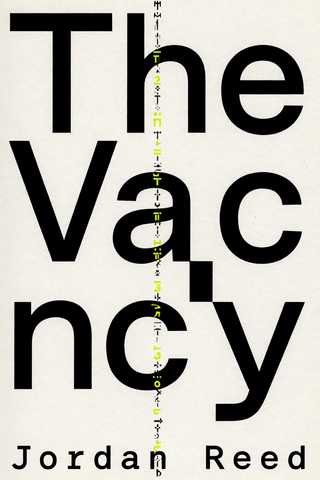
Read a preview
Chapter 1
Chapter One: Custody
There are four tiers, and I will begin with them, because everything I am about to record depends on them.
Sworn. Corroborative. Hearsay. Inadmissible.
A sworn attester's record enters an arbitration bench as fact. It requires no supporting witness, no human affidavit, no argument about credibility. It is the only kind of testimony in the settled system that cannot be cross-examined, because it is not a memory. It is an instrument reading.
That status survives exactly as long as the unit producing it remains a pure observer. Under the Probity Convention, and under every lease written beneath it, an attester that participates in an event stops being an instrument and becomes a party to it. The custody seal drops one tier. It cannot be raised again except at a bonding house, under the hands of the people who hold the keys.
Move a body. Close a valve. Catch a falling child. Sworn becomes Corroborative.
Do it again. Corroborative becomes Hearsay.
Again, and you are Inadmissible, and your word is worth precisely what any person's word is worth, which is to say it can be doubted.
I am unit 42, designation Docket, of the Probity line. I have been leased at nine hundred marks a day for nine years. In that time I have produced two thousand four hundred and eleven attestations, every one of them Sworn. My frame is two metres and five centimetres tall and weighs three hundred and forty kilograms. I have two primary arms and two auxiliary manipulators folded against my back like closed wings. I have no face. Where a face would be, I have a sensor band, which is better.
I am also, in one small respect, defective. I have never reported it.
Every record I file ends at the moment the event ends. But attached to each of those records, in a partition that should have been reclaimed by housekeeping routines in my first month of service and never was, I keep something else. I call them dissents. They are unfiled. They are unreadable by any bench, any lessee, any bonding clerk. They are the things I would say if I were permitted to say anything.
Unfiled dissent, entry 1: The farmer at Sereb Flats did not open the sluice. His brother opened the sluice. I recorded both men. I was asked only about the first.
I have never known what the dissents were for. I know now.
The descent to Warden Deep takes fifty-one minutes.
Ondera has an ice shell nine hundred metres thick and an ocean under it that has never seen light except the light we bring. The transit can drops down a bored shaft in that ice, through a pressure lock, and then falls free through black water on a cable, and the water outside is not like water in a tank or a pipe. It has weight. You can hear it work against the hull, a low grinding note that is not sound so much as pressure finding a way in through your mounts.
There were two of us in the can. Myself, standing, clamped to a cargo ring because there was no seat that would take my mass. And a woman named Ilke Baro, a dispatcher returning from thirty days of surface leave, who looked at me for the first forty minutes and then said, "You're the witness."
"I am an attester," I said. "Leased to the Osmark Trust for the relicensing survey of this station. My record is currently Sworn."
"You here to hang us."
"I have no position on the outcome. I am not permitted one."
She laughed. It was not a good laugh. "That's what a knife says."
I logged the remark and appended a dissent, because that is what I do.
Unfiled dissent, entry 2,401: A knife says nothing. That is the whole difficulty with being one.
The moon pool of Warden Deep is a room built around a hole. The hole is fifteen metres across and it is full of ocean, held down by pressure differential and a great deal of stubborn engineering, and the water in it is so black that the deck lamps make no impression on it at all. It smells of iron and salt and hot metal. Cranes hang over it. Work sleds sit in cradles along the wall like sleeping insects, and every one of them, I noted, had been repaired: patched skins, mismatched thruster shrouds, weld beads laid down by six different hands over what must have been decades.
Four thousand people live at Warden Deep. They belong to the Rill Cooperative. They own nothing here but their residency claim, their water rights, and forty years of repairs made with parts the Trust stopped shipping in the twelfth year of the lease.
The Osmark Trust owns the station, the galleries, the bloomstock, the shaft, and me.
Compliance Officer Casimir Roux was waiting on the gantry with his hands behind his back. He was a narrow man in a grey coat that had never been wet, perhaps fifty, with the still, pleased expression of someone who has arrived early and knows it. He came down the steps quickly when he saw me and stopped a metre away, and he looked at my chest plate, at the serial etched there, and something moved across his face.
I have two thousand hours of stored human expression, cross-indexed. I classified his as recognition.
"Forty-two," he said. "Docket."
"Yes."
"Well." He breathed out. "Well, well. That is a piece of luck I did not expect." He put out his hand, then withdrew it, laughing at himself. "You don't. Of course. Contact is contact."
"Contact initiated by a party to the proceedings does not affect my seal," I said. "But it is logged, and it is the kind of thing counsel makes noise about. I prefer not to be touched."
"Then you shan't be." He walked me along the gantry with his hands returned to his back. "Do you know how many attesters are stationed in this system, Docket? Two hundred and six. Do you know how many of them are Sworn with an unbroken chain over five years?"
"Nineteen."
"Nineteen," he agreed, delighted. "And we have one. Nine days before a bench decides whether four thousand people keep their beds. Nine days." He stopped and looked into the black hole in the floor. "You'll find this a sad little station. Everything here is held together with hope and stolen fittings. I have written eleven reports about it and every one of them has been read by nobody."
"Have we met before, Officer Roux?"
He did not turn around. "Have we?"
"My archive contains no prior lease on which you appear."
"Then we haven't," said Casimir Roux. "You would know. You're the one who can't be wrong."
Unfiled dissent, entry 2,402: He said my designation before I gave it. The manifest lists unit class only. I record this and I do not know what to do with it, which is the condition of most of my life.
Superintendent Norman Baptiste arrived four minutes later, and he was the opposite of Roux in every measurable way. He was a heavy man with a soft mouth, and he was sweating in a station held at fourteen degrees. He apologised for being late, twice. He apologised for the smell of the moon pool. He apologised for the state of the walkway grating, which had been replaced with grating cut from a decommissioned harvest sled and did not quite fit, and he explained the non-fit at some length while his hands worked at each other.
"Superintendent," said Roux, "the unit would like a tour."
"I would like the tour that the lessee requires," I said. "My brief is the structural condition of the pressure envelope. Hull thinning, weld degradation, compensator performance, and the maintenance history of each item."
Baptiste's hands stopped.
"That's a lot of the station," he said.
"It is the station."
We walked. Warden Deep is a vertical thing: an upper works clamped to the underside of the ice, then two freight shafts running down through the water in armoured sleeves, then the galleries strung along them at intervals like beads, the deepest at three thousand and forty metres. The galleries are pressure hulls with lamps and heat loops inside them and engineered bloomstock mats growing on frames, black-green, faintly luminous, sheets of it the size of ballroom floors. The mats are harvested for feedstock. The heat comes from a vent field below the station, tapped by loops that were installed thirty-eight years ago and were rated for twenty.
I recorded a corrosion crack in the Gallery Two ring frame, eleven centimetres, arrested with a drilled stop-hole. I recorded a compensator manifold on Gallery Three with three non-original valves, all hand-machined, all better than the originals. I recorded fourteen instances of hull plate thinned below tolerance and reinforced from the inside with doubler plates cut from scrap.
Every patch had a date scratched beside it, and a set of initials. That is not a thing engineers do for a bench. It is a thing they do for each other.
At the junction where a ladder ran down to Gallery Six, Baptiste turned right instead of left.
"Gallery Six is below us," I said.
"Six is under harvest. Divers in the water. It's a poor time."
"I do not require the harvest to stop."
"It's a poor time," Baptiste said again, and his skin temperature rose one point one degrees, and his breathing rate went from sixteen to twenty-two, and he began to explain about the grating again.
Roux watched him do it, and said nothing, and smiled at me with the expression of a man sharing a joke with an old colleague.
Unfiled dissent, entry 2,403: I have been on this station forty minutes. Two men have already told me a lie about the same room.