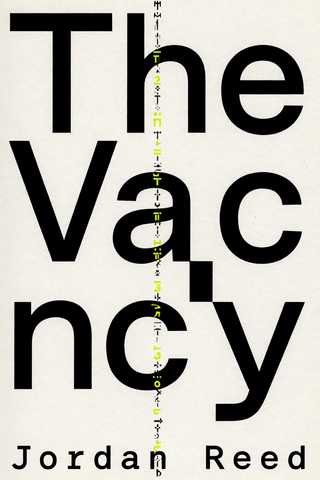
Read a preview
Chapter 1
Chapter 1: Impact
The shuttle hit at an angle Sanna Heikkinen would later calculate as seventeen degrees from horizontal, which was the only reason she survived.
Had the approach been steeper — twenty-five degrees, thirty — the hull would have crumpled inward like a fist closing, and the kinetic energy would have turned her organs to jelly inside her pressure suit. Had it been shallower, she would have skipped across the frozen surface like a stone across black water, tumbling end over end until the craft disintegrated. But seventeen degrees gave her a long, screaming slide across methane ice, the belly of the shuttle carving a trench half a kilometer long before friction and a ridge of frozen nitrogen brought everything to a shuddering, bone-rattling stop.
For a long time afterward, Sanna didn't move.
She hung in her crash harness, arms floating in the reduced gravity, listening to the shuttle tick and groan as its superheated hull met the surface temperature of Acheron-7. Minus two hundred and twenty Celsius. The number had been abstract when she'd read it in the survey data aboard the Väinämöinen. Now it pressed against the hull like a living thing, patient and absolute.
Blood dripped from a cut above her left eyebrow, floating in lazy droplets before the weak gravity — maybe a third of Earth's — pulled them down to patter against the inside of her visor. She blinked, tried to focus. The cockpit lights had gone red, which meant emergency power. The main console was dark. Through the forward viewport, she saw nothing.
Not darkness in the way a moonless night on Earth was dark, where there was always some ambient glow — starlight reflected off clouds, the distant orange smear of a city over the horizon. This was absolute. Acheron-7 had no star. It drifted through interstellar space, a world untethered from any sun, and the darkness outside was the darkness between galaxies, the darkness at the bottom of the universe.
Sanna's breathing was too fast. She could hear it echoing inside her helmet, a ragged rhythm that spoke of shock and the beginning of panic. She closed her eyes — pointless, since there was nothing to see — and forced herself to count. In for four. Hold for seven. Out for eight. A technique her mother had taught her when she was nine years old and terrified of the dark in their apartment in Oulu, which now seemed like the most absurd irony the universe had ever produced.
"Status," she said aloud, and her voice cracked on the word.
The shuttle's AI didn't respond. Either the processing core had been damaged in the crash or it had lost power. She reached for the manual diagnostic panel to her right, fingers clumsy in her suit gloves, and toggled the switches by feel. A few secondary displays flickered to life, painting the cockpit in dim amber.
Hull integrity: compromised but holding. Atmosphere: the cabin was still pressurized, though sensors showed a slow leak from the aft section. Life support: functioning on backup cells, estimated eighteen hours of breathable air. Navigation: offline. Communications: she toggled to the distress beacon and felt her stomach drop. The beacon was transmitting, but its signal strength was a fraction of what it should have been. The crash had damaged the antenna array.
Even at full power, the beacon would have been a whisper in the void. Acheron-7 was three point seven light-years from the nearest inhabited system. A distress signal, traveling at the speed of light, would take nearly four years to arrive — and that assumed anyone was listening in the right direction, on the right frequency, at the right time. With the antenna damaged, the effective range was probably a tenth of that. Maybe less.
Sanna stared at the amber numbers and let the reality settle over her like a weight.
She was alone on a frozen world with no sun, no rescue coming, and roughly sixty days of emergency rations in the survival locker behind her seat. The Väinämöinen — the research vessel that had been her home for fourteen months — was somewhere in orbit above her, or what was left of it. The cascade failure had happened so fast. One moment she'd been in the geology lab, reviewing spectrographic data on Acheron-7's surface composition. The next, alarms were screaming, the lights were strobing red, and Commander Leppänen's voice was on the intercom ordering all hands to evacuation stations.
Sanna had made it to Pod Three. She didn't know if anyone else had made it to theirs.
She'd seen the Väinämöinen through the pod's tiny viewport as she'd separated — the ship listing badly, venting atmosphere from a rupture along the port side, its running lights flickering like a dying heartbeat. Then the pod's automated descent program had fired its retros and she'd lost sight of the ship as she plunged toward the dark world below.
The pod had been designed for atmospheric entry on surveyed worlds with known conditions. Acheron-7 was only half-surveyed. The pod's heat shield had held, but the landing thrusters had misfired in the thin, frigid atmosphere, and the last two hundred meters had been an uncontrolled fall that ended in the long, grinding slide across the ice.
Now here she was.
Sanna unclipped her harness and lowered herself carefully to the deck, testing her limbs. Her left ankle throbbed — sprained, probably, not broken. Her ribs on the right side ached with every breath, suggesting a crack or a deep bruise. The cut on her forehead had already clotted in the dry cabin air. She could move. She could think. These were the things that mattered.
She pulled the survival kit from its locker: a hard-sided case the size of a large suitcase, packed with military precision. Ration bars. Water purification tablets. A medical kit. A multi-tool. Emergency thermal blankets. A portable atmospheric analyzer. A geological sampling kit — because even escape pods on survey missions were designed with science in mind. Two chemical flares. A hand-crank power cell. And, tucked into a foam-lined compartment, a personal data pad preloaded with survival protocols, planetary databases, and the complete works of Finnish literature, because someone in the European Space Consortium's logistics department had a sense of humor.
Sanna pulled out the atmospheric analyzer and checked the readings from the shuttle's external sensors. The atmosphere outside was a thin soup of nitrogen and trace gases, with a surface pressure roughly a tenth of Earth's sea level. Unbreathable. The temperature was minus two hundred and eighteen Celsius — slightly warmer than the planetary average, which meant she'd landed somewhere with residual geothermal activity. This matched the data she'd collected from orbit. Acheron-7 was geologically active, its core still molten despite billions of years of wandering through the cold between stars. The survey had detected geothermal vents and volcanic fissures on the surface, places where the planet's internal heat leaked through the frozen crust.
She'd aimed for one of those regions during her descent. Not with any precision — the pod's navigation had been half-dead by then — but she'd tried to steer toward the thermal signatures she remembered from the orbital scans. The slightly-less-lethal temperature outside suggested she'd gotten at least partly lucky.
Sanna activated her suit's external lamp and pressed her face to the viewport.
The beam cut through absolute darkness and illuminated a landscape that looked like a fever dream. The surface was a jumble of frozen nitrogen — pale, translucent slabs tilted at crazy angles, interspersed with darker masses of methane ice that had a waxy, organic look. Frost crystals the size of her hand glittered in the lamp's beam, nitrogen frozen into delicate fractal patterns by the extreme cold. The trench her shuttle had carved was visible as a long scar in the ice, steaming faintly where the hot hull had sublimated the surface material.
And there — maybe two hundred meters to the east, if the shuttle's compass could be trusted in a world with a weak and wandering magnetic field — a faint glow. Not light, exactly. A suggestion of warmth in the infrared, visible only because the suit's visor had automatically switched to thermal overlay. A crack in the surface, running roughly north-south, from which heat was escaping.
A volcanic fissure.
Sanna leaned back from the viewport and took a slow breath.
"All right," she said to the empty cockpit. "First things first."
She had eighteen hours of air in the shuttle. She had a suit with six hours of independent life support. She had a fissure two hundred meters away that might — might — provide warmth and possibly a pocket of volcanic gases that could extend her breathing time if she could filter them. She had sixty days of food. She had a damaged distress beacon that almost certainly no one would ever hear.
And she had herself. Sanna Heikkinen, thirty-four years old, PhD in astrophysics with a secondary specialization in planetary geology, born in Oulu, Finland, on a world eight thousand light-years away in a galaxy that didn't care whether she lived or died.
She opened the medical kit, cleaned and bandaged the cut on her forehead, wrapped her ankle tightly, and swallowed two anti-inflammatory tablets. Then she repacked the survival kit, slung it onto her back, and began the process of cycling the shuttle's airlock.
The outer door opened onto silence.
Not the silence of a quiet room or a still forest. The silence of a world with almost no atmosphere to carry sound. Her boots crunched on the frozen surface, and she felt the vibration through her legs more than she heard it. The cold was a physical presence, seeping through her suit's insulation despite its thermal layers. Her visor readout showed the external temperature dropping as she moved away from the still-warm shuttle hull. Minus two-twenty. Minus two-twenty-two. The suit's heaters were working, but they were designed for short EVAs, not sustained exposure to conditions that would freeze carbon dioxide solid.
She walked toward the fissure.
The surface was treacherous — smooth methane ice alternating with rough, fractured nitrogen that crumbled under her boots. The gravity helped; at a third of Earth's, she could catch herself more easily when she slipped. Her lamp cut a cone of white light through the darkness, illuminating maybe thirty meters ahead. Beyond that, nothing. The darkness was so complete that her brain kept trying to fill it with shapes — mountains, walls, figures standing just beyond the light's reach. She ignored them. They were phantoms, the visual cortex rebelling against a world that offered it nothing to process.
The fissure was narrower than she'd expected — a crack in the surface maybe two meters wide, running as far as her lamp could illuminate in both directions. But warmth poured from it like breath from a sleeping animal. Her suit's external temperature reading jumped twenty degrees as she approached the edge. Minus two hundred. Still lethal, but less immediately so.
She knelt at the edge and pointed her lamp down. The crack descended steeply for about ten meters, then opened into what looked like a wider space — a cavern or tunnel carved by geothermal activity. The walls were streaked with mineral deposits, yellows and oranges that spoke of sulfur compounds. And the atmospheric analyzer, held over the opening, registered a thin but real concentration of volcanic gases: carbon dioxide, water vapor, sulfur dioxide, and — critically — oxygen. Not much. Maybe six percent, compared to Earth's twenty-one. But it was there, produced by geochemical processes deep in the planet's crust.
Six percent oxygen wouldn't sustain her unaided. But mixed with her suit's reserves, filtered and supplemented, it could extend her breathing time significantly. And if she could find a pocket where the concentration was higher, near the heat source itself...
Sanna looked back at the shuttle, a dark shape barely visible at the edge of her lamp's range. She could stay there, in relative comfort, and die when her air ran out in eighteen hours. Or she could climb down into the guts of a rogue planet and try to find a way to keep breathing.
She thought about her mother, who had died three years before the mission launched. She thought about her sister Kaisa, who had stood at the launch facility in Kourou with tears on her face, waving until the shuttle was out of sight. She thought about Commander Leppänen's calm voice on the intercom: All hands to evacuation stations. This is not a drill.
Then she swung her legs over the edge of the fissure and began to climb down.
The descent was easier than she'd feared. The walls were rough, offering plenty of handholds, and the reduced gravity meant she could lower herself almost gently from ledge to ledge. The temperature rose as she descended — minus one-eighty, minus one-sixty, minus one-forty. Still brutally cold, but her suit could handle it. The air thickened, too, the atmospheric pressure climbing as she went deeper. By the time she reached the bottom of the initial crack and stepped into the wider tunnel, her analyzer was reading a surface pressure of nearly half an Earth atmosphere and an oxygen concentration of nine percent.
Nine percent. Still not enough to breathe freely, but enough that her suit's supplemental system could stretch her air supply from six hours to maybe twenty. And the tunnel went deeper.
Sanna followed it.
The tunnel was roughly circular, about four meters in diameter, its walls smooth in places where flowing water — liquid water, here on this frozen world — had once carved through the rock. The mineral deposits grew thicker and more colorful as she descended: iron reds, copper greens, sulfur yellows. The temperature continued to climb. Minus one hundred. Minus eighty. She was descending into the planet's warmth, following the heat gradient toward the molten core that kept Acheron-7 geologically alive.
After about an hour of careful descent — pausing to mark her route with chemical chalk from the survival kit, checking her analyzer readings, testing each foothold — Sanna emerged into a chamber that made her stop and stare.
It was roughly dome-shaped, perhaps fifty meters across and thirty meters high. The floor was a jumble of volcanic rock, dark basalt streaked with mineral veins. And in the center of the chamber, surrounded by a ring of sulfur-crusted vents, was a pool of liquid water.
Steam rose from its surface, curling in the thin atmosphere. The water was dark, heated from below by geothermal energy, and the temperature in the chamber was minus twelve Celsius — cold, but survivable. More importantly, the atmospheric readings here were remarkable: fourteen percent oxygen, adequate nitrogen, carbon dioxide levels elevated but not toxic. The air was thin — about sixty percent of Earth's sea-level pressure — but it was breathable. Marginally, carefully, with rest between exertions, but breathable.
Sanna stood at the edge of the pool, surrounded by the soft hiss of volcanic vents, and felt something she hadn't expected to feel ever again.
Hope.
Not rescue-hope. She was clear-eyed about that. No one was coming. The distress beacon was a formality, a gesture toward protocol that would almost certainly go unheard. But survival-hope — the raw, animal conviction that she could keep breathing, keep her heart beating, keep existing for longer than the eighteen hours the shuttle had offered — that surged through her like electricity.
She shrugged off the survival kit and began to set up camp.
The thermal blankets went down first, creating an insulated floor on the rock near the warmest vent. The ration bars she stacked carefully, doing the math in her head: sixty days at two bars per day, or ninety days at reduced intake if she could supplement with anything the planet offered. The water in the pool would need testing, but if it was geothermally heated groundwater without too many dissolved heavy metals, it could be filtered and drunk.
She tested it. High in minerals — iron, manganese, traces of lithium — but within tolerable limits after filtration. She filled her suit's water reservoir and drank deeply, the warm, slightly metallic water the best thing she'd ever tasted.
Then she sat on her thermal blanket, in a cave on a world without a sun, and pulled out her data pad.
"Day One," she typed. "Acheron-7 surface. Crash-landed survey pod approximately 0340 UTC, ship time. Shuttle intact but not habitable long-term. Located geothermal fissure two hundred meters east of crash site. Descended to subterranean chamber at approximately three hundred meters depth. Found liquid water, breathable atmosphere, survivable temperature. Beginning resource inventory and survival protocol."
She paused, then added: "I am alive. I intend to stay that way."
She saved the entry, set an alarm on her suit's chronometer for six hours, and lay down on the thermal blanket. The rock beneath her was warm. The vents hissed softly, a sound like breathing. Above her, through three hundred meters of rock and ice, the surface of Acheron-7 stretched away in every direction — frozen, dark, and utterly alone in the space between stars.
Sanna closed her eyes and slept.