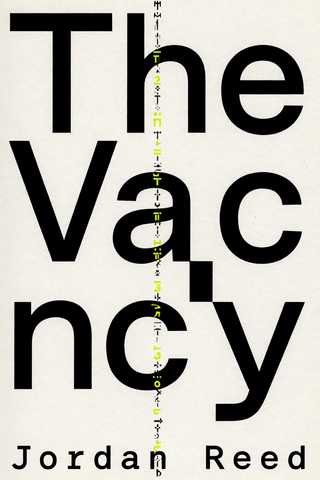
Read a preview
Chapter 1
Chapter 1: The Clinic Beneath the Noodles
The smell of lamb broth and chili oil seeped through the floor every morning at six, curling through the ventilation gaps like a ghost that refused to leave. Rafe Ozeki had long since stopped noticing it consciously, but his body remembered. His stomach would growl, his hands would steady, and he'd know it was time to begin his day.
His clinic occupied the sub-basement of a building that, on paper, didn't have a sub-basement. The noodle shop above — Grandmother Feng's, open since before the megacity consolidation — served as both cover and early warning system. Grandmother Feng herself was eighty-three years old and had no idea what happened beneath her kitchen. Her grandson, Bohai, knew everything. Bohai handled the appointments.
Rafe sat at his workstation, a curved desk of brushed titanium surrounded by holographic displays that painted the dim room in shifting blues and greens. The neural interface rig dominated the center of the space: a reclining chair fitted with a crown of gossamer-thin filaments, each one capable of reading and writing to the quantum substrate of an uploaded human consciousness. The chair looked medical. Clinical. It was neither. No medical board in any jurisdiction would have sanctioned what happened in it.
He was reviewing the morning's client file when the chime sounded — three ascending tones that meant Bohai had cleared someone through the noodle shop's back corridor and down the service elevator.
The client was a man named Piotr Dzhambul, fifty-six, a retired logistics executive who'd made his fortune routing cargo through the Central Asian Free Trade Corridor. He had the soft, well-fed look of someone who'd spent the last decade spending money rather than earning it. His backup — the uploaded copy of his consciousness stored in a licensed vault — was three months old, and he wanted something removed from it.
"It's a memory," Piotr said, settling into the consultation chair across from Rafe. He didn't sit in the neural rig. Not yet. First they talked. Rafe always insisted on talking first. "A specific memory. From about four years ago."
"Tell me about it," Rafe said. He kept his voice neutral, professional. He'd learned long ago that people who came to him were rarely comfortable. They were doing something illegal, something intimate, something that most of polite society considered a violation of selfhood. The least he could do was not make them feel judged.
Piotr looked at his hands. They were thick, spotted with age, adorned with two rings that probably cost more than the noodle shop above. "I had an affair," he said. "My wife doesn't know. She never will. But my backup knows. If something happens to me and they restore from backup, the restored version of me will know, and I'm not confident that version will keep the secret."
"You want the memory of the affair excised from your backup."
"Completely. As if it never happened."
Rafe nodded. This was bread and butter work. Memory excision was the most common procedure he performed — the soul surgery equivalent of removing a mole. Wealthy clients backed up their minds regularly, a hedge against death, and those backups were perfect snapshots of who they were at the moment of upload. Every secret, every shame, every private thought captured in quantum crystal and stored in vaults with better security than most governments could manage.
The problem, of course, was that perfection. People wanted their immortality, but they wanted it curated. They wanted the version of themselves that would wake up after death to be the best version. Or at least a version that wouldn't embarrass them.
"I can do it," Rafe said. "But I need you to understand the limitations. Memory isn't a filing cabinet. It's a web. The affair connects to other memories — where you were on certain dates, why you felt certain emotions, decisions you made because of guilt or excitement or fear. I can remove the core memory, but there will be... gaps. Small ones. Moments where the restored version of you might feel that something is missing without knowing what."
"I can live with gaps," Piotr said. "Or rather, the other me can."
Rafe almost smiled. Clients always talked about their backups as if they were separate people. In a philosophical sense, they were.
"The fee is forty thousand tenge," Rafe said. "Half now, half on completion. Bohai will handle the financial arrangements. I'll need your vault access credentials and your biometric authorization key."
Piotr produced a data chip from his breast pocket and slid it across the desk. "Everything you need is on there. My vault is with Pinnacle Storage, Tier Three facility in the Chimkent District."
Rafe took the chip and plugged it into his secure reader. The data unfolded across his holographic display: vault coordinates, encryption keys, biometric profiles. Everything checked out. Pinnacle was a mid-tier storage provider, decent security but nothing extraordinary. He'd penetrated their systems before.
"Give me seventy-two hours," Rafe said.
Piotr stood, looking relieved. The hardest part, for most clients, was the asking. "Thank you, Dr. Ozeki."
"I'm not a doctor," Rafe said. It was a reflex, not modesty. Using a medical title for what he did felt wrong in a way he couldn't fully articulate. Doctors healed. He edited.
After Piotr left, Rafe sat in the quiet of his clinic and studied the data chip's contents. The job was straightforward. Two days of prep, three hours of actual surgery, and Piotr Dzhambul's backup would wake up — if it ever needed to wake up — believing its owner had been faithful for forty years of marriage.
Rafe wondered, not for the first time, what that made him. Not a doctor. Not quite a criminal, though the law disagreed. Something in between. A technician of the soul, working in the space between what people were and what they wanted to be.
He'd been doing this for eleven years. He was tired.
The clinic itself reflected that fatigue. It was functional, not comfortable. The walls were bare composite, the lighting utilitarian. The only personal touch was a small photograph pinned above his workstation: a beach somewhere warm, waves breaking on white sand, palm trees leaning in a wind he could almost feel. He'd pulled the image from a travel catalog years ago. He'd never been to a beach. Tashkent Prime was landlocked, two thousand kilometers from the nearest ocean, and Rafe hadn't left the megacity in over a decade. The photograph was an aspiration, not a memory.
One more big job, he told himself. One more, and the beach becomes real.
He'd been telling himself that for three years.
---
Tashkent Prime sprawled across what had once been the Fergana Valley, a megacity of forty-two million souls that had grown like a crystal formation — beautiful from a distance, chaotic up close. The old city of Tashkent formed its administrative core, but the megacity had long since swallowed neighboring towns, villages, and agricultural land, replacing wheat fields with residential towers and cotton farms with server complexes.
The city ran on data. That was the simple truth of it. The Central Asian Data Sovereignty Accords of 2089 had transformed the region into one of the world's premier digital storage hubs, and Tashkent Prime sat at its center. Consciousness vaults, financial archives, corporate memory banks — they all flowed through the city's quantum infrastructure like blood through a heart.
And where there was data, there were people who wanted to change it.
Rafe had come to Tashkent Prime at twenty-two, a dropout from the Novosibirsk Institute of Cognitive Engineering with half a degree and a talent for pattern recognition that his professors had called "unsettling." He'd started small — data recovery work, helping people retrieve corrupted files from damaged storage media. But the money was in consciousness work, and consciousness work was illegal without a license, and licenses required the kind of institutional backing that didn't welcome dropouts with unsettling talents.
So he'd gone underground. Apprenticed with a soul surgeon named Old Timur, who operated out of a converted warehouse in the Almazar District and smelled perpetually of synthetic tobacco. Old Timur had taught him the craft: how to navigate the architecture of an uploaded mind, how to distinguish genuine memories from reconstructive artifacts, how to cut without leaving scars.
"A mind is not a machine," Old Timur had told him, over and over. "It is a garden. You do not repair a garden. You tend it."
Old Timur had died six years ago — a stroke, the old-fashioned kind, no backup to restore from. He'd never trusted the technology he'd spent his life manipulating. Rafe had inherited his client list, his tools, and his philosophy. The clinic beneath Grandmother Feng's had been Rafe's own innovation.
Now, at thirty-three, Rafe was the best soul surgeon in Tashkent Prime. Possibly the best in Central Asia. His reputation, spread through encrypted channels and whispered referrals, was built on two pillars: precision and discretion. In eleven years, he had never been caught, never been named in an investigation, never lost a client's data. He charged premium rates and turned away more work than he accepted.
But the work wore on him. Every mind he entered left traces — not in the technical sense, but in the psychological one. He'd spent thousands of hours inside other people's consciousness architectures, swimming through their memories, their fears, their secret selves. He'd seen things that no therapist, no priest, no lover would ever see. The hidden rooms of the human psyche. The basements where people stored the things they couldn't face.
It changed you. It had to.
Rafe finished his review of Piotr's data, secured his workstation, and climbed the narrow stairs to the noodle shop. It was mid-morning, and the lunch rush hadn't started. Bohai was behind the counter, a lean young man with quick eyes and a tattoo of a crane on his forearm, wiping down surfaces with mechanical efficiency.
"Client seemed happy," Bohai said without looking up.
"Standard job. Three days."
"Good. You've got another inquiry. Came through the Karakul channel."
Rafe paused. The Karakul channel was his highest-tier referral network — invitation-only, used exclusively by clients who represented serious money. He hadn't received a Karakul inquiry in months.
"Details?"
Bohai handed him a sealed data chip. "Woman. Didn't give a name. Said she'd come in person tomorrow at nine. Said to tell you the budget is open-ended."
Open-ended. Rafe turned the phrase over in his mind. In his experience, people who said "open-ended" either had more money than sense or more ambition than money. Either way, they were dangerous.
"I'll see her," he said.
Bohai nodded and went back to wiping the counter. Outside, through the noodle shop's grease-filmed windows, Tashkent Prime hummed and churned, forty-two million people living their lives in a city built on the promise that death was optional and memory was negotiable.
Rafe ordered a bowl of noodles and ate it standing at the counter, watching the street. Tomorrow, he thought. Tomorrow might be the last job.
He'd been telling himself that for three years. But this time, something in the weight of the data chip in his pocket told him it might actually be true.