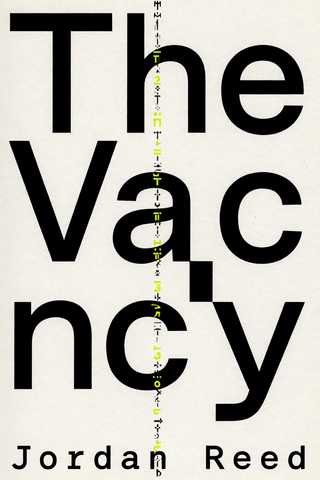
Read a preview
Chapter 1
Chapter 1: Descent
The shuttle banked hard over the northern continent, and Delphine Stenmark pressed her forehead against the viewport to watch the world called Enso unfurl beneath her.
It was, by every visible measure, beautiful. The forests were dense and jade-dark, stretching in unbroken canopy from the coastal ranges to the interior basin where the colony sat like a pale thumbprint on green felt. Rivers threaded through the landscape in silver braids. The sky was a shade of blue that Earth hadn't managed in two centuries — clean, depthless, almost accusatory in its clarity.
Delphine had read the colonial survey files during the eleven-month transit from Kepler Station. Enso had scored in the ninety-eighth percentile on the Habitability Index: breathable atmosphere, stable axial tilt, no dominant megafauna, temperate climate across forty percent of its landmass. The kind of world that made terraforming engineers weep with joy because there was almost nothing to terraform. The first settlers had called it a gift.
Twelve years later, they were calling it something else.
"Dr. Stenmark?" The shuttle pilot's voice crackled through the cabin speaker. "We're on final approach to Threshold. Touchdown in eight minutes."
"Thank you." Delphine pulled back from the viewport and began securing her equipment cases. Three hardshell containers held her field lab: gene sequencers, atmospheric samplers, soil probes, a portable mass spectrometer, and Rho — her research AI, housed in a processing unit the size of a shoebox. Rho had been her partner through six planetary surveys across four star systems. It was, in many ways, the closest thing she had to a constant companion.
The shuttle dropped through a thin layer of cirrus cloud, and Threshold resolved into detail below. The colony was modest by interstellar standards — a cluster of prefabricated structures arranged in concentric rings around a central commons, surrounded by agricultural fields that extended outward in neat rectangles. Beyond the fields, the forest began. Not gradually, not in the way Earth forests thinned at their edges. The tree line on Enso was a wall. Dark trunks rose shoulder to shoulder, their canopies interlocking so tightly that the forest floor was invisible from above.
Delphine noticed something else as the shuttle descended: the fields nearest the forest edge were discolored. Some were barren entirely — pale, exposed soil in geometric patches that looked deliberate, as if someone had laid a stencil over the cropland and burned away everything inside the lines.
She'd seen the satellite images in her briefing packet, but seeing it with her own eyes was different. The patterns were too regular to be disease, too precise to be pest damage. Triangles. Hexagons. Perfect circles of dead earth amid healthy grain.
The shuttle touched down on a packed-earth landing pad at the colony's western edge. Delphine felt the landing struts compress, heard the engines cycle down, and then there was silence — or what passed for silence on a living world. Through the hull she could hear wind, and beneath it, something she couldn't quite identify. A low, pervasive hum, like the resonance of a struck bell long after the impact.
She unsealed the hatch and stepped out into Enso's air for the first time.
It hit her like a physical thing. Rich, layered, almost thick with information — the scent of chlorophyll analogs and soil chemistry and something faintly sweet that she couldn't place. Earth's air, even in its wildest places, had never smelled like this. This was air that was doing something. Carrying something.
Delphine closed her eyes and breathed deeply, cataloging. Her training kicked in automatically: volatile organic compounds, probable terpene analogs, something with a sulfur note that suggested active microbial metabolism in the topsoil. She'd need Rho to break it down properly, but her instincts were already firing.
This biosphere was loud.
"Dr. Stenmark?"
She opened her eyes. A man was crossing the landing pad toward her — tall, dark-skinned, with close-cropped gray hair and the kind of face that had been handsome once and was now merely authoritative. He wore the standard colonial administrator's jacket, slightly faded, and walked with the careful stride of someone accustomed to being watched.
"Governor Cantrell," Delphine said, extending her hand.
Malik Cantrell's handshake was firm and brief. "Welcome to Enso. I hope the transit wasn't too rough."
"Eleven months in a survey vessel. I've had worse."
"I imagine you have." He studied her for a moment — the way people always studied xenobiologists, as if expecting someone wilder, more eccentric, less like a slightly undersized woman in practical field clothes with her dark hair pulled back in a functional knot. "We're glad you're here. The situation has... evolved since we filed the initial request."
"Evolved how?"
Malik glanced back toward the colony, then at the forest wall beyond the fields. "Let me show you to your quarters first. We can talk over dinner. I've assembled the senior staff — people you'll want to meet."
Delphine nodded but didn't move immediately. She was looking at the tree line. In the late afternoon light, the forest canopy had a quality she hadn't expected from the survey images — a subtle iridescence, as if the leaves were coated in something that refracted light differently depending on the angle. The colors shifted as she watched. Green to blue-green to something almost violet at the edges.
"Governor," she said. "The crop failures in the eastern fields. When did they start?"
"Three growing seasons ago. But they've accelerated. We lost forty percent of the eastern harvest last quarter."
"And the patterns? The geometric shapes?"
"They appeared about eighteen months ago. Before that, the failures looked random. Now they look..." He paused, searching for a word. "Intentional."
Delphine looked at him. "You think something is deliberately destroying your crops?"
"I think something is happening that I don't have the training to understand. That's why you're here." He gestured toward the colony. "Shall we?"
She followed him across the landing pad, but she kept glancing back at the forest. The iridescence was deepening as the sun dropped lower. The entire tree line seemed to pulse with color, slowly, like breathing.
Like something watching her arrive.
---
Threshold was clean, orderly, and quietly desperate.
Delphine could read it in the infrastructure as Malik walked her through the colony's central ring. The buildings were well-maintained but showing twelve years of wear that colonial supply chains couldn't quite keep up with. Patches on roofing panels. Repurposed cargo containers serving as storage sheds. A medical clinic that had clearly been expanded twice, each addition slightly less polished than the last.
But it was the people who told the real story. The colonists she passed nodded politely, but their faces carried a particular kind of tension — not panic, not despair, but the slow erosion of certainty. These were people who had crossed interstellar space to build something, and something was going wrong in ways they couldn't name.
"Population?" Delphine asked.
"Three thousand, two hundred and fourteen as of last census. We've had some births, a few deaths. No one's left — there's nowhere to go until the next supply ship, and that's fourteen months out."
"Any health issues? Beyond what's in the reports?"
"The dreams," Malik said, and his voice dropped half a register. "The reports mention them, but they don't capture it. A third of the colony — everyone living within five hundred meters of the forest edge — reports vivid dreams. Not nightmares, exactly. More like... visions. And they're shared."
"Shared how?"
"People who've never spoken to each other describe the same images. Roots growing through dark soil. Water moving underground. Light filtering through canopy. And a feeling — they all describe the same feeling. Like being part of something enormous. Something that's aware of them."
Delphine's pulse quickened, though she kept her expression neutral. Shared dream content among unconnected individuals suggested either a common environmental stimulus or mass psychogenic illness. Given what she'd already noticed about Enso's atmosphere, she had a strong suspicion which one it was.
"I'll need to interview the affected colonists," she said. "And I'll need unrestricted access to the forest."
"You'll have both. But I'd recommend not going into the forest alone. Not yet."
"Why?"
Malik stopped walking. They were standing at the edge of the central commons — a broad, open space where colonists gathered for meals and meetings. Beyond it, the eastern fields stretched toward the tree line, and Delphine could see the geometric crop failures clearly now: perfect hexagonal patches of bare earth, each one perhaps thirty meters across, arranged in a pattern that repeated with mathematical precision.
"Because the last person who went into the forest alone was our ecologist, Dr. Tamsin Okada. She went in to collect samples three weeks ago. She came back fourteen hours later and couldn't speak for two days. When she could, she said she'd felt the forest thinking."
"Thinking about what?"
"About us."
---
Dinner was held in the colony's main hall — a large prefab structure that served as cafeteria, meeting space, and social hub. Malik had assembled six people around a long table, and Delphine studied each of them as introductions were made.
Brisaian Pearce was the colony's chief engineer — a broad-shouldered man in his fifties with scarred hands and the impatient energy of someone who solved problems by building things or breaking them. He shook Delphine's hand hard enough to hurt and didn't apologize.
"We don't need a biologist," he said, before she'd even sat down. "We need heavier equipment. Push the tree line back another kilometer and the crop failures stop. I've been saying this for a year."
"Bris," Malik said quietly.
"It's a forest, Malik. Not a deity. We clear it, we plant, we eat. That's how colonization works."
Delphine filed Brisaian's position away and turned to the woman beside him: Dr. Tamsin Okada, the colony's ecologist. Tamsin was small, Japanese-descended, with dark circles under her eyes that spoke of sleepless nights. She met Delphine's gaze with an intensity that bordered on pleading.
"You'll understand when you see the data," Tamsin said. "I've been collecting for two years. It's not contamination. It's not disease. It's something else entirely."
"I'm looking forward to reviewing your work," Delphine said.
The others at the table included Reza Khorasani, the colony's agricultural director — a quiet, precise man who spoke about crop yields the way a surgeon speaks about vital signs. There was Lotte Bergman, head of the colonial medical staff, who had been tracking the dream phenomenon and was clearly disturbed by what she'd found. And at the far end of the table, two people Delphine hadn't expected: Juno Vasara, a young communications technician who had been the first to report the shared dreams, and her partner, Fen Castellane, a forestry worker who had been mapping the tree line's advance.
"Advance?" Delphine looked up from her plate. "The forest is advancing?"
"Three meters per year along the eastern boundary," Fen said. He was wiry, sunburned, with the careful diction of someone who chose words like tools. "We clear, it grows back. But not randomly. It fills in the gaps we make. Exactly the gaps. Like it knows where we've cut."
"That could be normal regrowth patterns," Delphine said, testing.
Fen shook his head. "Normal regrowth is messy. Opportunistic. Pioneer species first, then succession. What happens here is different. The forest replaces what we remove with the same species, in the same configuration, within weeks. It's not regrowing. It's repairing."
The table went quiet. Outside, the sun had set, and through the hall's windows Delphine could see the tree line as a dark mass against the stars. The iridescence was gone now, replaced by something else — faint bioluminescence, blue-green, pulsing along the canopy edge in slow waves.
"How long has it done that?" she asked, pointing.
"The glowing?" Juno said. "Since about six months ago. It started faint. It's getting brighter."
"It's bioluminescent signaling," Tamsin said. "I've confirmed it. The trees produce luciferin compounds in their bark. The patterns correspond to — well, I'm not sure what they correspond to. But they're not random."
Delphine pushed her plate aside and leaned forward. "Governor, I'd like to start fieldwork tomorrow. First light. I'll need Tamsin's data, access to a vehicle, and permission to set up monitoring equipment along the forest perimeter."
"Done," Malik said.
"And I want to be clear about something." She looked around the table, meeting each pair of eyes in turn. "I'm not here to confirm anyone's theory. I'm here to observe, measure, and analyze. Whatever Enso is doing, I'll find out what it is. But I need everyone to hold their conclusions until I have data."
Brisaian snorted. "While you're collecting data, we're losing crops. People need to eat, Doctor."
"People also need to understand what they're dealing with before they act," Delphine said evenly. "That's why I'm here."
Brisaian held her gaze for a long moment, then looked away. The bioluminescence outside pulsed once, twice, three times — and then went dark, as if someone had thrown a switch.
The silence that followed was the loudest thing Delphine had ever heard.