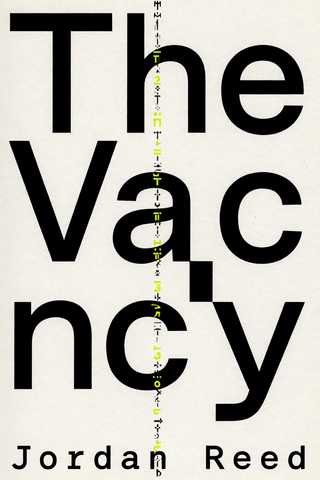
Read a preview
Chapter 1
Chapter One: The Four Hundred and Seventh
The annex under the judge's garden had one window, set high in the wall, and it looked out at ankle level onto a gravel path. Standing at the foot of the bed I could see the base of a stone urn, three inches of clipped hedge, and the rain coming down on the Terraces the way it always did up there — politely, at a slant, as if it had been asked.
Down in the Low Kilns, forty metres below and two kilometres east, that same rain arrived like a debt collector.
"You'll want the lamp," the intake clerk said. He was maybe nineteen, in a Vellum Indemnity coat two sizes too generous, and he had already been sick once in the garden. "The ceiling fixture's out. It's been out since Tuesday, apparently."
"Since Tuesday," I said.
"That's what the house steward says."
"Write that down." I set my case on the bench under the window and worked my gloves tighter over my knuckles. "Not because it means anything. Because in nine months a lawyer will ask you what the light was like in here and you'll want to have an answer that isn't your memory."
He wrote it down. His name was Petro Vask and he was going to last about a year in the profession, which was two months longer than most.
The woman on the bed was Anika Boyle. Twenty-nine years old. Sink of record to Fabian Solmes, appellate justice, Third Division, for twelve years and four months. She lay on her left side with her knees drawn up and one hand tucked under her cheek, and if you did not know how to look at hands you would have thought she was asleep and cold.
I knew how to look at hands. It is most of the job.
Her nails were grey. Not dirty — grey the whole way through, the colour of wet ash, with that faint pearl striation that comes in after the fourth or fifth year of routing. The knuckles were thickened, the joints swollen past what any twenty-nine-year-old earns. When I lifted her eyelid with my thumb, the pale ring sat around her cornea like a coin rim, half a millimetre wide.
Stigmata. The trade's own signature, written on the outside of the body in three places so that anyone can read it from across a tram carriage and know what you are.
"Cause?" Vask asked.
"That's what the next four hours are for."
I want to be honest about what I do, because everyone else in Verrick lies about it, including the people who invented the words.
When two bodies are compatible — and compatibility is heritable, rare, and worth more per litre than anything else that comes out of the Kilns — a licensed surgeon can build a vector between them. Not a tube. Nothing so crude. An engineered colony that seeds in the marrow of both parties and, in the presence of a tuned resonator, routes burden. Oxidative load. Inflammatory signal. Cortisol. Malignancy risk. The slow tax of being alive gets lifted out of one body and set down in another.
The one who sets it down is the principal. The one who picks it up is the sink.
Principals stay smooth. They stay calm. They keep their hair and their joints and their tempers, and they die in their nineties of something dignified, in a bed with a view. Sinks get grey nails, thick knuckles, a ring at the cornea, and roughly half a life. The pair must sleep within forty metres of a shared resonator once every sixty hours or the routing destabilises. Severance — cutting the vector — kills the sink nineteen times out of twenty.
And when a sink dies, someone has to come and read the tissue and decide which kind of death it was. Contractual attrition means the sink wore out doing exactly what the contract said she would, and the estate pays for burial and nothing else. Negligence means the principal dumped faster than the schedule permitted, or skipped calibration, or ran her past her assessed capacity, and then the family gets a payment large enough to change a Kilns household for a generation.
I am a consequence auditor. I make that determination. My signature had been on four hundred and six of them.
Of those four hundred and six, I had found negligence eleven times.
That number is not a confession of cowardice. It is arithmetic. The contracts are written by people who have never been surprised by a document in their lives. A principal can bleed a girl to a husk inside the schedule if the schedule was drawn generously enough, and the schedules are always drawn generously. My job is not justice. My job is to stand between a corpse and an insurer and say, out loud, what the body will support.
I took my samples in the order I always take them. Vitreous. A marrow draw from the iliac crest. A shave of liver through the flank. Cornea scrape, both eyes. Nail clippings, all ten, bagged separately, because principals sometimes cheat on the record and the nails keep a better calendar than the paperwork does.
My hands were bad that day. They are always bad, but the cold in the annex made them worse, and by the marrow draw I had to brace my right wrist with my left to hold the trocar steady. Vask watched and said nothing, which I appreciated.
"Protocol," I said, before he could ask about the gloves. "Cross-contamination. Vector colonies are opportunistic."
They are not, particularly. But I have worn gloves at every audit for eleven years, and in eleven years nobody has once asked me to take them off.
While the assay ran I did the room, because the room is evidence too.
It was four metres by five, brick, whitewashed, with a drain in the middle of the floor. Bed bolted to the wall. Above the bed, set in a housing behind a steel grille, the resonator — Tanit Holdings casting, model 9, the kind that hums at the very bottom of hearing so that after a week you stop noticing and after a year you cannot sleep without it. Twenty-eight metres of concrete between that resonator and the master bedroom in the house above. Well within the forty. Whoever built this had measured.
On the shelf: a jar of dried lemon peel. A wind-up clock. A paper packet of hairpins. A bicycle wheel, no bicycle. Nine books, most of them water-damaged, one of them a battered thing about lake birds with a Kilns lending stamp fourteen years out of date. And pinned to the brick with a bent nail, a map she had drawn herself — I could tell, because the coastline was wrong and the mountains were drawn from the front, the way children draw mountains, by someone who had never in her life stood in front of one.
Twelve years in this room. Sixty hours at a stretch was the leash, and she had used it the way sinks use it: work, shop, walk, and back before the clock ran out. There is a particular kind of world you get to see when you can never be more than forty metres from a machine in a rich man's cellar for longer than two and a half days.
"She had a sister," Vask said. "Semma. The steward says she came Sundays."
"Is she outside?"
"They didn't let her past the gate."
"Of course they didn't." I capped the last vial. "Go and take her statement at the gate, then, and don't do it in the rain. And Vask — do not tell her anything about cause. Not a guess, not a shrug. Whatever I find, she'll hear it read out properly, once, from me."
He went. I stood a while longer with Anika Boyle.
People assume that after four hundred bodies you stop seeing them. It is the opposite. What you lose is the ability to see anything else. I looked at her hand tucked under her cheek and I could read the whole ledger of her: the ridge on the middle finger from years of gripping something, the burn scar on the thumb pad, older than the routing, from before she was sold. Someone had taught her to keep her nails short and clean, and she had kept doing it right to the end even though they had gone the colour of ash and there was no possible audience for it but herself.
The assay chimed.
I read it standing up, and then I sat down on the bench under the window and read it again, and then I turned off the display and looked at the three inches of clipped hedge for a while.
There were two numbers on that display that could not both be true, and neither of them was the number I had come here to write down.
Upstairs somewhere, faintly, someone was playing an instrument. Strings, low, unhurried, the sort of sound money makes when it is trying to be sensitive. It came down through the floor of the annex along with the hum of the model 9, and the two of them did not agree about pitch, and it occurred to me that Anika Boyle had fallen asleep inside that disagreement every night for twelve years.
I signed nothing that day. It was the first time in eleven years.