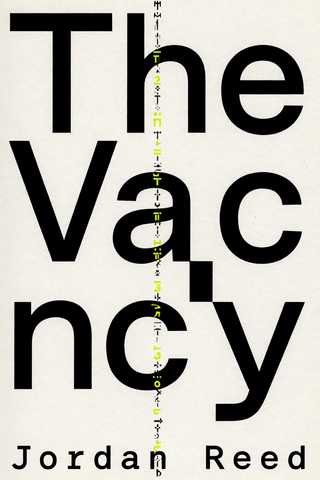
Read a preview
Chapter 1
Chapter 1: The Numbers
The algae tanks stretched before Owen Prescott like a cathedral of green glass, their bioluminescent glow painting shifting patterns across his weathered face. He had walked these corridors ten thousand times in his forty-three years, first as a child holding his mother's hand, then as an apprentice learning the sacred mathematics of survival, and now as Chief Resource Officer of the Meridian.
He pressed his palm against Tank Seventeen, feeling the warmth of the photosynthetic reaction humming beneath the surface. His grandmother had helped install these tanks, back when the ship was still tethered to Earth's orbital platforms. She had died believing her work would sustain thirteen generations of humanity across the void between stars.
She had been wrong.
Owen pulled his tablet from his coat pocket and scrolled through the audit results for the seventh time, hoping the numbers would rearrange themselves into something survivable. They refused. The columns remained fixed, implacable, a death sentence written in decimal points.
The error was elegant in its simplicity. Fifty-three years ago, before Owen's birth, a calibration team had adjusted the algae growth parameters to compensate for a minor hull breach that had introduced trace contaminants into the water supply. The adjustment had worked perfectly—the algae had adapted, thrived even. But the team had failed to account for the cascading effect on oxygen production rates. A two percent reduction, compounding annually.
Two percent seemed like nothing. Two percent was a rounding error, a statistical hiccup. But two percent over fifty years became forty-seven percent. And forty-seven percent meant the Meridian's air would run out sixty years before they reached their destination.
Owen closed his eyes and performed the calculation again, using different assumptions. Perhaps the population would decline naturally. Perhaps they could reduce physical activity, slow metabolisms, find some way to stretch each breath further. The numbers shifted slightly but the conclusion remained unchanged. They were all going to die.
Not today. Not tomorrow. Not even in his lifetime, most likely. But the children being born in the maternity wards three decks above—they would suffocate in their old age, gasping for air that no longer existed, watching their grandchildren turn blue.
"Chief Prescott?"
Owen's eyes snapped open. Junior Technician Yael Hoffman stood at the entrance to the tank farm, her maintenance uniform streaked with the greenish residue of algae work. She was twenty-two, born on the ship like everyone else under sixty, and she had the particular optimism of someone who had never known anything but the Meridian's metal walls.
"Yael." Owen forced his voice into steadiness. "Status report?"
"Tanks Forty through Forty-Seven are showing optimal yields. We might even exceed quota this quarter." She smiled, proud of her work. "My grandmother always said the farms were the heart of the ship. I'm starting to understand what she meant."
Owen nodded, not trusting himself to speak. Yael's grandmother had been on the calibration team. She had died twelve years ago, peacefully, in her sleep, never knowing what she had done.
"That's excellent news," Owen managed. "Keep up the good work."
Yael's smile widened, and she disappeared back into the maze of pipes and tanks that kept the Meridian breathing. Owen watched her go, then looked down at his tablet again.
He could tell Captain Oyelaran. That was the protocol—any threat to ship survival was to be reported immediately to the command structure. The captain would convene the council, the council would debate, and within hours the entire ship would know they were dying.
Owen imagined the panic. Thirteen thousand people trapped in a metal cylinder hurtling through the void, suddenly aware that their children's children would never see the promised world. There would be riots. Suicides. Murder, probably, as people fought over resources that wouldn't matter in the end.
Or perhaps worse—there would be solutions. The council would propose terrible things, necessary things, and the ship would tear itself apart deciding which terrible thing was least terrible.
Owen locked his tablet and slipped it back into his coat. He needed time. Time to verify, time to think, time to find an alternative that didn't require telling anyone the truth.
He walked the long corridor back to his quarters, passing the hydroponics bays where vegetables grew under artificial sun, the water reclamation center where every drop was precious, the machine shops where engineers kept two-hundred-year-old equipment running through sheer stubbornness. The Meridian was a miracle of human engineering, a closed ecosystem hurtling through the cosmos at a significant fraction of light speed. It had survived asteroid impacts, solar flares, and three attempted mutinies. It had carried humanity's hope for two centuries.
And it was dying, slowly, invisibly, one breath at a time.
Owen reached his quarters and sealed the door behind him. The room was small—eight square meters, standard for single occupancy—but he had made it his own over the years. His mother's paintings hung on the walls, abstract swirls of color that she claimed represented the world they were traveling toward. His father's engineering manuals filled a small shelf, their pages yellowed but still legible. A photograph of his sister, who had died in a machinery accident when Owen was nineteen, sat on his desk.
He sat down heavily and stared at the photograph. Miriam had been the optimist in the family, always talking about what they would do when they reached the new world. She had wanted to be a farmer, to feel real soil between her fingers instead of the nutrient gel they used in the hydroponics bays.
She would never have made it anyway, Owen realized. Even if she had lived, she would have died gasping for air in her eighties, watching the oxygen meters drop toward zero.
He pulled out his tablet and began to work.
The first step was verification. Owen spent the next six hours running the numbers through every model he could construct, using historical data going back to the ship's launch. He accounted for population fluctuations, equipment degradation, solar radiation effects on algae productivity. He even factored in the possibility that his instruments were malfunctioning, that the readings he was seeing were artifacts of sensor decay rather than actual oxygen deficits.
Every model produced the same result. The Meridian would run out of breathable air in one hundred and forty years. Their destination was two hundred years away.
Owen stared at the ceiling of his quarters, watching the faint flicker of the light panels as they cycled through their programmed day-night simulation. Somewhere in the ship's vast databases, there had to be a solution. The original designers had planned for everything—hull breaches, engine failures, disease outbreaks, even psychological collapse. They had built redundancy into every system, backup plans for every contingency.
But they hadn't planned for this. They hadn't imagined that their descendants would make a simple mathematical error and not catch it for half a century.
Owen began searching the archives.
The Meridian's computer systems held the accumulated knowledge of human civilization—every scientific paper, every engineering manual, every philosophical treatise that the founders had deemed worth preserving. Owen had spent his entire career working with a tiny fraction of this data, the resource management protocols and atmospheric chemistry models that governed his department. Now he dove deeper, into the theoretical physics papers and speculative biology research that had been locked away since the voyage began.
He found proposals for faster-than-light travel that had been abandoned as impossible. He found designs for artificial photosynthesis that required materials the ship didn't carry. He found a detailed plan for converting the entire population to a form of suspended animation that would reduce oxygen consumption to near zero—but the technology required had never been developed beyond the theoretical stage.
And then, buried in a folder labeled "CONTINGENCY PROTOCOLS - EXTREME," he found Option Seventeen.
The document was sparse, clinical, written in the detached language of engineers who had hoped their work would never be needed. It outlined a procedure for "population optimization in resource-critical scenarios." Owen read it three times before he fully understood what it was proposing.
Lottery-based euthanasia. Random selection of passengers to be painlessly terminated, their bodies processed for nutrients and their quarters repurposed for resource production. The math was precise: for every four hundred passengers eliminated, the ship would gain approximately fifteen years of oxygen supply.
Owen closed the document and sat in silence for a long time.
The founders had known. They had known that something like this might happen, and they had prepared a solution. A monstrous solution, but a solution nonetheless. Four hundred deaths to buy fifteen years. Sixteen hundred deaths to buy sixty years. The numbers worked out perfectly.
Owen thought about Yael Hoffman, smiling in the algae tanks. He thought about the children in the maternity wards, the couples planning their futures, the elderly passengers who had spent their entire lives believing they were part of something noble. He thought about choosing four hundred of them by lottery and watching them die.
He couldn't do it. He couldn't even suggest it.
But he also couldn't do nothing. The air was running out, one breath at a time, and every day he delayed was a day closer to catastrophe.
Owen stood up, walked to his small washbasin, and splashed cold water on his face. In the mirror, he saw a man who had aged ten years in a single day. His brown hair was shot through with gray he hadn't noticed before. The lines around his eyes had deepened into crevasses. He looked like his father had looked, in the months before the cancer took him.
He dried his face and made a decision.
He would not tell anyone. Not yet. He would find another way, some solution that didn't require choosing who lived and who died. He would buy time however he could, stretching the resources, reducing consumption, doing whatever was necessary to keep the ship alive while he searched for an answer.
And if he couldn't find one—if the only options were the terrible ones—then he would face that choice when it came. But not today. Not while there was still hope, however faint.
Owen Prescott sealed his quarters, locked his tablet, and began to plan.