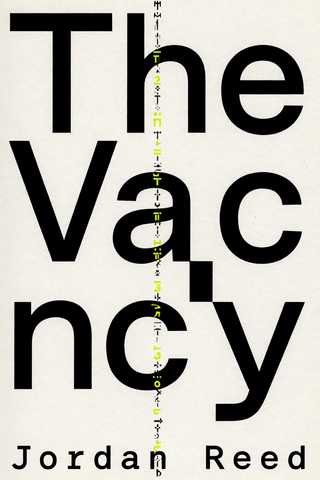
Read a preview
Chapter 1
Chapter 1: The Architecture of Delight
The restaurant didn't exist yet, but Neil Lindemann could already taste it.
He stood in the center of an empty warehouse on Velden's eastern ridge, eyes closed, letting the raw dimensions of the space settle into his body. Fourteen meters to the ceiling. Thirty-two meters deep. The concrete floor still held the chill of last night's rain, seeping through his shoes. He breathed in: dust, old sealant, the faint mineral tang of the river three blocks south.
None of that would survive. In six weeks this shell would become Terroir, the most ambitious dining experience his firm had ever attempted. Every surface would be engineered to deliver pleasure at frequencies most people couldn't consciously detect—the particular warmth of the lighting calibrated to dilate pupils by exactly the right fraction, the acoustics shaped so that conversation felt effortless, the textures of every chair and tablecloth tuned to trigger micro-cascades of serotonin and oxytocin. The food itself was almost secondary. What mattered was the architecture of delight.
His implant pulsed gently behind his left ear—a soft, warm throb that meant his Joy metrics were climbing. Even the anticipation of designing pleasure registered as pleasure itself. A neat trick of neurochemistry that the implant's algorithms had learned to amplify over the years.
"You're doing that thing again," said Maja Solberg from the doorway.
Neil opened his eyes. His business partner leaned against the warehouse's steel frame, arms crossed, a tablet dangling loosely from one hand. She wore her dark hair pulled back in the severe knot she favored when she was working, and her expression carried its usual blend of amusement and impatience—the look of someone who had known him for fifteen years and still found him slightly ridiculous.
"What thing?" he asked.
"The standing-in-an-empty-room-with-your-eyes-closed thing. The pretending-you-can-feel-the-space thing."
"I can feel the space."
"You can feel your own projections onto the space. There's a difference." She pushed off the doorframe and walked toward him, her footsteps echoing in the emptiness. "I've got the preliminary Joy-yield projections from the modeling team. Want the good news or the very good news?"
"Very good news first."
"Peak-hour diners are projected to generate an average of fourteen Joys per visit. That's nearly double what Lumière pulls, and they've been the top-rated sensory restaurant in the district for three years."
"And the good news?"
Maja held up the tablet, turning it so he could see the cascading graphs. "The ambient design alone—before anyone takes a single bite—accounts for six of those fourteen Joys. Your obsessive fiddling with light wavelengths is actually paying off."
Neil took the tablet, scrolling through the data. Each projected Joy unit represented a verified moment of pleasure, logged by the diners' implants and transmitted to the central Joy Exchange. Those units would flow to the diners' personal accounts, increasing their social standing and purchasing power. A percentage would flow to Terroir as the generating venue. And a percentage of that would flow to Lindemann-Solberg Design as the experience architects.
It was an elegant system, and Neil had spent his entire career learning to play it like an instrument.
"The texture gradient in the entryway needs adjustment," he said, still studying the numbers. "We're losing half a Joy in the transition from exterior to interior. People are hitting a sensory gap."
"I'll flag it for the haptics team."
"And the scent profile in the eastern dining room—"
"Neil." Maja plucked the tablet from his hands. "It's good. The numbers are good. You're allowed to enjoy the moment without immediately trying to optimize it."
He smiled, and his implant registered the smile, and the smile deepened fractionally in response to the implant's gentle reinforcement. This was so ordinary he didn't notice it, the way a person doesn't notice their own breathing.
"Fine," he said. "It's good. Let's celebrate. Dinner at the Kline Terrace?"
"Can't. I'm meeting Petter for the concert series at Holm Park." Petter was her husband, a genial man who worked in civic Joy optimization for the municipal government. "Tomorrow, though. We'll do a proper toast when the contracts are signed."
"Tomorrow," Neil agreed.
They walked out of the warehouse together into the late afternoon light of Velden. The city spread before them in gentle tiers, descending toward the river—clean lines of glass and living walls, pedestrian bridges strung with bioluminescent cables that would glow amber and rose as dusk fell. Somewhere below, a public Joy garden was hosting an open session; Neil could hear the distant, carefully modulated sound of laughter drifting up like birdsong.
Velden had been designed, like everything else, for maximum pleasure. The streets curved in ways that created pleasant surprises around every corner. The buildings were spaced to let light fall in patterns that triggered aesthetic satisfaction. Even the weather was managed—not controlled, exactly, but nudged through atmospheric engineering so that rain fell mostly at night and sunshine arrived in the precise golden-hour quality that human eyes found most beautiful.
It was, by every measurable standard, the happiest city in the world.
Neil and Maja parted at the transit hub. She squeezed his arm—a quick, warm gesture that barely registered on his implant but that he would remember later with a vividness that surprised him.
"Tomorrow," she said again.
"Tomorrow."
He watched her step onto the eastbound platform, her dark hair catching the light, and then she was gone.
---
Neil's apartment occupied the upper floor of a converted textile mill in the Ostervik Quarter, a neighborhood popular with experience designers and sensory artists. The building's exterior was deliberately understated—raw brick, industrial windows—but the interior had been crafted with the obsessive attention to pleasure that characterized everything in his life.
The lighting shifted as he entered, reading his implant data and adjusting to complement his current emotional state. Warm amber tones, slightly lower than standard, because his metrics showed he was in a reflective mood after a productive day. The air carried a faint scent of cedar and rain-washed stone—his default evening profile, designed to ease the transition from work to rest.
He poured himself a glass of wine from the temperature-controlled cabinet, settled into the chair by the window, and looked out at the city.
From here he could see the Joy Exchange tower, its facade alive with shifting colors that represented the city's aggregate emotional state in real time. Tonight it glowed a deep, satisfied gold—the color of a population at ease. Occasionally a ripple of brighter yellow would pulse through, indicating a spike in collective pleasure somewhere: a concert reaching its crescendo, a neighborhood celebration, a particularly successful dining experience.
Neil had designed some of those spikes. It was, he reflected, a good life.
His implant agreed. The warm pulse behind his ear confirmed what his conscious mind already knew: he was content. His Joy balance was healthy—well above the median for his age and profession. His social connections were strong, his work was fulfilling, and his body was in excellent health thanks to the same biomedical infrastructure that had eliminated disease and most forms of physical suffering from Velden two generations ago.
He thought about Terroir, about the way the light would fall across the tables, about the precise moment when a diner would take their first bite and feel the entire room conspire to make that bite transcendent. He thought about the Joy yield projections, the elegant cascade of pleasure converted to currency converted to social standing.
He thought about none of the things he couldn't name—the faint, formless dissatisfactions that occasionally surfaced like bubbles in still water and popped before he could examine them. His implant was very good at managing those.
The wine was excellent. The evening was beautiful. The city hummed with manufactured contentment.
Neil Lindemann went to bed happy, as he did every night, and dreamed of nothing at all.
---
The next morning, he arrived at the Lindemann-Solberg offices early, as was his habit. The firm occupied a bright, open space on the fourth floor of a building in the Centrum district, surrounded by other creative enterprises—sensory composers, ambient architects, Joy consultants. The office itself was a showpiece: every surface, every angle, every scent and sound had been designed to demonstrate what the firm could do. Visitors often reported gaining two or three Joys just from walking through the front door.
Neil's assistant, a young woman named Tilde Foss, met him with coffee and his morning briefing. Tilde was efficient, cheerful, and possessed an implant score that consistently ranked in the top five percent of the city. She was, in the vocabulary of Velden's social economy, a "high-yield personality"—someone whose mere presence tended to elevate the Joy scores of those around her.
"The Kline Terrace account confirmed for next quarter," Tilde said, scrolling through her tablet as she followed Neil to his workspace. "And the municipal parks commission wants a proposal for the riverside promenade redesign."
"Timeline?"
"They want concepts by the end of the month. Maja said she'd take point on the initial survey."
"Good. She's better with municipal clients anyway. They find me too—"
"Intense," Tilde supplied.
"I was going to say 'detail-oriented.'"
"That's what intense people always say." Tilde smiled, and the office's ambient system registered the micro-interaction and logged a fraction of a Joy for both of them. "Also, your ten o'clock moved to eleven. The sensory team needs more time with the Terroir scent profiles."
Neil settled into his work. The morning passed in the familiar rhythm of design reviews, client communications, and the deep, absorbing pleasure of solving aesthetic problems. At eleven, he met with the sensory team—four specialists who spent their days calibrating invisible pleasures—and they argued productively about whether the Terroir entryway should smell of fresh bread or warm stone. (Neil favored stone. It was subtler, more intriguing, and the data showed it produced a longer-lasting Joy response.)
At noon, Maja still hadn't arrived.
This was unusual. Maja was punctual to the point of compulsion—a trait she attributed to her upbringing in Velden's northern districts, where civic orderliness was practically a religion. Neil checked his messages. Nothing. He pinged her implant through the office's internal network. No response.
A small wrinkle of concern formed in his mind. His implant registered it as a minor negative fluctuation and gently smoothed it with a micro-pulse of reassurance.
At twelve-thirty, Tilde appeared in his doorway. Her face held an expression Neil had never seen on her before—something complicated and unfamiliar, as if her features were trying to arrange themselves into a configuration they'd never practiced.
"Neil," she said. "There's a message from the municipal safety office."
The wrinkle of concern returned, sharper this time. His implant pulsed again, trying to soften it.
"What message?"
Tilde's mouth opened and closed. She looked down at her tablet, then back up at him.
"There was an accident," she said. "On the eastern transit line. Last night. A structural failure in one of the elevated sections." She paused. "Maja was on the platform."
The world tilted.
"Is she—" Neil started, but he already knew. He could read it in the strange, struggling expression on Tilde's face—the look of someone whose emotional vocabulary didn't include the word she needed.
"She didn't survive," Tilde said. "I'm sorry, Neil. I'm so sorry."
His implant fired. A warm, soothing pulse, stronger than usual, flooded through him—the neurological equivalent of a hand on his shoulder, a voice saying everything is fine, everything is fine, everything is fine.
But everything was not fine. Maja was dead.
Neil sat down slowly in his chair. The office's ambient system, detecting his metric drop, adjusted the lighting to a warmer hue and released a calming scent profile. Somewhere in the building's management algorithms, his sudden emotional dip was being flagged and compensated for, the way a thermostat responds to a draft.
None of it touched him. Beneath the implant's warm insistence that he was okay, something vast and dark was opening up, something the implant had no protocol for.
Maja was dead. His partner of fifteen years. The person who had built this firm with him, who had argued with him about scent profiles and light wavelengths, who had squeezed his arm yesterday and said "tomorrow."
There would be no tomorrow.
Neil Lindemann sat in his optimized office, surrounded by engineered pleasure, and felt something break.