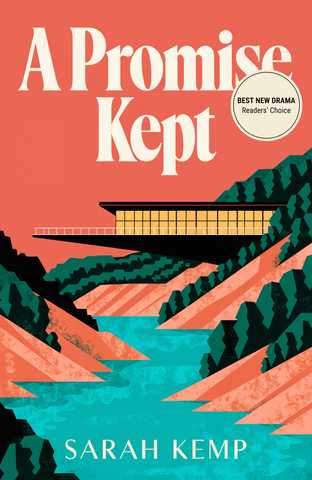
Read a preview
Chapter 1
Chapter One: The Return
They came into Cloonbeg on the last Friday in October, in rain that had been falling since Athlone.
Tom Cribbin drove the way he had driven all his life, both hands on the wheel, sitting a little too far forward, as if the car needed encouragement. Beside him Norah held a bag of groceries on her lap because there was no room left in the boot. Behind them, packed to the roof lining, were forty-one years of a life in Galway city: books, blankets, a breadmaker, two framed photographs of Sheila at her graduation, a box of Tom's school papers he had promised to throw out and had not thrown out.
"That's Coen's," Tom said, when they passed a bungalow with a wall of concrete blocks stacked in the front garden. "Mattie Coen. He's the vet now. His father was the vet before him."
"You've told me."
"Did I?"
"Twice since Ballyroan."
He smiled and said nothing. He had been talking since Galway because if he stopped talking he would have to notice what his chest was doing, which was nothing at all, which was the point, and which he could not stop noticing.
Six weeks earlier he had been standing in front of a fifth-year class with a piece of chalk in his hand when the room had gone strange, tilted somehow, and the chalk had ended up on the floor. He remembered a boy named Dwyer saying, very politely, "Are you all right, sir?" and Tom saying that he was, and then sitting down on the edge of the desk. The hospital in Galway kept him four days. A minor event, the young cardiologist said. Not a heart attack. A warning shot. Tom had liked that phrase and hated it. He was sixty-two. The school had a scheme for early retirement, and there was a form, and he signed it on a Tuesday afternoon while Norah sat in the corridor outside, and by the time he came out with the form signed he had already decided about Cloonbeg without knowing he had decided.
The road narrowed. Grass came up the middle of it in a green stripe. Whitethorn hedges leaned in from both sides, stripped nearly bare, holding the last of their haws like beads.
"There," he said.
The house stood side-on to the road behind a hedge that had grown to twice the height it should be. Two storeys, slate roof, four windows above and two below with the door between them, the whole thing washed a dirty cream that had been white when his mother was alive. A galvanised gate hung off one hinge. Beyond the gable, in the yard, he could see the long grey shape of Brian's mobile home, and past that the sheds, and past the sheds the land going down and away in the rain toward the low ground and the lake he could not see from here.
He pulled in and stopped the engine and neither of them moved.
"Well," Norah said.
"It needs work."
"It needs a bonfire," she said. "But it will do."
She got out first. She was sixty-one, a small square-shouldered woman with grey hair cut short because she had no patience for anything else, and she went at the gate with both hands and got it open by lifting it, and Tom thought, as he had thought for four decades, that she was braver than he was in every practical way there was.
Brian came out of the shed as they crossed the yard.
He was in a boiler suit with the arms tied around his waist and a jumper under it that had once been navy. Fifty-seven years of age and he looked both older and harder than that, brown at the neck and wrists, grey-white where the collar had covered him, with their father's long face and their mother's small light-coloured eyes. He had a length of blue plastic pipe in one hand.
"You got here," Brian said.
"We did."
"Rain's after coming in on you the whole way."
"From Athlone," Tom said.
Brian nodded as though this confirmed something he had suspected about Athlone. He turned to Norah. "You're welcome, Norah."
"Thanks, Brian."
"There's a key in the door. I put a heater in the back room the last two days, but there's damp in the front. There'd be damp in it no matter what you'd do." He shifted the pipe to his other hand. "I have a heifer with a bad foot. I'll come up after."
And he went. Not rudely, not unkindly. He went the way a man goes who has work, and the work was true, and still Tom stood in the yard in the rain and felt the old flat weight of it settle on him, the thing that had been there between them since they were young men and that neither of them had ever once named out loud.
Norah put the groceries into his arms.
"Come on," she said.
The hall smelled of soot and old wallpaper paste. The lino had lifted in the corner by the stairs. In the kitchen the range sat cold and enormous, black as a coffin, with a rust bloom down one side, and above it on the wall the same picture that had been there since 1968: a Sacred Heart with a small red bulb that had stopped working when Tom was doing his Leaving Certificate.
He stood in the middle of the floor and could not, for a moment, be sure what year it was.
That was the strange thing. That was what he had not told the cardiologist or Norah or anyone. Since the day in the classroom, time had loosened in him. He would be doing something ordinary — filling a kettle, tying a lace — and he would be twelve years old, and his mother would be at the table with flour to the elbows, and Brian would be under the table with a tin lorry, and their father would be at the door saying that the calf was down in the drain again. Not a dream. Nothing so soft as a dream. More like walking into a room you had forgotten was in the house.
"The floor's sound," Norah said, stamping her heel. "That's something. Where do the mice come in?"
"Under the back door."
"Right." She was already writing on the back of a receipt. "Range man. Chimney. A carpenter for that door. Is the water off the well or the scheme?"
"The well."
"Then a plumber to look at the pump, because that noise it's making isn't a good noise." She looked up. "Tom."
"What?"
"Sit down for a minute."
"I'm grand."
"I know you're grand. Sit down anyway, so I can stop looking at you."
He sat on the sill of the window with his back to the yard, and she went and looked into the pantry, and he heard her say, mildly, "Sweet God," and then the sound of things being lifted out and set on the floor.
They had talked about it, of course. He had put it to her one evening in September, in the kitchen of the house in Galway with the traffic going by outside, and he had made it sound reasonable: the land was half his, the house was empty, Brian was alone out there, they'd be mad to pay rates on a city house on a teacher's pension when there was thirty acres of Cribbin ground sitting in the middle of the country. Norah had listened without interrupting, which was how he knew she was taking it seriously. Then she had said: "And you'll be able to stop talking about it. That'll be a mercy for us both." She had grown up on a farm in south Mayo and knew what a wet farm was and what a hard brother was. She had not said no. He understood, sitting on the windowsill with his hands on his knees, that he had never actually asked her to say yes.
At half six Brian came up to the house.
He stood inside the door and would not sit. Norah had the two-ring gas thing going on the table and made tea in a saucepan, and Brian took the mug and held it and did not drink it.
"Ye'll want a plumber," he said.
"Norah has one written down," Tom said.
"Barrett out of Ballyroan. He's dear but he'd come." A silence. "The range is no good. That's twenty year going."
"We'll get a new one."
"You will." Brian looked at the floor, then out at the yard, then, briefly, at his brother. "You're stopping, so."
The question in it was so well hidden that a stranger would have missed it. Tom did not miss it. Something in him wanted to say: *Ask me straight. Ask me straight, for once in your life, and I'll tell you straight.*
"I am," he said.
Brian nodded and set the mug down untouched on the table.
"There's a drain blocked in the Long Field," he said. "If it's fine tomorrow I'll show you."
Then he was gone across the yard, and a minute later the light came on behind the small windows of the mobile home, low and yellow, and stayed on.
Norah closed the back door and leaned against it.
"He put a heater in the back room for two days," she said. "Did you notice that?"
"I did."
"That took thought. That's not nothing."
"No," Tom said. "It's not nothing."
They slept that first night in the back bedroom, under three blankets and a coat, with the smell of a paraffin heater in the room and rain going along the slates over their heads. Norah was asleep in ten minutes. Tom lay awake and listened.
He had forgotten how loud it was. In the city there had been traffic and voices and the neighbour's television, and all of it had run together into one grey noise you could sleep through. Here every sound stood on its own and demanded to be identified. Wind in the sycamore at the gable. A gutter dripping onto the flag outside the back door — a slow, deliberate drip, like a clock with a bad heart. Cattle somewhere below coughing. And under all of it, if you held still, nothing. A depth of nothing that went out for miles.
At some point he got up and stood at the window in his shirt.
The rain had stopped. There was a moon behind thin cloud, enough to see by, and the land lay out below the house in long soft shapes, the hedges black, the fields the colour of nothing, going down to the flat gleam of water two fields away where the lake began. In the mobile home the light was still on.
His brother had been out there under that low ceiling for fifteen years, since the winter their mother died. Tom had come down for the funeral and gone home four days after. He had come at Christmases, some Christmases, for one night. He had telephoned. He had, he thought, done what a man does.
He stood at the window until the light in the mobile home went out, and then a little longer, and then he went back to bed and lay with his eyes open beside his sleeping wife in the house where he was born.