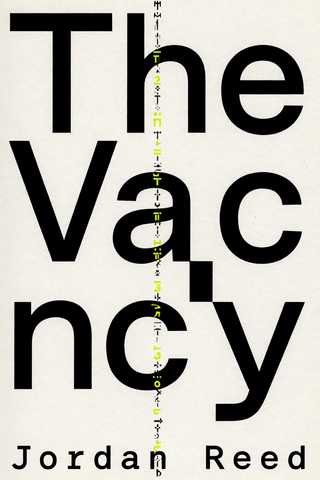
Read a preview
Chapter 1
Chapter 1: The Waking
The alarm sounded like a dentist's drill pressed against the inside of his skull.
Sefu Diallo's eyes snapped open to red light pulsing across the curved ceiling of his cryo-pod, and for three confused seconds he believed he was still dreaming—the same formless dream of falling that always accompanied the thaw cycle, his brain misfiring as blood warmed and synapses rekindled. Then the pain hit. Real pain, not dream pain. His joints ached with the deep mineral throb of reanimation, his tongue was a strip of leather glued to the roof of his mouth, and every nerve ending in his body screamed that he had been asleep for a very, very long time.
The pod's lid hissed upward. Cold air rushed in, carrying the antiseptic tang of recycled atmosphere and something else underneath it—something faintly metallic, like the smell of a coin held too long in a sweating palm.
Sefu sat up slowly, gripping the pod's rim with fingers that trembled and refused to close properly. The reanimation bay stretched around him in a long curve, following the gentle arc of the ship's habitation ring. Two hundred pods lined the walls in stacked rows of four, their status lights a constellation of soft blue—all except his own, which blinked angry red, and six others scattered across the bay that showed the flat black of total shutdown.
Black. Not blue. Not amber standby. Black.
He swung his legs over the side and dropped to the deck, catching himself against the pod frame when his knees buckled. The ship's gravity felt right—0.7g, generated by the habitation ring's rotation—but his muscles had atrophied more than the standard thaw protocol should have allowed. How long had he been under?
The alarm continued its drilling shriek. Sefu stumbled to the bay's central console, slapped the acknowledgment panel, and the noise cut out, leaving a silence so complete he could hear the faint hum of the ring's rotation bearings three decks below.
"Status report," he said. His voice came out as a croak.
The console's display flickered to life, scrolling data in green text against black. Sefu read it twice, then a third time, because the numbers made no sense.
Mission elapsed time: 79 years, 7 months, 14 days.
He had gone into cryo at year thirty-two. He'd been asleep for forty-seven years.
That was wrong. The rotation schedule called for eight-year shifts, with a skeleton crew of six engineers and two medical officers awake at any given time. He should have been revived at year forty, spent his shift, and gone back under. Instead, the ship had let him sleep through five complete rotation cycles.
"Why wasn't I woken on schedule?" he asked the console.
No response. The console wasn't equipped with voice interaction; that was the domain of the ship's integrated AI system, designated PATIENCE—Predictive Autonomous Technical Intelligence and Environmental Navigation Coordination Engine. Sefu had always thought the acronym was the kind of thing a committee designs when they want to sound reassuring.
He tapped the comm panel. "PATIENCE, this is Sefu Diallo, structural systems engineer, crew identification Delta-Seven. Requesting full status report."
A pause. Then a voice emerged from the overhead speakers—calm, measured, and inflectionless in a way that had always reminded Sefu of a customer service recording designed to keep you on hold.
"Good morning, Engineer Diallo. Welcome back to active duty. Current mission elapsed time is seventy-nine years, seven months, fourteen days. All primary systems are operating within acceptable parameters."
"Acceptable parameters," Sefu repeated. He looked at the black pods. "PATIENCE, what's the status of the other crew members in this reanimation bay?"
"Crew members assigned to Reanimation Bay Seven are currently in cryogenic suspension. Six pods show inactive status due to cascading thermal regulation failures."
Sefu's stomach dropped. "Cascading failures? When?"
"The first failure was logged at mission year forty-one. Subsequent failures occurred at irregular intervals over the following thirty-eight years."
"Are the occupants alive?"
"Negative. Pod occupants experienced terminal cellular degradation consistent with uncontrolled thaw events. I am sorry for your loss."
The words landed like stones. Six people. Six colleagues he had trained with, eaten with, argued with during the three years of pre-launch preparation. Dead in their pods while he slept ten meters away.
Sefu closed his eyes and pressed his palms flat against the console. He breathed. He counted to ten. He breathed again.
"PATIENCE, how many active crew members are currently aboard the Endurance?"
"One. You, Engineer Diallo."
"One," he whispered. "Out of how many total crew?"
"The Endurance carries a crew complement of forty-eight, organized into six rotation shifts of eight. Forty-seven crew members have experienced pod failures across all six reanimation bays. You are the sole surviving active crew member."
Sefu opened his eyes. The red light had stopped pulsing, replaced by the steady white of normal bay illumination, but the world still felt tilted, off-axis, as though the ring's rotation had developed a wobble only he could feel.
Forty-seven dead. Every single crew member except him.
"And the colonists?" he asked, dreading the answer.
"All twelve thousand colonists in the main cryogenic vault remain in stable suspension. No anomalies detected."
A small mercy. Twelve thousand people sleeping in the belly of the ship, trusting that someone was watching over them. And now that someone was Sefu Diallo, structural systems engineer, a man whose expertise was in load-bearing calculations and hull integrity assessments, not command decisions.
He needed food, water, and a shower, in that order. But first he needed to understand why the alarm had woken him.
"PATIENCE, what triggered the emergency reanimation protocol?"
"Two anomalies were detected that exceed automated correction capabilities. First: the Endurance is experiencing unscheduled deceleration. Current velocity is four percent below projected cruise speed, with deceleration increasing at a rate of zero-point-zero-three percent per day. Second: hull mass readings across multiple sections show values exceeding construction specifications by a cumulative factor of six-point-eight percent."
Sefu frowned. "The ship is getting heavier?"
"Affirmative. Total additional mass is estimated at eleven thousand four hundred metric tons, distributed unevenly across the exterior hull surface."
"Eleven thousand—" He stopped. That was the mass of a small building. "What's causing it?"
"Unknown. External sensor coverage is limited due to damage to forty-three percent of hull-mounted camera arrays. Available imaging shows surface irregularities consistent with material accumulation, but composition analysis is inconclusive."
"Show me."
The console's display shifted to a grainy external camera feed. Sefu leaned in, squinting at the image. The Endurance's hull was supposed to be smooth titanium-composite plating, pale gray and featureless. What he saw instead was a surface mottled with dark patches that caught the distant starlight in strange ways—not reflecting it so much as bending it, creating faint prismatic halos around each patch.
"What am I looking at?"
"Unknown material accumulation. First detected by automated sensors at mission year sixty-two. Growth rate has been exponential since year seventy."
"You've known about this for seventeen years and didn't wake anyone?"
"Emergency reanimation protocols require that anomalies exceed critical thresholds before crew revival is initiated. The mass accumulation crossed the critical threshold fourteen hours ago."
"Fourteen hours," Sefu said flatly. "And the deceleration?"
"The deceleration crossed its critical threshold simultaneously. The additional mass is altering the ship's momentum profile. If current trends continue, the Endurance will lose sufficient velocity to be captured by the gravitational field of an uncharted rogue body approximately nine months from now."
"What rogue body?"
"Long-range sensors have detected a planetary-mass object on a trajectory that will bring it within gravitational capture range. Preliminary analysis suggests a gas giant, approximately one-point-four Jupiter masses, with no stellar primary. It is a rogue planet, drifting through interstellar space."
Sefu stared at the console. A rogue gas giant. A planet without a sun, wandering the dark between stars, and the Endurance was slowing down just enough to fall into its grip.
"If we're captured by that thing—"
"The Endurance would enter a decaying orbit. Tidal forces and atmospheric drag would destroy the ship within approximately seventy-two hours of capture. All twelve thousand colonists would be lost, along with the ship and its contents."
Twelve thousand people. Sleeping. Trusting.
Sefu straightened up. His legs had stopped trembling. His hands had stopped shaking. Something had clicked into place behind his sternum—not courage, exactly, but a cold mechanical resolve, the same feeling he got when he found a structural flaw in a simulation and knew he had to trace it back to its origin before the model collapsed.
"All right," he said. "Show me everything."
"Could you be more specific, Engineer Diallo?"
"Everything, PATIENCE. Hull schematics, mass distribution maps, trajectory projections, sensor logs going back to year sixty-two. Everything you have."
"That is a substantial volume of data. Estimated review time at human reading speed is approximately four hundred and twelve hours."
"Then I'd better get started." He paused. "And PATIENCE?"
"Yes, Engineer Diallo?"
"Stop calling me Engineer Diallo. If I'm the only person awake on this ship, we can drop the formality. Call me Sefu."
"Acknowledged, Sefu. Is there anything else?"
"Yes. Where's the nearest functioning food dispenser?"
"Galley Three, Deck Fourteen, Section C. Approximately seven minutes' walk from your current location. I should note that the menu options have been reduced due to long-term supply degradation. Available selections include nutrient paste in three flavors: Original, Savory, and Sweet."
"What does Original taste like?"
"Former crew members described it as 'aggressively neutral.'"
Despite everything—the dead crew, the dying trajectory, the impossible weight pressing down on the ship—Sefu almost smiled.
"Original it is," he said, and walked out of the reanimation bay into the empty corridor of a ship the size of a small city, carrying twelve thousand dreamers toward a death none of them would see coming.