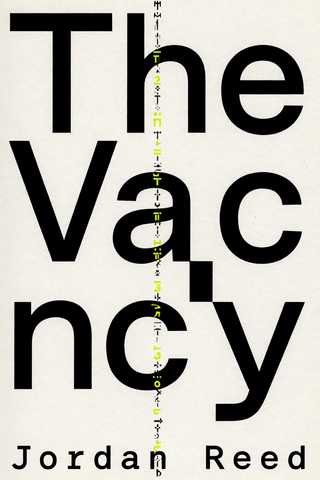
Read a preview
Chapter 1
Chapter 1: Signal Lost
The mules knew the road better than the maps did.
Tess Ryland walked alongside the lead wagon with one hand on the brake lever and her boots finding the cracks in Interstate 25 by muscle memory. The asphalt had been splitting for twenty years now, grass and sage pushing through like the earth was trying to forget what pavement was. In places the road had buckled into ridges that could snap an axle if you hit them wrong, and in other places it had simply vanished under drifts of sand and gravel carried down from the foothills by spring floods nobody controlled anymore.
The mules didn't care. They put their heads down and pulled.
Behind Tess, the Wireless Caravan stretched back along the highway in a loose column of eight wagons, each one loaded differently and each one essential. The first two carried the heavy equipment: vacuum tubes packed in sawdust, copper wire wound on wooden spools, hand-cranked generators with cast-iron frames, battery banks sealed in wax-coated boxes. The third wagon held the teaching supplies—printed diagrams on oilcloth, razor blades, pencil leads, coils of thin wire, magnets salvaged from dead hard drives, and jars of homemade solder paste that smelled like pine resin and burned tin. The fourth and fifth were provisions: dried elk, oats, salt, rendered tallow, a precious barrel of lamp oil, and enough water to get them to the next creek that hadn't gone alkaline.
The sixth wagon was Albie's.
Albie Noakes sat on the bench seat with his legs stretched out and his boots propped on a crate of salvaged capacitors, smoking a hand-rolled cigarette that smelled like burning hay because actual tobacco was three settlements away and cost more than ammunition. He was seventy years old. His hands were scarred from decades of soldering, his knuckles swollen with arthritis, and his hearing was shot in the left ear from years of wearing headphones cranked to maximum gain on bands that produced nothing but static.
He was the best radio operator Tess had ever known, and she had known most of them.
"Wind's shifting," Albie said without opening his eyes. "We'll want the tarps tight tonight."
Tess looked west. The sky over the Bighorns was the color of a bruise—purple and green and heavy. Summer storms in Wyoming came fast and hit hard, and a lightning strike on an ungrounded antenna mast could kill a person just as dead as it could kill a radio.
"I'll tell Mack," she said.
She found Mack Boone at the rear of the column, walking with the tail wagon and talking to the two outriders who ranged ahead and behind the caravan on horseback. Mack was fifty-three, built like a fence post—tall, narrow, hard to knock over—and he moved with the deliberate economy of a man who had learned a long time ago that wasted energy was wasted life.
Before Carrington II, he had been a FEMA logistics officer stationed in Denver. He had spent his career planning for disasters that were always theoretical until they weren't. When the flare hit, he had been the one to organize the first supply convoys out of the federal warehouses before the warehouses were looted or burned. When the convoys stopped running because there was no fuel and no roads that weren't blocked by dead vehicles, he had switched to mules. When the mules couldn't carry enough, he had built wagons.
When the wagons needed a purpose beyond hauling food, he had found Albie.
"Storm coming," Tess told him.
Mack looked at the sky the way he looked at everything—like it was a logistics problem. "How long?"
"Three hours. Maybe four."
"There's a rest stop two miles ahead. Roof's half gone but the walls are standing. We'll pull in there." He turned to the outriders. "Fen, ride ahead and check it. Look for squatters, look for water, look for anything that wants to eat a mule."
The outrider named Fen nodded and kicked his horse into a trot, disappearing around a bend where the highway curved through a cut in the sandstone.
Tess fell into step beside Mack. They walked in silence for a while, which was normal. Mack wasn't a talker. He believed in communication the way a priest believes in God—absolutely, completely, as the thing that separated order from chaos—but he practiced it with the economy of a man who understood that every word costs energy and energy is finite.
"Casper tomorrow?" Tess asked.
"Day after. There's a trading post at the old truck stop south of town. They've been asking for a receiver build for six months. We promised them."
"We promise everyone."
"And we deliver. Eventually." He glanced at her. "You all right?"
Tess didn't answer immediately. She was thirty-two years old. She had been twelve when the flare hit, old enough to remember everything and young enough that the memories had calcified into something harder than mere recollection. She remembered electricity. She remembered the internet. She remembered her mother's voice on the phone.
She remembered the last thing her mother ever said to her.
"I'm fine," she said.
Mack nodded. He didn't push. He never pushed. That was one of the things Tess respected about him—he understood that people carried weight, and asking them to set it down in the middle of the road didn't help anyone.
The caravan rolled on.
Behind them, in the seventh wagon, Zoe Rivas sat cross-legged on a bedroll surrounded by wire and components, building something she wasn't supposed to be building.
Zoe was sixteen. She had been born three years after the flare, in a settlement outside Sheridan that no longer existed. She had never heard recorded music. She had never seen a working screen. She had never held a phone or typed on a keyboard or watched a video or heard a voice that wasn't coming from a living throat or a scratchy radio speaker.
The world before was a story people told her, and she was tired of stories.
She wanted to make something.
The thing taking shape in her hands was a transmitter. Not a receiver—the caravan built receivers for settlements, crystal sets and simple regenerative circuits that could pull voices out of the air. But transmitters were different. Transmitters were power. Transmitters meant you could talk back.
Albie had been teaching her theory for two years. Inductance, capacitance, resonance, impedance matching, antenna design, propagation. She understood it the way she understood breathing—not as a set of rules but as a felt thing, a sense of how current wanted to move and where it wanted to go.
But Albie taught slowly. Albie believed in patience, in foundations, in making sure you understood why before you learned how. Albie had been born in a world where there was time for that.
Zoe had not.
She wound wire around a ferrite core she'd pulled from a dead car stereo, counting turns under her breath. The coil had to be precise. Too few turns and the frequency would be too high; too many and she'd be transmitting into the dirt. She wanted 7.2 megahertz, the old 40-meter amateur band, because that was where the caravan's relay network lived and because Albie had told her once, in a moment of unguarded honesty, that 40 meters was the band that carried farthest at night.
She wanted to be heard far away.
She wanted to be heard at all.
The wagon jolted over a crack in the road and she bit her tongue, tasting copper. She swore quietly, checked her coil for damage, and kept winding.
Above her, the sky was turning the color of old metal, and the wind was beginning to smell like rain.
---
They made the rest stop with an hour to spare.
Fen had been right—the roof was half gone, peeled back by some storm years ago, the steel beams twisted like pulled taffy. But the concrete block walls stood firm, and there was enough covered space to get the wagons and mules out of the weather. The parking lot had become a field of cracked concrete and wild grass, and someone had been here before them—there were fire rings made of stacked stone, and the remains of a lean-to built against the south wall.
The caravan crew moved with practiced efficiency. Mules were unhitched, watered from collapsible canvas buckets, and led under the remaining roof. Wagons were positioned to block the open sides against wind. Tarps were stretched and staked. The cooking crew—two brothers from Billings named Duff and Perry—got a fire going in one of the stone rings and started heating a pot of elk stew that had been simmering in a sealed crock all day.
Tess helped with the mules, then walked the perimeter. It was habit, drilled into her by Mack years ago. You always walked the perimeter. You looked for tracks, for signs of recent habitation, for anything that suggested you weren't alone. The world after Carrington II wasn't as dangerous as the movies had predicted—there were no roving gangs of leather-clad raiders, no cannibal tribes, no warlords on motorcycles. Mostly there were just people, tired and hungry and trying to figure out how to grow food and keep warm without any of the systems that had made those things easy.
But mostly wasn't always.
She found nothing. The lean-to was old, the fire rings cold. Whoever had been here was long gone.
The storm hit at dusk.
It came over the mountains like a wall, black clouds stacked a mile high, lightning stitching the horizon in white and purple. The wind arrived first, slamming into the rest stop hard enough to make the tarps snap like gunshots. Then the rain—not drops but sheets, horizontal and cold, turning the parking lot into a shallow lake in minutes.
The caravan huddled under the remaining roof and ate stew and listened to the thunder and didn't talk much. There was something about storms that made people quiet. Maybe it was the reminder that the sky could still do whatever it wanted and there wasn't a thing anyone could do about it.
After supper, Albie set up his station.
He did this every night, rain or shine, storm or calm. He had a receiver built into a wooden case the size of a bread box, with vacuum tubes glowing amber behind a mesh screen and a tuning dial that moved with the smoothness of something machined in a world that still had machine shops. He connected it to a wire antenna that he strung between the building and the nearest standing pole—in this case, a dead light standard at the edge of the parking lot—and he put on his headphones and he listened.
Most nights, he heard nothing.
The bands were mostly dead. Had been for twenty years. The ionosphere still worked—radio waves still bounced off the charged layers of the upper atmosphere and came back to earth hundreds or thousands of miles away—but there were so few transmitters left that the bands were vast empty oceans with tiny islands of signal scattered across them.
The caravan's own relay network was one of those islands. Settlements they had built receivers for would sometimes transmit back, using the simple spark-gap or crystal-oscillator transmitters the caravan taught them to build. The signals were weak, scratchy, and brief—battery power was precious—but they were there. A settlement checking in. A request for medical advice. A weather report. A birth announcement. A death.
Albie listened for all of it.
He also listened for things that shouldn't be there.
Tess was half asleep in her bedroll when she heard him say her name.
Not loud. Albie never spoke loud. He had a voice like old paper, dry and thin and precise, and he used it sparingly.
"Tess."
She opened her eyes. The storm had passed. The sky outside was clearing, stars appearing between ragged clouds, and the air smelled like wet sage and ozone.
"Tess, come here."
She got up and went to him. He was sitting at his station with his headphones around his neck, his face lit by the amber glow of the vacuum tubes. His expression was the one she had learned to pay attention to—not alarm, not excitement, but a particular focused stillness that meant he had found something that didn't fit.
"Listen," he said, and handed her the headphones.
She put them on.
Static. The hiss and crackle of an empty band, the sound of the ionosphere breathing. She was about to ask what she was supposed to be hearing when it came through.
A woman's voice.
Calm. Precise. Clinical.
"—particle flux at fourteen-point-seven, magnetometer deviation north-northwest at six degrees, solar wind velocity estimated four-twenty kilometers per second, probability of M-class event within seventy-two hours at thirty-one percent—"
Tess looked at Albie. He was watching her face.
The voice continued, reciting numbers and measurements with the cadence of someone reading from a script or a screen, each datum delivered with the same flat, unhurried precision. It was broadcasting on 14.070 megahertz—the old 20-meter digital band, a frequency that had been dead for two decades because the equipment needed to use it had been fried in the flare.
"—directional estimate bearing two-one-five from reference station, coronal mass velocity if ejected estimated at—"
The voice paused.
Then, in a tone that was no longer clinical—in a tone that was warm, and tired, and achingly familiar—it said:
"Sleep tight, Tessie. Somebody's listening."
The transmission ended.
Tess didn't move.
She sat with the headphones on, staring at the receiver's glowing tubes, and she didn't breathe for what felt like a very long time.
Albie's hand was on her shoulder.
"You heard it," he said.
"That's not possible."
"I know."
"That's my mother's voice."
"I know, Tess."
"She's dead. She's been dead for twenty years."
Albie didn't answer that. He just sat beside her in the amber light, his hand steady on her shoulder, and waited for her to breathe.