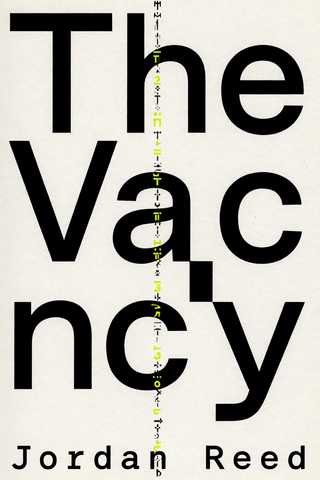
Read a preview
Chapter 1
Chapter 1: The Thinning
The alarm had been ringing for eleven minutes before anyone on Spoke Nine acknowledged it. Not because they couldn't hear it—the shrill, oscillating tone penetrated bulkheads, sleeping pods, even the hydroponic bays where Diadem residents spent their mornings coaxing engineered lettuce from mineral-depleted substrate. They didn't acknowledge it because alarms had become the Diadem's heartbeat. Three years of cascading system failures had trained an entire population to treat klaxons like birdsong: present, persistent, and beneath conscious notice.
Dr. Anjali Sorel noticed.
She stood in Observatory Four, her forehead nearly touching the curved viewport, watching Earth turn below. From this altitude the planet looked like something dreamed rather than remembered—a sphere of deep metallic greens and silvers, threaded with veins of iridescent blue where the Bloom's weather systems churned clouds it had manufactured from ocean vapor. No brown continents. No white ice caps. No amber deserts. Just the Bloom, pole to pole, a single organism wearing the planet like a skin.
Anjali pressed her fingertips against the cold glass. She was forty-three years old, lean and angular, with close-cropped black hair silvering at the temples and eyes that her colleagues described as "uncomfortably attentive." She had spent twenty-one of those years studying the entity below from the safety of orbit—cataloging its growth patterns, analyzing atmospheric samples scooped by high-altitude drones, building models of its metabolism that she revised every six months because the Bloom kept surprising her. She knew its moods by the color of its canopy. She could predict its storm cycles three days out. She had published more papers on its biology than anyone alive.
She had never touched it.
The alarm changed pitch—dropping from urgent to critical, a distinction most residents had stopped parsing. Anjali turned from the viewport and pulled up her wrist display. The notification was from Chief Ecologist Edwina Vogel's office, flagged with a red priority band she'd never seen used outside of drills.
BIOSPHERE ADVISORY: TRACE ELEMENT DEPLETION — CRITICAL THRESHOLD REACHED — ALL SECTION LEADS REPORT TO CENTRAL COMMONS — IMMEDIATE
Anjali's stomach tightened. She'd suspected this was coming. The numbers in her own atmospheric models had been trending wrong for two years—nitrogen fixation declining, phosphorus cycling slowing, a dozen micronutrient loops losing efficiency in ways that couldn't be patched with clever engineering. The Diadem was a closed system, and closed systems didn't last forever. They just lasted long enough for people to forget they were temporary.
She sealed her viewport, pulled on her station jacket, and walked toward the central transit tube. The corridor was narrow and scuffed, its walls a patchwork of original construction and centuries of repair—gleaming alloy panels beside dull polymer patches beside sections of exposed conduit that hummed with the ring's rotation. The Diadem had been built as a temporary refuge during the evacuation, designed to sustain fifty thousand people for a decade. It now held thirty-one thousand, and it was four hundred years old.
The transit tube carried her inward along the spoke, gravity shifting as she moved from the ring's outer edge toward the hub. She passed through Residential Block Fourteen, where families had hung fabric over their doorways to simulate the privacy the original architects hadn't thought to include. Children's drawings decorated the corridor walls—crude depictions of the Earth below, always green, always strange. One showed a stick figure standing in a forest of silver trees. Another showed the Diadem itself, a thin circle floating above a world that took up the entire page.
Anjali looked away from the drawings and kept walking.
Central Commons was the Diadem's largest open space—a cylindrical chamber at the junction of four spokes, with a transparent ceiling that offered a vertiginous view of the ring curving away in both directions. It served as town hall, market, and gathering place. Today it was packed. Anjali estimated three hundred people, mostly section leads and department heads, standing in concentric rings around the low stage at the chamber's center. The air smelled of recycled breath and anxiety.
Edwina Vogel stood at the stage's center, and she looked like she hadn't slept in days. The Chief Ecologist was a compact woman in her late fifties, her gray-streaked red hair pulled back in a severe knot, her station uniform wrinkled in a way that would have been unremarkable on anyone else but was alarming on Edwina, who treated personal grooming as a form of institutional discipline.
"Thank you for coming," Edwina said, and the room's murmur died. She didn't raise her voice. She never needed to. "I'll be direct, because the situation demands it and because I respect you enough not to soften what I'm about to say."
She activated the holographic display behind her. A three-dimensional model of the Diadem's biosphere appeared—the interconnected loops of gas exchange, water cycling, nutrient flow, and biological processing that kept thirty-one thousand people breathing. Anjali recognized it immediately. She'd helped build portions of the model herself.
Red indicators pulsed across the display like infected wounds.
"Our biosphere is failing," Edwina said. "Not degrading. Not declining. Failing. We have been recycling the same base materials for four centuries, and we have reached the point where critical trace elements—molybdenum, selenium, cobalt, manganese, and eleven others—have been lost to entropy faster than our systems can recover them. We cannot manufacture them. We cannot substitute for them. Without them, our nitrogen-fixing bacteria die. Without those bacteria, our oxygen production collapses. Without oxygen—" She paused. "You understand."
The silence in the chamber was absolute.
"How long?" someone asked from the crowd.
Edwina looked at the display. "My models give us eleven years before atmospheric oxygen drops below the threshold for sustained human survival. That's the optimistic projection, assuming no additional system failures."
Eleven years. Anjali felt the number settle into her chest like a stone. She'd expected bad news. She hadn't expected a death sentence with a date on it.
"The only known reservoir of these elements in accessible form," Edwina continued, "is the planetary surface."
The murmur that rose was not surprise. Everyone in the room had looked down at Earth and wondered. But wondering and planning were different things, separated by four centuries of fear and a planet-sized organism that had killed everything humanity sent to its surface.
"We are proposing a descent expedition," Edwina said. "Crewed. To the surface. To assess whether extraction is possible."
The murmur became a roar.
Anjali didn't join it. She stood very still, watching the red indicators pulse on the holographic display, and felt something she hadn't felt in years—a pull, gravitational and emotional, toward the green world below.
She was going down. She'd known it the moment she read the advisory. Twenty-one years of studying the Bloom from orbit, and now she was going to meet it.
The thought terrified her. The thought thrilled her. She couldn't tell the difference.
---
The expedition briefing took place two days later in a sealed conference room on Spoke Three, away from the public anxiety that had gripped the ring since Edwina's announcement. Anjali arrived early and found two people already seated at the oval table.
The first was Captain Joaquin Bravo, and she recognized him by his scars before she recognized his face. The left side of his jaw was a lattice of silver-white tissue where reconstructive grafts had healed imperfectly, and his left hand was prosthetic—a functional but unadorned mechanical replacement that he made no effort to disguise. He was forty-eight, broad-shouldered, with the rigid posture of someone who had learned to hold himself together through discipline because the alternative was falling apart.
Seven years ago, Joaquin had led the Diadem's last attempt to reach the surface—a three-person reconnaissance team in a shielded lander. The Bloom had dismantled the vehicle in under ninety seconds. Joaquin was the only survivor. He'd been pulled from the wreckage by a retrieval drone, missing a hand and most of his face, and he'd spent two years in medical recovery before returning to active duty. He never spoke about what he'd seen during those ninety seconds, and nobody asked.
He looked up when Anjali entered and gave her a nod that was precisely calibrated to convey acknowledgment without invitation.
The second person was younger—late twenties, with a narrow face, dark blonde hair cut asymmetrically, and eyes that moved constantly, cataloging the room. She had a tablet in front of her displaying what appeared to be pre-Bloom topographic maps overlaid with handwritten annotations.
"Birdie Larssen," the young woman said, extending a hand. "Archivist, Section Twelve. I handle the pre-Bloom historical records."
"Anjali Sorel. Xenobiology."
"I know who you are. I've read everything you've published on the Bloom. Your paper on its atmospheric modification patterns is the reason I requested assignment to this mission." Birdie's handshake was firm, her grip slightly too tight, the enthusiasm of someone who had been waiting for this moment longer than she wanted to admit. "I have maps. Real maps—satellite imagery from the evacuation era, overlaid with my best estimates of how the surface has changed. I think I can get us to stable ground."
"You think," Joaquin said from across the table. It wasn't a question.
"I think," Birdie agreed, unfazed. "Nobody's been down there in seven years, and the last attempt wasn't exactly a survey mission. I'm working with four-hundred-year-old data and orbital imaging that can't penetrate the canopy. 'I think' is the most honest thing anyone on this mission will say."
Joaquin studied her for a moment, then returned his attention to the viewport. Anjali decided she liked Birdie Larssen.
The door opened again, and two more figures entered. The first was a man Anjali knew by reputation: Orin Falkner, the Diadem's most experienced remote pilot. He was in his mid-thirties, wiry and restless, with the kind of face that looked perpetually amused by something he wasn't sharing. Orin flew the salvage drones that skimmed the upper atmosphere to collect samples and retrieve debris—work that required threading vehicles through the Bloom's weather systems at speeds that left no margin for error. He'd lost more drones than anyone in the program, and he'd also recovered more salvage than anyone in the program. The Diadem's logistics department considered him either their greatest asset or their most expensive liability, depending on the quarter.
"Falkner," Joaquin said.
"Captain." Orin dropped into a chair with the boneless ease of someone who spent most of his working life in zero gravity. "Heard you needed a pilot who's comfortable crashing."
"I need a pilot who doesn't crash."
"Then you've called the wrong guy. But I'm very good at crashing in survivable ways."
The final arrival was Councilor Sefas Mordant, and the room's temperature seemed to drop when he entered. Mordant was the Diadem Council's representative—a tall, patrician man in his early sixties with silver hair, pale eyes, and the practiced stillness of someone who had spent decades in political chambers where every gesture was parsed for weakness. He wore the Council's formal gray, impeccably pressed, and carried a sealed briefcase that he set on the table with deliberate care.
"Good morning," Mordant said, taking the chair at the head of the table as though it had been reserved for him. It hadn't. "I trust we're all aware of the stakes. The Council has authorized this expedition with full resource priority. I will be accompanying you as the Council's direct representative, with authority to make binding decisions on behalf of the Diadem."
Anjali glanced at Joaquin, who had gone very still.
"With respect, Councilor," Joaquin said, "the surface isn't a committee room. Authority down there will be determined by who can keep the team alive."
"Which is why you're leading the security element, Captain. I have no intention of interfering with operational decisions." Mordant smiled. It was a precise expression, deployed like a tool. "I'm here to ensure that whatever we find below serves the Diadem's interests. That is my mandate. I trust it aligns with yours."
The briefing lasted three hours. Edwina Vogel attended by video link, walking them through the biosphere projections in granular detail. The numbers were worse than Anjali had feared. The eleven-year estimate assumed no additional failures, but the Diadem's systems were interconnected in ways that made cascading breakdowns increasingly likely. A realistic timeline might be eight years. Or six. Or, if the wrong reactor coupling failed at the wrong moment, considerably less.
The mission parameters were simple in concept and terrifying in execution: descend to the surface, locate accessible deposits of the critical trace elements, assess whether extraction was feasible, and return with enough data to plan a full-scale mining operation. Duration: thirty days maximum. The lander was being retrofitted with every countermeasure the Diadem's engineers could devise—electromagnetic shielding, ablative hull coatings, broad-spectrum signal jammers designed to confuse the Bloom's communication networks.
"Will any of that actually work?" Orin asked.
Edwina hesitated. "We don't know. The Bloom's capabilities have evolved significantly since the last descent attempt. Our countermeasures are based on seven-year-old data."
"So we're guessing."
"We're extrapolating from incomplete information under existential time pressure. Yes, Mr. Falkner. We're guessing."
Orin nodded, apparently satisfied. "Just wanted to hear someone say it out loud."
After the briefing, Anjali lingered in the corridor outside, watching the others disperse. Joaquin walked with the measured stride of a man conserving energy for something he knew was coming. Birdie clutched her tablet like a shield, already lost in her maps. Orin ambled toward the transit tube, whistling tunelessly. Mordant disappeared in the opposite direction, his briefcase held close.
Anjali leaned against the corridor wall and closed her eyes. Below her feet—below the hull, the shielding, the four hundred kilometers of empty space—the Bloom waited. Patient. Vast. Alive in ways she had spent her career trying to understand and had never come close to grasping.
Eleven years, she thought. Or eight. Or six.
She opened her eyes and walked toward her quarters to pack.