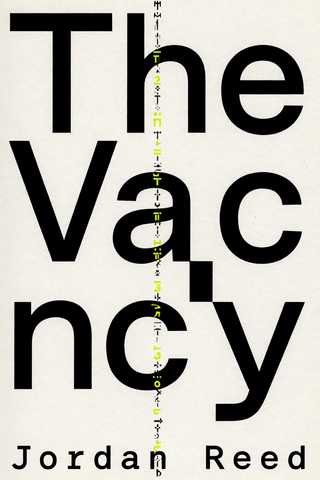
Read a preview
Chapter 1
Chapter 1: The Last Frequency
The signal from Earth died on a Tuesday.
Mira Solberg remembered this because Tuesdays were when she reviewed the comm logs personally, a ritual she'd maintained since the Nansen cleared Jupiter's orbit four years ago. Every other day of the week, Communications Officer Priya Deshpande handled the logs, compressing the data bursts from Mission Control into digestible summaries that Mira read over her morning ration of synthetic coffee. But Tuesdays were hers. Tuesdays, she sat in the cramped communications alcove on Deck Two, headphones pressed to her ears, and listened to the raw transmissions from home.
She told herself it was discipline—a captain's duty to verify the integrity of their link to command. But the truth was simpler and sadder than that. The voices from Earth were the only proof she had that the world she'd left behind still existed. That her mother was still tending her greenhouse in Bergen. That the fjords still caught the light in that particular way she'd never been able to describe to anyone who hadn't seen them.
On this particular Tuesday, the transmission buffer was empty.
Mira stared at the readout for a long time. The display showed the expected carrier wave frequency, the alignment parameters for the deep-space antenna array, the handshake protocol cycling through its attempts to establish contact. Everything on their end was functioning. The silence came from the other side.
"Priya," she said into the intercom, keeping her voice level. "Can you come down to Comm Two?"
Priya arrived three minutes later, her dark hair still damp from the ship's water-recycling shower. She was a small woman with quick hands and quicker eyes, and she read the display in under five seconds.
"That's not a malfunction," Priya said.
"No."
"The antenna's aligned. Power output is nominal. We're transmitting fine." Priya's fingers moved across the console, pulling up diagnostic layers. "There's nothing wrong with us. They just... stopped."
"When?"
"Last confirmed burst was eighteen hours ago. Standard telemetry package, nothing unusual. Then silence." Priya looked up. "Captain, I should check the relay frequencies for the Eriksson and the Zheng He."
The other two ships. The Eriksson, bound for the TRAPPIST system under Captain Georg Lindqvist. The Zheng He, heading for Proxima Centauri b under Captain Wen Fangyin. Three ships, three targets, three rolls of the dice for the survival of the human species.
"Do it," Mira said.
Priya's hands moved. The silence in the alcove was total except for the ever-present hum of the Nansen's fusion drive, a sound so constant that Mira's brain had long since filtered it into nonexistence. She only noticed it now because she was noticing everything—the recycled air against her skin, the faint vibration in the deck plating, the way Priya's jaw tightened as she cycled through frequency after frequency.
"Nothing," Priya said finally. "All three channels are dead. Earth, Eriksson, Zheng He. Simultaneously."
Mira let that word settle. Simultaneously. Not a gradual degradation. Not one signal fading while others held. All three, at once.
"Could be solar activity," Priya offered, but her voice carried no conviction. "A coronal mass event could disrupt—"
"All three independent relay paths?"
Priya said nothing.
Mira stood up from the console. The alcove was small enough that this put her back against the opposite wall. She pressed her palms flat against the cool metal and closed her eyes.
The Nansen was seven years from Kepler-1638b. Seven years of empty space in every direction, the nearest star a cold point of light that wouldn't resolve into a proper sun for years yet. Behind them, Earth was a memory growing fainter with every passing second, the light from home taking longer and longer to reach them, arriving as whispers from an increasingly distant past.
And now even the whispers had stopped.
"Wake Mateo," Mira said.
"Aguilar? From cryo?"
"He's not in cryo. He's on the crew rotation. Deck Four, berth seven."
"Right. Sorry. I forgot he was—"
"Just get him, Priya."
Priya left. Mira stayed in the alcove, staring at the silent readout, and tried to calculate the weight of what she was about to do.
The mission parameters were clear. The Nansen's orders, encoded in the ship's command architecture and backed by the authority of the United Earth Provisional Government, specified that in the event of prolonged loss of contact with Mission Control, the commanding officer was to exercise independent judgment regarding mission continuation. Prolonged was defined as ninety days. They were at eighteen hours.
But Mira had spent twenty-two years in the Combined Space Forces before this mission, and she knew the difference between what orders said and what reality demanded. Ninety days of silence would not tell her anything that eighteen hours of simultaneous signal loss across three independent channels hadn't already told her.
Something had happened to Earth.
The question was whether that something changed what they were doing out here.
---
Mateo Aguilar arrived looking like a man who'd been sleeping poorly long before anyone woke him. He was tall and angular, with deep-set eyes that carried permanent shadows beneath them, and hands that never quite stopped moving. Mira had read his file before launch—everyone's file, all fourteen crew members—and she knew the broad strokes of his story. He was the geologist who'd built the thermal convection models that first identified the core cooling anomaly. The man who'd told Earth it was dying, only to watch his findings get classified, buried, and denied for ten years while governments argued about economic impacts and election cycles.
By the time the truth came out, they'd lost a decade of preparation. The magnetosphere was already showing visible degradation. The first radiation storms hit São Paulo and Lagos within months of the public announcement. Mateo Aguilar became simultaneously the most vindicated and most haunted scientist on the planet.
"Captain," he said, ducking into the alcove. His eyes went to the display immediately. "That's a dead channel."
"All of them are dead. Earth, Eriksson, Zheng He. As of eighteen hours ago."
Mateo absorbed this with the particular stillness of a man accustomed to receiving catastrophic news. He'd had practice.
"Simultaneous?"
"Yes."
He leaned against the console, his long fingers tracing the edge of the display without touching it. "The magnetosphere models I ran before we left... the worst-case projections gave us forty years before surface habitability dropped below viable thresholds. That was based on the cooling rate as of 2145."
"We launched in 2147."
"Two years. The rate could have accelerated. Cascading core solidification isn't linear—it follows a power curve once it passes certain thresholds. If the inner core crystallized faster than projected..." He trailed off, doing math in his head. Mira could almost see the equations moving behind his eyes. "It's possible. Not probable, but possible, that the magnetosphere collapsed ahead of schedule. If it went suddenly, the radiation exposure on the surface would have been—" He stopped himself. "The comm infrastructure would have been among the first things to go. High-energy particle bombardment would fry unshielded electronics within hours."
"And the relay satellites?"
"Same problem. They were designed to withstand normal solar wind, not a full magnetospheric collapse. If the field dropped below a certain threshold, the Van Allen belts would have dissipated, and everything in low orbit would have been bathed in radiation."
Mira nodded. She'd known this already, or at least suspected it. She'd wanted to hear it from him—from the man whose models had predicted this future, who understood the physics better than anyone alive on this ship.
"What about the other ships?" she asked. "Why would we lose them too?"
"Their signals relay through Earth's deep-space network. If the network went down, we'd lose all three channels at once, even though the ships themselves are fine." He paused. "Assuming they are fine."
"We have no way to know."
"No."
They stood in the alcove, two people suspended in the vast dark between stars, contemplating the possibility that everything behind them was gone.
"I need to make a decision," Mira said. "The crew will want to know what we're doing."
"You're thinking about turning back."
"I'm thinking about everything. Including turning back."
Mateo looked at her directly for the first time since entering the alcove. His eyes were the color of coffee without milk, and they held a quality she'd come to recognize in the months since launch—a kind of weary clarity, the gaze of someone who'd already lived through the end of the world once and wasn't especially afraid of doing it again.
"If Earth's magnetosphere has collapsed," he said carefully, "then turning back means returning to a planet that's being sterilized by cosmic radiation. Even if people survived in underground shelters, the surface will be uninhabitable for centuries. We'd arrive to a graveyard."
"And if it hasn't collapsed? If this is something else—a technical failure, a political disruption, something we can't predict from out here?"
"Then they'll restore communications eventually, and we'll know. But we'll know too late to change course either way. At our current velocity, the energy cost of a full reversal is..." He shook his head. "We don't have the fuel. We'd have to decelerate, turn, accelerate again. We'd burn through our reserves and arrive at Earth on fumes, with no capacity to enter orbit safely."
"I know the math, Mateo."
"Then you know the answer."
Mira did know the answer. She'd known it before she called him down here. But command was a peculiar burden—it required not just making the right decision, but making it in the right way, with the right witnesses, through the right process. Mateo was her witness. This conversation was her process.
"We push forward," she said.
"Yes."
"Seven more years."
"Seven more years."
She straightened up and keyed the ship-wide intercom. "All crew, this is Captain Solberg. Report to the common area on Deck Three in thirty minutes. I have an announcement."
She released the intercom and looked at Mateo. "Go get some coffee. You look terrible."
The ghost of a smile crossed his face. "I always look terrible."
"I know. But today you have an excuse."
He left the alcove. Mira stayed for one more minute, watching the dead channels cycle through their handshake protocols, reaching out into the void, waiting for an answer that would never come.
Then she turned off the display and went to tell her crew they were alone.