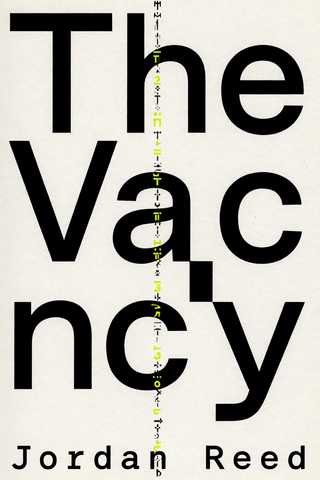
Read a preview
Chapter 1
Chapter One: The Watch on the Dam
At four in the morning the river was the only thing in the world making noise.
Michael Brannan stood at the crest of the dam with a rifle slung muzzle-down across his back and a mug of chicory in both hands, and he listened to the water come through the seep gates in a low steady rush that had not stopped once in eighteen months. It was the sound he woke to and the sound he fell asleep to. Some nights it was the only thing that convinced him the world was still turning.
His daughter sat on the concrete parapet beside him with her heels drumming softly against the wall, wide awake, the way she had been wide awake every hour of every night since the second week of the pulse.
"You're cold," Elsa said.
"I'm fine."
"Your hands are shaking on the cup."
"That's coffee that isn't coffee. Makes a man tremble." He passed her the mug anyway and she wrapped both small hands around it, not drinking, just holding it for the warmth. She was eight years old and weighed less than a bag of feed and she had not dreamed in a year and a half.
In the dark her eyes were the palest thing on the dam. Not white — people got that wrong, the ones who told stories — but a gray like the inside of an oyster shell, faintly luminous at the edges when the light was low, as if some small amount of the day had gotten trapped in there and couldn't find its way out. Michael had watched the color leave her over eleven days that first spring. Her irises had been brown as creek stones. Then they were amber, then dust, then this.
He had stopped grieving the brown. Mostly.
"Ivy's up," Elsa said.
"Ivy's six. Ivy is always up."
"No, she's *up* up. She's on the stairs." Elsa tilted her head toward the powerhouse three hundred feet below them, where a single lantern moved behind the cracked window of the machine floor. "She had a bad hour. She wants her mother and her mother is asleep and she doesn't want to wake her, so she's sitting on the stairs."
Michael did not ask how she knew. He had spent a year not asking. "Should I go get her?"
"Hattie's going." A pause. "Hattie's going now."
And twenty seconds later a second lantern joined the first on the machine floor, and the two lights sat down side by side and stayed there, and Michael Brannan thought, as he thought a dozen times a day, that if the rest of the human race had reacted to this the way he had — with a kind of stunned, stubborn, exhausted love — then there would still be cities.
Eighteen months ago, on an ordinary Tuesday in April, something had swept the Earth for forty seconds.
That was the whole event. Forty seconds. No flash, no sound, no heat. Aircraft did not fall. Radios did not fail. Nine-tenths of the adult population never felt a thing; the ones who did described a pressure behind the sinuses, a taste of pennies, a moment of standing very still. The observatories reported nothing. The satellites reported nothing. Some agency somewhere put out a statement about an anomalous geomagnetic transient and everybody went back to work.
Then the children stopped sleeping.
Not all of them. Roughly one in eight hundred, under the age of twelve. Michael had heard a hundred versions of the number and that was the one that stuck, the one people said out loud in the tone you'd use for a diagnosis. *One in eight hundred.* They lay down at bedtime out of habit and lay there with their eyes open all night, and after four days their parents stopped being able to pretend it was a phase, and after two weeks the irises began to bleach, and after a month the Changed children in a given town could tell you what the Changed children in the next town were eating for breakfast.
The world did not end because of the pulse. Michael had had a long time to think about this and he was certain of it. The world ended because of what people did about the pulse. Churches split. Borders closed. A governor in the Midwest ordered registration and a mayor in the East refused it, and somewhere in between, the trucks stopped rolling. Then the power went uneven, then the water, then the pharmacies were empty, and by autumn there were seventeen separate armed factions inside what used to be one country, and none of them could agree on anything except that the children were the reason.
Michael had been a combat engineer for eleven years. He knew how to put a bridge across a river and how to take one down. When the county sheriff's office dissolved in a shouting match and the National Guard armory at Tyre Junction was stripped by its own soldiers, he had loaded his wife and daughter into a truck, driven up the Ammons River road to the dam he had helped decommission in a previous life, cut the chain on the gate, and started fortifying.
Three hundred and six people lived there now. Nineteen of them were Changed.
His wife was not one of the three hundred and six. Marion had cut her forearm on a length of rebar in the second month and it had gone bad in the way things went bad now, fast and stupid and for no reason, and there had been no antibiotics stronger than expired amoxicillin within sixty miles. She had died in February with the river frozen at the edges. Elsa had sat with her the whole last night, awake, holding her hand, and at some point near dawn she had looked up at Michael and said, in a voice not quite her own, *the others are sorry too*.
He had not known what to do with that. He still didn't. But he had never once been afraid of her, and he knew that this made him, in the new world, an unusual man.
"Dad." Elsa set the mug down on the parapet. Her heels stopped drumming. "Somebody's on the river road."
Michael was already moving. "How far?"
"Past the second bend. Walking. One person." She frowned, and her frown was the most ordinary thing about her, a scrunch of the nose she'd had since she was two. "She's very thirsty. She's counting her steps out loud so she doesn't stop."
"Ivy told you?"
"Casey. Casey's on the west window." Elsa said it the way another child would say a friend was on the swings. "He says she has a red backpack and she's alone and she keeps looking behind her, but there's nobody behind her."
Michael keyed the handheld radio at his shoulder. Twelve of them worked, salvaged and cannibalized, and the batteries got charged off the dam's own generators, which was the reason three hundred people were alive here instead of dead somewhere else. "Gate, this is Brannan. Wake Mack. We've got a walker inbound on the river road, single, female, on foot. Lights on her at two hundred yards, nobody shoots."
The radio hissed. Then Errol Tapp's voice, ragged with sleep: "Copy. How do you know?"
Michael looked at his daughter, who had picked up the mug again and was breathing on her fingers.
"Same way I always know," he said.
He took the maintenance stairs two at a time, four hundred and eleven steps down through the body of the dam, past the gallery where water wept out of the joints in the concrete and ran along the drainage channel in a thin cold thread, and he thought about the fact that his eight-year-old had known about the stranger before the man with the rifle at the gate did, and he thought about Mack Henning, who would point that out before breakfast, and would not be wrong to.
At the bottom he pushed through the steel door onto the machine floor, where the two lanterns still sat side by side on the stairs. Ivy Prosser, six years old, in pajamas printed with faded rocket ships. Hattie Mowry, nine, holding her hand. Both of them turned their heads at exactly the same instant and looked at him with exactly the same pale eyes.
"Hi, Mr. Brannan," they said.
Not in unison, quite. A half-beat apart, like an echo in a canyon.
"Morning, ladies," Michael said, and kept walking, and did not let them see his hand tighten on the rail.