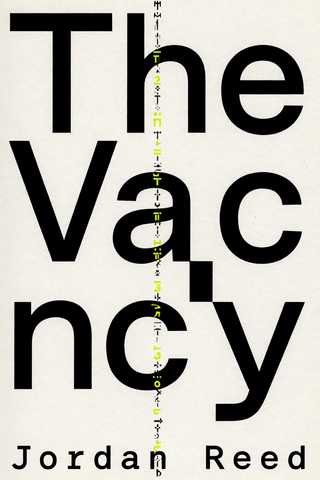
Read a preview
Chapter 1
Chapter 1: The Courier
The rain hadn't stopped in eleven days.
Kara Peng counted the days the way she counted everything else — automatically, unconsciously, a habit born from years of running data through the drowned streets of the lower districts. Eleven days of warm acidic rain sheeting off the polycarb awnings of Kowloon Sink, pooling in the sagging corridors between hab-stacks, turning the already flooded streets into channels of brown water that reached her thighs in places. She moved through it the way everyone down here moved through it: with resigned efficiency, one hand on the guide-rope strung between buildings, the other clutching the collar of her slick-coat to keep the water from running down her back.
Shanghai-3 had been sinking for thirty years. The original Shanghai was a memory, a ghost map overlaid on satellite feeds that showed nothing but the South China Sea lapping at the foundations of what used to be the Bund. Shanghai-2 had lasted twelve years before the second surge. Shanghai-3 was built higher, built harder, a vertical city of carbon-fiber towers and suspended transit lines — but the lower districts, the ones closest to the waterline, still flooded. They always flooded. The city planners called it "managed inundation." The people who lived here called it drowning in slow motion.
Kara's apartment was on the fourteenth floor of a hab-stack called the Meridienne — not because anyone spoke French down here, but because the original developer had pretensions that survived long after the building's structural warranty expired. The Meridienne leaned two degrees off vertical, which wasn't enough to condemn it but was enough to make the elevators unreliable. She took the stairs, as always, her boots squelching on the metal treads, the stairwell lit by bioluminescent strips that someone had glued to the walls in lieu of actual maintenance.
Fourteen floors. She counted them the way she counted everything.
Her door was triple-locked — mechanical, electronic, and a pressure seal that would flood the hallway with marker dye if anyone tried to force it. Overkill for a one-room apartment in a leaning tower, but Kara wasn't protecting furniture. She was protecting the thing inside her head.
The cranial vault sat behind her left ear, a titanium-ceramic capsule the size of a walnut, surgically bonded to her temporal bone and threaded with fiber-optic leads into her cortex. It was a dead box — no wireless, no network interface, no way in or out except through a physical port hidden under a synthetic skin flap. Data went in sealed. Data came out sealed. Kara couldn't read it, couldn't modify it, couldn't even tell what format it was in. She was a locked briefcase with legs.
It was the safest smuggling method in a world where every network connection was watched.
The Five Families — Panterre, Shuo-Liang, Kessinger-Brandt, the Narita Group, and Volstoy Industrial — had carved up Asia's economy after the Sovereign Collapse like butchers dividing a carcass. When the last national governments dissolved under the weight of debt, climate migration, and infrastructure failure, the corporations stepped in with the only thing that still worked: money, logistics, and private security forces large enough to enforce order. They called it the Corporate Compact. Everyone else called it what it was: feudalism with better marketing.
The Families controlled the networks. Every data packet, every message, every transaction flowed through their infrastructure. Encryption was technically legal but practically useless — the Families had quantum-cracking farms that could break most civilian ciphers in minutes. The only truly secure way to move information was to move it physically, in a container that couldn't be remotely accessed.
Hence the couriers. Hence Kara.
She locked the door behind her, hung her slick-coat on the hook, and stood dripping on the polymer floor of her apartment. One room, one window — the window faced east, toward the upper districts, where the towers rose above the flood line and the lights never went out. From here, the upper city looked like a circuit board standing on edge, all clean lines and blue-white illumination. A different world, four kilometers away and a thousand meters up.
Kara peeled off her boots and checked the time. Just past midnight. She had a pickup scheduled for tomorrow — a package from a pharmaceutical broker in the Sink, destined for a buyer in the Narita Group's commercial zone. Routine work. Safe work, as much as anything was safe.
She was heating water for tea when someone knocked on her door.
Not knocked. Pounded. A wet, desperate hammering that made the pressure seal whine.
Kara killed the heating element and reached for the shock-baton she kept under the sink. She moved to the door and checked the camera feed on her wrist display. The hallway camera showed a man — mid-forties, dark skin, soaked through, one hand braced against the wall. He was bleeding from his nose. Not a trickle. A steady flow that painted his chin and the front of his shirt.
"Open the door," he said. His voice came through the intercom tinny and distorted. "Please. I know who you are. I know what you do."
"Then you know I don't take walk-ins," Kara said.
"My name is Luc Ferreira. I was — I am — a researcher. Genomics division, Panterre Consortium." He coughed, and something red hit the camera lens. "I have data. Critical data. I need a courier."
"Call a service."
"There's no time. They're in my head. They triggered something — I can feel it. The hemorrhaging is going to kill me in minutes." He looked directly at the camera, and Kara saw his eyes. They were the eyes of a man who had already accepted what was happening to him. "Please. I just need someone to carry it. Someone with a vault."
Kara's thumb hovered over the lock release. Every instinct she'd developed in six years of courier work told her to keep the door closed. Walk-ins were trouble. Desperate walk-ins were worse. A man claiming to be a Panterre researcher, bleeding from what sounded like a cerebral hemorrhage, begging to dump data into her vault at midnight — that was the kind of trouble that ended careers. That was the kind of trouble that ended lives.
But she'd seen those eyes before. On the faces of people in the Sink when the floodwaters rose too fast. On the faces of refugees from the coastal zones when the last ferries pulled away. The look of someone who knew they were out of time and had one thing left to do.
She opened the door.
Luc Ferreira half-fell into her apartment, catching himself on the edge of her table. Up close, he was worse than the camera showed. His skin had a grayish undertone beneath its natural brown, and the blood from his nose was coming faster now, dripping steadily onto her floor. His hands were shaking. In his right hand, he held a device she recognized — a neural handshake unit, black-market grade, the kind used for direct brain-to-brain data transfer.
"Sit down," Kara said. "I'll call a med-drone."
"No." He gripped her arm with surprising strength. "No network calls. They're monitoring everything. That's how they found me. That's how they triggered this." He touched his temple. "Kill-code. Targeted cerebral hemorrhage. They can do it to anyone who's been through their gene therapy. Anyone."
Kara stared at him. "That's not possible."
"It's not only possible, it's operational. Three billion people received Panterre's gene-therapy vaccines over the last twenty years. Every single one of them has a kill-switch in their genome. A targeted retrovirus that can be activated remotely." He held up the handshake device. "The proof is in my head. All of it. Research data, activation protocols, test results. I need to get it out of my head and into yours before I die."
"I don't do neural transfers. My vault takes chip-loaded data, formatted and sealed—"
"I know. But the handshake device can bridge the gap. It'll encode the data as memory engrams and write them directly to your vault's storage substrate. It won't be clean — it'll be tangled up with my actual memories — but it'll be there. Sealed. Safe." He coughed again, harder this time, and blood spattered across the table. "Please. I spent three years gathering this. If it dies with me, Panterre wins. They keep the switch. They keep the power."
"Why me?" Kara asked. "There are dozens of couriers in the Sink."
"Because you're the best. Because your vault is military-grade, not civilian junk. And because—" He stopped. Something passed across his face — guilt, maybe, or sorrow. "Because I owe you. You won't understand that yet. But you will."
Before Kara could ask what that meant, Luc Ferreira pressed the handshake device to the port behind her ear.
The world went white.
It lasted less than three seconds. She felt a cascade of heat behind her left eye, a sensation like swallowing ice water too fast, and then a deep, resonant click that she felt more in her bones than heard with her ears. The vault's intake confirmation. Data received. Data sealed.
When her vision cleared, Luc was on the floor.
He was still breathing — barely. His eyes were open but unfocused, the pupils blown wide. Blood was pooling beneath his head. Kara knelt beside him and felt for a pulse. It was there, thready and fading.
"Luc. Luc, stay with me."
His lips moved. She leaned close.
"Find... Jia Kuroda. The warrens. She'll know... what to do with it." A long, rattling breath. "I'm sorry, Kara. For what they did to you."
His eyes fixed on a point above her shoulder, and then the pulse under her fingers stopped.
Kara sat on the floor of her apartment beside a dead man, the handshake device still warm against her neck, and felt the weight of something enormous and unknown settle into the vault behind her ear.
She had the data. She didn't know what it contained. And somewhere in the upper city, someone was going to come looking for it.
She gave herself thirty seconds to sit with the dead. Then she stood up, grabbed her slick-coat, and started packing.