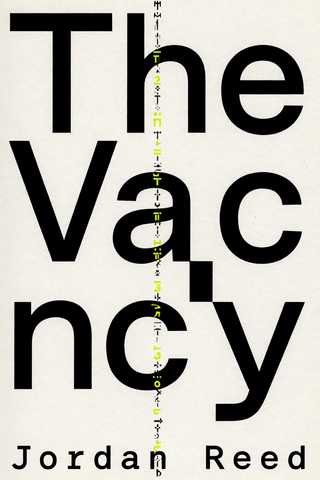
Read a preview
Chapter 1
Chapter 1: The Weight of Names
The list arrived at 0347 hours, when the dome's artificial sky still hung in programmed darkness and the recycled air carried the particular staleness of manufactured night. Five hundred names. Five hundred lives reduced to data points on Nadine Kirsch's tablet, each one a universe of hope and desperation compressed into citizenship applications, medical records, and skills assessments.
She sat at her kitchen table in Sector 7, a cup of synthetic coffee growing cold beside her, and scrolled through the first hundred entries. The faces stared back at her from identification photos—some defiant, others pleading, many simply exhausted. Earth had been dying for decades, but these past three years had accelerated the collapse. The coastal cities were gone. The breadbaskets had turned to dust. And the lottery that had once provided orderly emigration to Mars had been hacked by someone with either a conscience or a profit motive.
Nadine suspected the latter.
"Mom?"
She looked up to find her daughter Priya standing in the doorway, seventeen years old and wearing the expression of someone who'd been crying. Her dark hair was pulled back in a messy knot, and she clutched her personal tablet to her chest like a shield.
"It's not even four in the morning," Nadine said. "What are you doing up?"
"I could ask you the same thing." Priya crossed to the table and sat down heavily. "I heard about the lottery. Everyone's talking about it on the feeds."
"Already?" Nadine rubbed her eyes. The announcement wasn't supposed to go public until 0600. But information leaked on Mars like atmosphere through a cracked seal—slowly at first, then all at once.
"They're saying you have to pick fifty people. Out of five hundred. That the computer can't do it anymore because someone broke the algorithm."
"That's essentially correct."
"How are you supposed to do that?"
Nadine looked at her daughter—at the life she'd built in this dome, at the safety she'd never questioned—and felt the familiar weight settle onto her shoulders. "I don't know yet."
The Adjudicator's office occupied the forty-third floor of the Administrative Spire, a needle of reinforced glass and recycled steel that rose from the center of Olympus Mons Colony like a monument to bureaucratic ambition. Nadine arrived at 0530, an hour before her official start time, to find her assistant Marcus Chen already at his desk.
Marcus was sixty-two, a first-generation colonist who'd survived the early years when the domes were little more than pressurized tents and hope. He'd been with the Adjudicator's office for thirty years, serving under four different holders of the position, and he knew things about the colony's immigration system that weren't written in any manual.
"You've seen the list," he said. It wasn't a question.
"I've started reviewing it." Nadine set down her bag and activated her workstation. The holographic display flickered to life, projecting the familiar interface of the Immigration Assessment System. "Walk me through what happened with the lottery."
Marcus pulled up a secondary display. "Three days ago, someone introduced a recursive algorithm into the selection matrix. It was elegant work—the kind of code that leaves no fingerprints. By the time our security protocols detected the intrusion, the entire lottery framework had been compromised."
"Compromised how?"
"Randomized beyond repair. The original weighted criteria—skills assessment, health status, family reunification potential—all of it scrambled. What we're left with is essentially a list of everyone who applied in the current cycle, sorted by nothing more meaningful than alphabetical order."
Nadine studied the code fragments on the display. She'd been an engineer before she became an administrator, back when the colony was young and everyone wore multiple hats. The work was sophisticated, but not impossibly so. "Who has access to the lottery system?"
"Officially? Seven people. The three members of the Governing Council, the Chief Technology Officer, the Director of Population Management, you, and me."
"And unofficially?"
Marcus's weathered face betrayed nothing. "Olympus Mons has fifteen thousand residents and a cybersecurity infrastructure designed forty years ago. I'd estimate at least two hundred people could access the system if they were determined enough."
"So we have no idea who did this."
"No. But I have a theory about why."
Nadine waited.
"The lottery has always been a useful fiction," Marcus said quietly. "A way to make impossible choices seem fair. Take away the randomness, force someone to make conscious decisions about who lives and who dies, and suddenly the whole system becomes visible."
"You think someone wanted to expose the process."
"I think someone wanted to expose you." He paused. "The lottery is impersonal. An Adjudicator making individual choices is not. Every decision you make in the next two weeks will be scrutinized, criticized, and weaponized. You'll become the face of Mars's immigration policy—and its scapegoat."
Nadine absorbed this. She'd held the position of Adjudicator for six years, long enough to understand its contradictions. The job required her to be simultaneously invisible and accountable, to make life-and-death decisions while pretending those decisions were made by algorithms and committees. The lottery had been her shield. Now it was gone.
"I assume the Council has been informed," she said.
"They've scheduled a meeting for 0800. All three members will attend."
"And the candidates?"
"They're being notified now. The first interviews are scheduled to begin tomorrow morning."
Nadine turned back to the list, scrolling through names and faces. Somewhere in these five hundred people were stories that would haunt her forever. She'd chosen this work because she believed someone with empathy should hold the position—that cruelty was more dangerous than compassion in the hands of power. But empathy had a cost, and she was about to pay it in full.
"Marcus," she said, "I need you to flag any candidates with exceptional circumstances. Medical urgency, unique skills, family connections to existing colonists. Anything that might help establish objective criteria."
"Already done." He transferred a subset of files to her display. "I've identified forty-seven candidates who meet at least one threshold criterion. The rest are ordinary people in extraordinary circumstances."
Ordinary people. Nadine thought about what that phrase meant on a dying planet. A teacher who'd watched her school flood. A farmer who'd seen three generations of land turn to salt. A child who'd never known a sky that wasn't gray with ash. There was nothing ordinary about surviving Earth's collapse.
But there were only fifty slots, and five hundred people waiting to fill them.
She began to read.