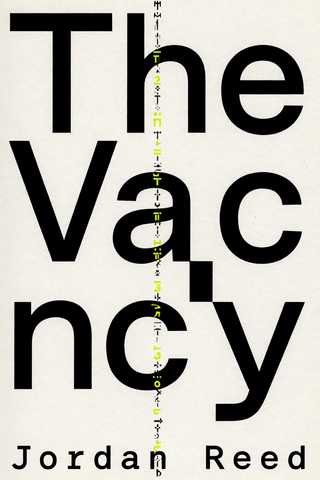
Read a preview
Chapter 1
Chapter 1: The Quiet Hum
The morning alarm didn't ring so much as bloom—a gentle cascade of tones that rose through the frequency spectrum like sunlight creeping across a floor. Luisa Vellsen opened her eyes to the pale blue glow of her ceiling display, which showed the time (06:14), the weather (overcast, 11°C), and a single green dot in the upper right corner confirming that her Lumen dispenser had prepared her daily dose.
She lay still for a moment, watching the dot pulse. It was such a small thing, that green circle. The size of a fingernail. Yet it represented the foundational promise of Laurentia itself: stability, calm, the managed hum of a population that had chosen peace over the chaos of unregulated feeling.
Luisa sat up, swung her legs over the side of her bed, and padded barefoot across the cool composite floor to the dispenser mounted beside her bathroom mirror. The device was elegant—a slender column of brushed titanium, no larger than a water glass, with a single recessed button. She pressed it. A soft click, and a capsule dropped into the receiving tray: translucent, faintly iridescent, filled with a liquid that caught the bathroom light like a tiny captured sunrise.
She placed it on her tongue. Swallowed. Felt nothing, as always. That was the point. Lumen didn't announce itself. It didn't create euphoria or numbness. It simply maintained—kept the emotional register within the government-approved range of what the Bureau of Wellbeing called "functional contentment." Not too happy, not too sad. Alert enough to work, calm enough to sleep. The perfect citizen frequency.
Luisa brushed her teeth, dressed in her standard-issue charcoal tunic and trousers, and pulled her dark hair into a low knot at the base of her neck. In the mirror, she looked exactly like what she was: a thirty-four-year-old mid-level compliance technician for the Bureau, unremarkable in every measurable way. Brown eyes, medium build, the kind of face that surveillance algorithms categorized as "low-interest." She had always found a quiet comfort in that anonymity.
Her apartment was in the Seventh Residential Tier, which meant she was neither privileged nor struggling—simply adequate. The living space was a standard forty-square-meter unit with a combined kitchen and sitting area, a bedroom, and a bathroom. The walls could display any environment she wished—forests, oceans, mountain ranges from the old world—but Luisa kept hers set to a muted grey-green that reminded her of nothing in particular. She liked it that way.
Breakfast was a nutrition bar and a cup of synthetic coffee, consumed standing at the counter while she scrolled through her morning briefing on the wall display. The briefing was the same as it had been every morning for the three years she'd held this position: population mood indices for her assigned districts, flagged anomalies from overnight monitoring, and a summary of any compliance interventions that had been initiated while she slept.
Today's data was clean. District 14-North showed a minor uptick in anxiety markers—0.3 percent above baseline—likely attributable to a water main repair that had disrupted sleep cycles in two residential blocks. District 14-South was perfectly nominal. District 15, her newest assignment, was so stable it barely registered as a dataset at all.
Luisa finished her coffee, placed the cup in the sanitizer, and left her apartment.
The corridors of the Seventh Tier were already filling with morning commuters, all moving with the same unhurried efficiency that characterized life in Laurentia. No one rushed. No one lingered. The pace was organic, synchronized not by any external mechanism but by the shared neurochemical equilibrium that Lumen provided. Luisa sometimes thought of it as a river—everyone flowing in the same direction, at the same speed, with the same gentle current carrying them forward.
She took the transit pod to the Bureau of Wellbeing's central campus, a sprawling complex of interconnected buildings in the administrative core of the city. The architecture was typical of Laurentia's post-war reconstruction: clean lines, abundant natural light channeled through solar arrays, surfaces that were smooth and white and deliberately free of ornamentation. Beauty, the city's founders had decided, should come from order. From the absence of friction.
The Bureau occupied the largest building on campus—a twelve-story structure that housed everything from pharmaceutical research to population analytics to the compliance division where Luisa worked. She badged through the entrance, passed through the biometric scanner without breaking stride, and took the elevator to the sixth floor.
Her workspace was an open-plan office shared with eleven other compliance technicians, each assigned to a cluster of residential districts. The room was quiet in the way that all Bureau offices were quiet—not silent, but muted, as though sound itself had been dampened to match the emotional register of the people who worked there. Keyboards clicked softly. Voices murmured. Chairs shifted with the careful deliberation of people who never made sudden movements.
Luisa settled into her station and pulled up her monitoring dashboard. The interface was familiar enough to be almost invisible—a series of overlapping data fields that displayed real-time neural activity readings from the population sensors embedded throughout her districts. Every public space in Laurentia contained passive monitoring equipment that tracked aggregate emotional output: stress hormones, serotonin levels, cortisol fluctuations, neural firing patterns. The data was anonymized and aggregated, presented to technicians like Luisa as smooth curves and color-coded heat maps rather than individual profiles.
Her job was to watch for deviations. A spike in collective anxiety might indicate a infrastructure failure, a contaminated food supply, or—in rare cases—a Lumen distribution error. A dip in engagement might suggest a need for environmental adjustments: more green spaces, adjusted lighting schedules, recalibrated ambient sound in public areas. It was, in every sense, maintenance work. She was a gardener tending an emotional landscape, pulling weeds before they could take root.
The morning passed without incident. Luisa processed three overnight flags—all minor, all easily explained. She filed her reports, attended a brief team meeting where her supervisor reviewed the week's metrics, and ate lunch alone in the sixth-floor cafeteria, watching the transit pods glide past the windows like silver fish in a stream.
It was during the afternoon review cycle that she noticed it.
She had been running a routine longitudinal comparison—a standard quality check where current district data was measured against historical baselines from the same period in previous years. It was the kind of task that most technicians completed on autopilot, scanning for the expected result (minimal variance) and moving on. Luisa was thorough by nature, though, and she had a habit of examining the underlying data layers rather than just the summary outputs.
District 15 was the one that caught her eye.
The mood indices were perfect. Textbook stable, well within the approved range, showing the gentle sinusoidal pattern of a healthy population cycling through normal daily rhythms. But beneath the mood data, in the raw neural activity readings that most technicians never bothered to examine, something was wrong.
Cognitive complexity scores were declining.
Not dramatically. Not in any way that would trigger an automated alert. The change was subtle—a gradual downward slope visible only when she layered five years of data on top of each other and looked at the trajectory. But it was there, and it was consistent. The aggregate neural firing patterns in District 15 showed a measurable reduction in what the Bureau's own metrics classified as "higher-order cognitive activity"—the kind of brain function associated with abstract reasoning, creative problem-solving, and complex memory formation.
Luisa stared at the data for a long time. She zoomed in. Zoomed out. Applied different filters. Ran the comparison against District 14-North and District 14-South. The same pattern appeared in both, though less pronounced in 14-North.
She pulled up District 12. District 9. District 22.
The pattern was everywhere.
The decline was steepest in the oldest districts—the ones that had been part of the original Lumen distribution network since Laurentia's founding. In newer districts, where populations had been on the supplement for fewer years, the effect was milder. But the direction was the same. Everywhere she looked, cognitive complexity was trending downward.
Luisa sat back in her chair. Her heart rate had increased—she could feel it, a faint quickening beneath her sternum that Lumen hadn't quite smoothed away. She glanced around the office. Her colleagues were absorbed in their own screens, their faces wearing the same expression of mild, focused attention that she saw on every face in Laurentia, every day.
She thought about what the data meant. Then she thought about whether she was qualified to interpret it. She was a compliance technician, not a neuroscientist. There could be a perfectly benign explanation—a calibration drift in the monitoring equipment, a change in data processing algorithms, some artifact of the aggregation method that created the illusion of decline where none existed.
But she had been trained to flag anomalies. That was literally her job.
She opened a new report file, documented her findings with careful precision, attached the raw data sets, and submitted it through the standard escalation channel to her supervisor, Oskar Vrenn.
Then she went home, took her evening supplement, and slept without dreaming.
---
Oskar Vrenn was a tall, lean man in his early fifties with a face that seemed designed for bureaucratic authority—sharp cheekbones, thin lips, grey eyes that assessed without revealing. He had been Luisa's supervisor for two of her three years in the compliance division, and in that time she had formed a clear impression of him: competent, measured, and fundamentally uninterested in anything that might disrupt the smooth functioning of his department.
He called her into his office the next morning.
"Luisa. Sit down."
She sat. His office was slightly larger than the open-plan workstations—a concession to rank—but decorated with the same institutional neutrality. A desk, two chairs, a wall display showing real-time district summaries. No personal items. No photographs.
"I reviewed your report from yesterday," he said, settling into his own chair. "The longitudinal analysis of cognitive complexity scores."
"Yes."
"Thorough work. Very detailed." He paused, and something in the pause felt deliberate—weighted in a way that Luisa couldn't quite identify. "I want to make sure I understand your concern. You're suggesting that the raw neural data shows a decline in higher-order cognitive function across multiple districts over a five-year period."
"That's what the data shows, yes."
"And you've ruled out equipment calibration as a factor?"
"I noted it as a possibility in my report, but the consistency across districts with different monitoring hardware makes it unlikely. If it were a calibration issue, we'd expect to see the pattern in some districts but not others, depending on when their equipment was last serviced."
Oskar nodded slowly. "What about changes to the data processing pipeline? We upgraded the aggregation algorithms eighteen months ago."
"The decline predates the upgrade. It's visible in data going back at least five years, possibly longer. I didn't have access to older archives."
Another pause. Oskar's expression hadn't changed—it rarely did—but Luisa noticed that he wasn't looking at her. He was looking at a point slightly above and to the left of her head, as though reading something on an invisible screen.
"I appreciate your diligence," he said finally. "This is exactly the kind of careful analysis we value in the compliance division. However, I think this falls outside our department's scope. Cognitive function metrics are the domain of the Neurological Health division on the ninth floor. I'd recommend we pass this along to them and let the specialists take a look."
"Of course. Should I send them my report directly, or—"
"I'll handle the referral. In the meantime, I have a new assignment for you." He tapped his desk display and a transfer order appeared on the screen facing Luisa. "We're reorganizing some of the archival functions in the basement level. Historical compliance records going back to the founding need to be migrated to the new database format. It's important work—foundational, really—and I think your attention to detail makes you the ideal person for it."
Luisa read the transfer order. It was effective immediately. Her district monitoring access would be revoked at end of day.
"This is a reassignment," she said.
"A temporary reallocation of resources. The archival project has a defined timeline—six months, perhaps eight. Once it's complete, you'll rotate back to active monitoring."
She looked at him. His face was perfectly composed, perfectly pleasant, perfectly within the approved range of professional warmth. And yet something was wrong with it. Not his expression—that was flawless. It was the absence of something. The way a person looked when they were performing a mood rather than experiencing one.
But that was an absurd thought. Everyone in Laurentia performed their moods to some degree. That was what Lumen did. It kept the performance consistent.
"I understand," Luisa said.
"Excellent. Report to the basement level tomorrow morning. Maret Dahl in records management will get you oriented."
Luisa stood, nodded, and left his office. She returned to her workstation and spent the remaining hours of her shift completing her final district reviews. Before she logged out, she pulled up the report she had submitted the previous evening.
It was gone.
Not archived. Not marked as referred to another department. Gone. The file ID still existed in the system, but it pointed to an empty record. Every attachment, every data set, every word she had written had been scrubbed.
Luisa stared at the empty record for thirty seconds. Then she closed the window, shut down her terminal, and walked to the elevator with the same unhurried pace as everyone else in the building.
But that night, after she took her evening supplement and lay in bed watching the ceiling display cycle through its ambient colors, she did not sleep. She lay awake in the blue-grey dark, thinking about the shape of a downward curve, and about the expression on Oskar Vrenn's face when he told her that her work was valued.
And for the first time in as long as she could remember, she felt something that Lumen should have prevented: the cold, electric prickle of fear.