Read a preview
Chapter 1
Chapter One: The Road Up
The van climbed for fifty minutes, and Jaime Madrigal spent most of them looking at his own hands.
They lay in his lap, palms up, and they were not shaking, which surprised him. Forty-four years old, two decades of technique in the tendons, eleven years since he had played for strangers who had paid to hear him. His hands looked like the hands of a man who did something practical for a living. A carpenter, maybe. A butcher.
"First time in the highlands, sir?" the driver asked. His name was Bino Alcantara, and he had been talking pleasantly since the airport, apparently unbothered by how little he got back.
"No. My grandmother lived in Argao. We came up this way once, on a bus, when I was seven. I remember being sick the whole time."
Bino laughed. "Same road. Better van."
It was better. The Cebu lowlands had been white with afternoon heat, tricycles fighting buses, sari-sari stores stacked with sachets of shampoo, and then the road began to bend and lift, and the air came through the vents cool and green. Mango trees gave way to bamboo. Mist lay in the ravines like spilled milk. At the switchbacks Jaime could see all the way down to the strait, the sea hammered flat and silver, ships sitting on it as if glued.
The fee was two hundred thousand pesos for one evening. He had read the email four times in his apartment in Sampaloc, standing up, then sitting down, then standing up again. Two hundred thousand pesos was a year of his mother's medicine and the roof over the back bedroom and the debt he owed his sister-in-law, all at once. It was also the first time in eleven years anyone had offered him money to walk onto a stage.
He had said yes before he could talk himself out of it. Then he had spent six weeks learning to be afraid again.
"There," Bino said.
The gate was iron, painted a soft green so it half disappeared into the hedge. Above it, in modest brass letters, three words: CASA LIGAYA.
"House of joy," Jaime said.
"Sir Fujimoto named it. He says a house should tell you what it is for."
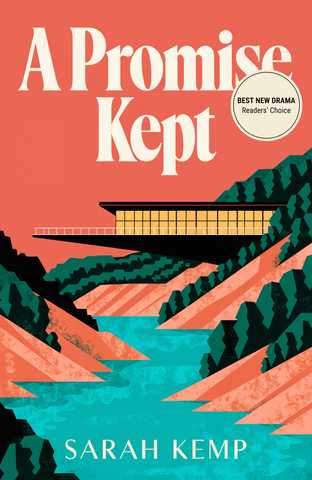
The drive ran a quarter kilometer through terraced gardens—sunflowers in absurd multitudes, then lettuce beds, then a lawn so level it looked poured rather than grown. The house itself was low and long, dark timber and pale stone, its roofline stepped down the slope so that nothing loomed. Jaime, who had expected vulgarity, felt his prepared contempt slide off and find nothing to hold.
Masaru Fujimoto came out to the gravel himself. He was seventy-one, small, immaculate in a linen shirt with no collar, and he bowed slightly and then shook Jaime's hand with both of his.
"Mr. Madrigal. You came."
"You paid me to come."
"I paid you to play. Coming was your decision." Fujimoto's Filipino-inflected English was slow and exact. "Come. You must see her before you see anyone."
Her.
The recital hall was built into the hill behind the house, entered through a corridor lined with photographs of orchestras. Fujimoto pushed open a heavy door and the air changed—cooler, drier, the particular dead-clean stillness of a room where humidity is a controlled enemy. Forty seats in five curved rows. Walls of pale slatted wood. A ceiling of angled panels. Three tall windows on the east side, floor to ceiling, giving out onto a stone terrace and the drop of the valley beyond.
And in the center of the floor, lid up, black as a lake at night, a Bösendorfer.
Jaime stopped walking.
"Nineteen twenty-seven," Fujimoto said. "Vienna. She spent forty years in a house in Kobe and then eleven in a warehouse. I had her restored over three years. New strings, new hammers, the soundboard repaired by a man who cried when he finished. The case is original. Look at the bass."
Jaime looked. Ninety-two keys instead of eighty-eight, the four extra bass notes black-on-black at the bottom of the register, the way the old Viennese houses built them.
"Do you want to touch her?"
"No," Jaime said, and then, hearing himself, "Yes. In a moment. Let me look first."
Fujimoto seemed to understand that entirely. He put his hands behind his back and waited, and the two of them stood there in the cold clean air like men at a graveside, which is not so far from how it felt.
Jaime had walked off a stage in Vienna eleven years ago, in the middle of the second movement, in front of nine hundred people. He had not planned to walk off. His hands had simply stopped, mid-phrase, the way a car stops when the engine dies, and in the silence he had heard a woman in the front row say *oh no* very quietly, in German, and that was what had gotten him out of the chair. He had gone through the wing door, past a stagehand holding a clipboard, down a corridor, out into the snow without a coat. They found him forty minutes later on a bench by the Danube canal with his shirt soaked through.
After that: Manila. A conservatory post. Sixteen years' worth of students learning their Czerny under his patient eye. Private playing only, in his own room, with the windows shut. He had made peace with it, or something he had agreed to call peace.
He sat down on the bench. He played a single note, low F, and the room answered with a warmth so immediate and generous that his throat closed.
"Ah," said Fujimoto, softly. "Yes."
"She's magnificent."
"She is. And she has been played by three people in nine years, and one of them was the technician." Fujimoto came around to the curve of the instrument and laid a hand flat on the rim. "I am not a musician, Mr. Madrigal. I make circuit boards and screens and things that will be garbage in six years. Sometimes I think this piano is the only object I own that will outlive the memory of me. I did not buy her to keep her quiet."
"Then why me?" Jaime said. "You could have anyone. You could have flown in someone from Berlin with a recording contract and a manager."
Fujimoto considered him.
"I heard you in nineteen ninety-eight," he said. "In Tokyo. You were twenty-six and you played Debussy, and I sat in the fourth row and thought: this young man is not performing. He is listening, in public, and letting us watch him listen. I have been to four hundred concerts. I remember perhaps six. Yours is one." He straightened a fold of his sleeve. "Then I read what happened in Vienna, and I read nothing after that, for eleven years, and I have thought about it more than a stranger has any right to."
Jaime looked at the keys.
"I might not be able to do it," he said. It came out of him with a bluntness that shocked him, and it was the first honest sentence he had spoken to another human being in months. "I want to be clear with you. I have not played for a room of people since. I might get to the middle and stop. You should know what you paid for."
Fujimoto nodded slowly. He did not offer reassurance, and Jaime was grateful.
"Tomorrow evening, forty people," the old man said. "Diplomats, businessmen, one journalist, a doctor I am considering funding. Half of them do not know Ravel from a rain gutter. If you stop, I will stand up and thank you and we will all go and drink very good wine, and I will pay you anyway, and no one will speak of it." He tilted his head. "And if you do not stop, then something will have happened in my house that was worth building the house for. Those are the two outcomes. Neither of them is a catastrophe. I say this as a man who has had catastrophes."
Jaime laughed—one short surprised breath.
"You're a strange host."
"I am an old man with a piano and no children," Fujimoto said. "Play. I will send tea."
He left. The heavy door sighed shut. Jaime sat alone in the cold bright room with the valley falling away past the tall windows, and he put his hands on the keys of an instrument built the year his grandmother was born, and he began, very quietly, to work.
Outside, in the last of the light, the mist came up out of the ravines and filled them, and along the ridge above the estate—above the green iron gate, above the sunflowers, in the shadow of the cogon grass—seventeen people lay on their bellies in the wet and watched the house turn on its lamps, one window at a time.