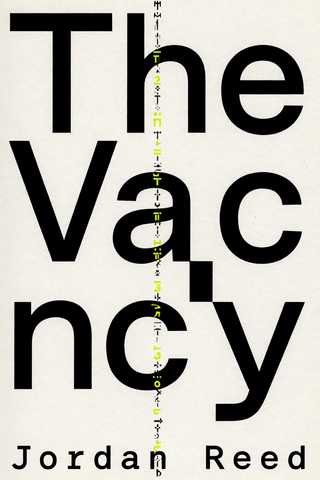
Read a preview
Chapter 1
Chapter 1: The Blank Room
The first thing Neil Harding understood was the color of the ceiling. It was a particular shade of institutional white—not warm, not cold, just the absence of any decision about color at all. He stared at it for what might have been minutes or hours, his mind as featureless as that expanse of plaster above him.
A machine beeped somewhere to his left. His right hand was taped to a board, an IV line running into the crook of his elbow. The tape pulled at the fine hairs on his forearm, and that small discomfort was the most real thing in his world.
"Mr. Harding?"
He turned his head. A woman stood in the doorway, backlit by the fluorescent corridor. She wore a white coat over dark blue scrubs, and she carried a tablet in one hand and a paper coffee cup in the other. Her hair was pulled back in a practical knot, dark brown threaded with early gray. She looked tired in the specific way that suggested tiredness was her permanent condition.
"Mr. Harding, my name is Dr. Westbrook. Katherine Westbrook. I'm a neurologist here at St. Ansgar's. Do you know where you are?"
He opened his mouth. The muscles of his jaw felt strange, as if they belonged to someone else and he was merely borrowing them.
"Hospital," he said. His voice was a rasp.
"Good. That's right. You're at St. Ansgar's Medical Center in Cleveland. Do you know what day it is?"
He didn't. He searched for the information and found nothing—not a gap exactly, but a smooth wall where knowledge should have been. Like reaching for a light switch in a dark room and finding only flat drywall.
"No," he said.
"It's Thursday, October seventeenth. You were brought in three days ago after an accident at the Reinhardt stamping plant on East 131st. Do you remember the accident?"
Another reach, another smooth wall. "No."
Katherine Westbrook set her coffee on the bedside table and pulled up a chair. She had sharp features—a narrow nose, pronounced cheekbones, eyes that were an unusual light brown, almost amber. She studied him with the focused attention of someone accustomed to reading faces for clinical data.
"That's not unusual after a head trauma. You sustained a significant concussion and some unusual electrical burns. The factory foreman said you were near a transformer bank when something went wrong. Do you remember working at the plant?"
"No."
"Do you remember your name?"
He thought about this. The name Neil Harding existed in his mind the way the word hospital did—as a label, a fact without context. He knew it was his name the same way he knew the ceiling was white. But he couldn't attach it to a life, a history, a face in a mirror.
"Neil Harding," he said. "But I don't remember being him."
Katherine made a note on her tablet. "That's an honest answer. We're going to run some more tests. In the meantime, is there anyone we should contact? Family, friends?"
The smooth wall again. Not even the echo of a name.
"I don't know."
"All right." She stood, and something in her expression shifted—a flicker of something beyond clinical interest. Curiosity, maybe. Or concern. "Try to rest. I'll be back this afternoon."
She left, and Neil stared at the ceiling again. He listened to the beeping machine, to the shuffle of feet in the corridor, to the distant chime of an elevator. Each sound was precise and distinct, and he realized he could hear things he probably shouldn't—the conversation at the nurses' station forty feet away, the electrical hum of the fluorescent lights, the particular frequency of the heart monitor, which was not the frequency printed on the machine's specifications but something slightly different, slightly off.
He knew this without knowing how he knew it.
He closed his eyes and tried to sleep, but behind his eyelids, he saw landscapes that made no sense: a plain of dark red stone under a sky with two suns, a city built vertically along the face of an impossible cliff, an ocean that was not water but something denser, something that sang.
He opened his eyes quickly. The white ceiling was still there. The machine still beeped.
He was Neil Harding, and he was in Cleveland, and everything was fine.
The tests came that afternoon and continued into the next day. MRI, CT, EEG, a battery of cognitive assessments. Katherine Westbrook administered several of them personally, which Neil gathered was unusual for an attending neurologist. She brought a resident with her—a young man named Dr. Pham who asked Neil to count backward from one hundred by sevens and to remember three words and repeat them five minutes later.
Neil counted backward from one hundred by sevens in 2.3 seconds. He knew it was 2.3 seconds because he could feel time passing with a precision that seemed abnormal, though he had no baseline for comparison.
"That's... very fast," Dr. Pham said, glancing at Katherine.
Katherine's expression didn't change. "The three words were elephant, umbrella, and sixteen," she said.
"Elephant, umbrella, sixteen," Neil repeated.
"I haven't asked you to recall them yet."
"You said to remember them. I remember them."
She made another note. "What about spatial reasoning? Dr. Pham, the block design test."
Dr. Pham set a collection of red and white blocks on Neil's bed tray and showed him a card with a geometric pattern. "Try to reproduce this pattern using the blocks."
Neil looked at the card. His hands moved before his conscious mind engaged, assembling the blocks with a speed and precision that made Dr. Pham take a step back. The pattern was complete in under four seconds.
"Another one," Katherine said.
Dr. Pham showed him a more complex pattern. Neil completed it in three seconds. His hands seemed to know what to do independent of his thoughts, as if the spatial relationships were not something he calculated but something he perceived directly, the way a person perceives color.
"Dr. Westbrook," Pham said quietly, "his scores are—"
"I know what his scores are." Katherine was looking at Neil with that same expression—curiosity shading into something deeper. "Mr. Harding, I'd like to show you something. These are your brain scans from yesterday."
She turned her tablet toward him. On the screen was a cross-section of a human brain—his brain, presumably. Even with no medical training that he could recall, Neil could see that something was different. Amid the familiar folds and structures were dense clusters of tissue, bright on the scan, concentrated in areas around the hippocampus and the prefrontal cortex.
"These structures," Katherine said, pointing, "don't correspond to any known brain anatomy. They're not tumors—the cellular composition is entirely different. They appear to be functional neural tissue, but organized in a way I've never seen in any textbook, any journal, any case study. Ever."
Neil stared at the image of his own brain. The bright clusters looked, to him, like knots in wood—natural, integral, part of the grain.
"What does that mean?" he asked.
"I don't know yet. But I intend to find out."
There was a quality to her voice that Neil would come to recognize over the following weeks—a quiet stubbornness, a refusal to leave a question unanswered. Katherine Westbrook was not the kind of doctor who filed away anomalies and moved on. She was the kind who stayed late, who pulled threads, who followed the strange data wherever it led.
It would lead her further than either of them could have imagined.
Neil was discharged on a Tuesday. His injuries had healed with remarkable speed—the electrical burns faded to faint pink marks within days, and his concussion symptoms resolved completely. The hospital social worker, a patient woman named Delia Furness, arranged for him to stay at a transitional housing facility on the west side called the Breckner House. It was a converted Victorian with creaking floors and the permanent smell of coffee and industrial cleaner.
His room was on the third floor, small and spare—a single bed, a pressed-wood dresser, a window that looked out onto a parking lot and, beyond that, the gray ribbon of the Cuyahoga River. He sat on the bed and felt the extraordinary strangeness of having no context for his own existence. No photographs. No favorite shirt. No memory of a meal he'd enjoyed or a song he'd liked or a person he'd loved.
Delia had also arranged a job for him—janitorial work at a commercial laundry facility on Lorain Avenue. The pay was minimal, the work was monotonous, and Neil discovered that he was suited to it in ways that surprised his supervisor, a stocky man named Gerald who chewed toothpicks and communicated primarily through grunts.
Neil could fix things. Not just mops and brooms—the machines. On his third day, one of the industrial dryers threw a bearing and began screaming like a wounded animal. Gerald called the repair service, but Neil walked over to the machine, placed his hand on its housing, and felt the problem. Not diagnosed—felt. The vibration pattern told him exactly which bearing had failed, and something deeper told him how the mechanism was supposed to work, the elegant simplicity of its design, the specific torque values for each bolt.
He fixed it in twenty minutes with a socket wrench and a replacement bearing from the parts shelf.
"Where'd you learn to do that?" Gerald asked, toothpick bobbing.
"I don't know," Neil said honestly.
Gerald stared at him for a long moment, then grunted. "Well. Keep doing it."
The strange things accumulated. At the Breckner House, Neil discovered he could tell when the wiring in the walls was carrying current. Not by listening—by touching the wall and feeling a faint, organized pulse. He could distinguish between the 60-hertz hum of standard AC power and the higher-frequency switching of the LED lights in the hallway. When a storm knocked out power to the block, Neil felt it happen before the lights went out—a sudden silence in the walls, as if the building had stopped breathing.
He kept these observations to himself.
The dreams continued. Every night, the same alien landscapes—the red stone plain, the vertical city, the singing ocean. But now there were figures in the dreams, tall and indistinct, moving through the impossible architecture with a grace that suggested they'd built it. Neil couldn't see their faces. He could feel their emotions, though—a vast, patient sadness that lingered after he woke.
Two weeks after his discharge, he was mopping the floor of the laundry facility's break room when the television, tuned to a Spanish-language news channel, began reporting on a hurricane in the Caribbean. Neil stopped mopping. He was understanding every word. Not translating—understanding, the way a native speaker would, the grammar and idiom as natural as breathing.
He didn't speak Spanish. He was certain of this, as certain as he could be about anything given his lack of memory. Neil Harding, whoever he had been, had worked in a stamping plant in Cleveland. There was nothing in his meager file to suggest fluency in a second language.
The next day, a delivery driver spoke to his colleague in Mandarin as they unloaded supplies at the laundry's loading dock. Neil understood that too.
He called Katherine Westbrook's office that afternoon.
"I need to talk to you," he said. "Something is wrong with me. Or something is very right with me. I can't tell which."
There was a pause on the line. Then Katherine said, "Can you come to the hospital tomorrow? Not as a patient. Come to my office, fourth floor, the neurology research wing. I have something to show you too."