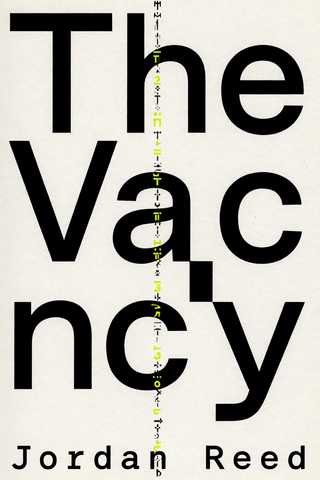
Read a preview
Chapter 1
Chapter One: Iteration Six
They took my mind on a Tuesday morning, the way they always did, and gave it back to me before lunch.
The scan cradle in Bay Nine smelled of warm dust and antiseptic gel. I lay in it with my arms at my sides and my skull inside a ring of quiet magnets, and Robin Henke sat at the console four meters away with a cup of tea going cold beside his elbow, and for eleven minutes neither of us said anything, because talking during a capture introduced what he called conversational noise.
When the ring powered down I sat up and rubbed my eyes.
"Clean," Robin said. "Ninety-nine point four percent coherence. Your best in months."
"I've been sleeping."
"You've been not dying. It helps." He tapped something. "Timestamp zero-six-eleven. You're saved."
That was the phrase. He never varied it, and I had stopped teasing him about it, because I had come to like the sound. *You're saved.* Two hundred and forty gigabytes of me, compressed and shelved in a cabinet three decks down, waiting to be needed.
I swung my legs off the cradle and pulled my jacket on. Robin was twenty-nine, thin as a wire brush, with the careful hands of a man who had assembled model ships as a boy and never entirely stopped. He had printed five of my six bodies. He was, in a way I found difficult to explain to anyone, the closest thing I had to a parent.
"Anything today?" he asked.
"Briefing at eight. Something about the landing site."
"Ah." His eyes went to the vat behind him — the long ceramic coffin where bodies grew, drained and dry now, lit by a strip of soft amber light. I looked away from the amber. I always did. I had no idea why.
"You'll tell me if it's bad," he said.
"You'll know before I do."
He didn't laugh. He never did at that one.
---
The *Perdurance* had been in flight for eleven years and two months. She was a kilometer of braced spine and swollen tanks and rotating habitat drums, hauling twenty-two hundred sleeping colonists and a skeleton crew of forty toward a rocky, wind-scoured, unremarkable world catalogued as Tallis-4. For eight of those years we had been accelerating. For the last three we had been slowing down, which felt exactly the same and was, according to the navigators, philosophically distinct.
Most of the crew had aged into the job. I had aged into a different one.
I found Jolene Mak in the mess, holding a bowl of something grey in both hands like it might get away from her. Jolene was a geologist, fifty-one, built like a door, with a laugh that made the ceiling panels rattle. She had been awake for the whole voyage because the colony needed someone who could read rock, and there had been no rock to read for eleven years, so she had spent that time becoming very good at cards.
"Iteration six," she said. "You look tired."
"They scanned me."
"Does it hurt?"
"It's like someone reading over your shoulder. For eleven minutes." I sat. "Have you seen the orbital plates?"
That lit her up. She turned her slate around and pushed it across the table, and there it was: Tallis-4, in false color, a broad dun continent smeared with dust storms, a shallow inland sea the color of old iron, and along the western edge of the survey box a scatter of hot spots rendered in bright, ugly red.
"Thermal," she said. "Deep. Sixty, seventy meters down. There's a whole field of them and the probe couldn't get a clean look because the regolith is full of iron oxide and the ground-penetrating return is garbage."
"Volcanic?"
"That was my first guess. But look at the spacing." Her thick finger moved from one red dot to the next. "Two hundred and ten meters. Two hundred and eleven. Two hundred and nine. Across nine kilometers."
I looked for a while. "Nature does patterns."
"Nature does *distributions*," Jolene said. "That's a grid, Ayla."
I didn't say anything. Below us, unimaginably close after eleven years, was a planet with a grid under its skin.
"Whoever goes down there first," Jolene said carefully, "gets to be the one who finds out."
"Yes," I said. "That's rather the point of me."
---
I keep a notebook. Actual paper, actual pen, forty-eight ruled pages, stitched binding, requisitioned from the colony's school supplies under a false line item that Jolene helped me write. Everyone else on this ship keeps logs, and logs live in systems, and systems are owned.
Paper is mine. And paper survives things I don't.
The rule I made for myself in my third iteration is simple: after every backup, before every mission, I write down what the last version of me knew. Not feelings. Facts. Who said what, who looked away when they said it, what smelled wrong. Because the person who reads the notebook next may not be, in every sense that matters, me.
At 0730 that Tuesday I sat on my bunk and wrote:
*Backup 0611. Coherence 99.4. Briefing at 0800 re: landing site thermals. Jolene says the vents are on a grid. If I'm wrong about that, I want it in writing that she said it first.*
Then I capped the pen, and went to be told what to do.
---
The conference room off the bridge had a real window, one of only four on the ship, and through it Tallis-4 filled the frame like a thumbprint on glass. Captain Zoya Prenn stood with her back to it, which I had always thought was a kind of discipline.
Prenn was sixty, narrow, grey-cropped, with a voice she never raised because she had never needed to. She had been a merchant hauler master for twenty years before the colonial service bought her out. She ran the *Perdurance* like a woman who intended to hand it back in good condition.
Quartermaster Henrik Dray leaned against the bulkhead beside her with his arms folded. Dray was broad and pink and always slightly damp, a man who had made himself indispensable by knowing where everything was stored, and who therefore knew a great deal about everyone. He nodded at me as I came in. He was the only person aboard who called me by my full designation.
"Iterant Rennik."
"Quartermaster."
On the wall screen, unexpectedly, was Director Caiwen Dorr.
I stopped one pace inside the door. Dorr headed the colonial governance council — five appointees who held legal authority over the colony and, by extension, over every contract aboard, including mine. She was fifty-four, small, immaculate, with a flat calm manner that made her sound like she was reading everything off a card she had written years ago and still agreed with. She very rarely attended survey briefings. Surveys were operations. Dorr did policy.
"Sit down, Ms. Rennik," she said. "This won't take long."
I sat.
Prenn brought up the map. "Preliminary landing site is here, on the western shelf. Flat, drained, good insolation, and a subsurface aquifer forty meters down that will save us fourteen months of drilling. The problem is this." The red dots. "Thermal anomalies, subsurface, forty to seventy meters, temperature differential eighteen to twenty-two Kelvin above ambient rock. We do not know what they are. We do not put twenty-two hundred people on top of something we don't understand."
"Understood," I said.
"You'll take a light shuttle down at fourteen hundred ship time. Full sensor package — seismic array, thermal string, atmospheric sampler. Set up a survey line across four of the anomalies, run active seismic, get us a picture. Twelve hours on the surface, then up." She paused. "You will not attempt to enter any void space. Not for any reason."
"Is there void space?"
"There may be caverns," Dray said. "Which is why the temperature reads high — trapped gas, geothermal circulation. Standard."
Jolene had told me, an hour earlier, that trapped gas did not organize itself on a two-hundred-and-ten-meter pitch. I looked at Dray and said nothing, because I had learned that saying nothing produced better information than talking.
Dorr spoke. "How long until the site must be cleared, Captain?"
"Seventy-two hours," Prenn said, "if we want to begin unloading before the storm season closes the shelf."
"Then let's not lose any of them." On the screen, Dorr's eyes moved to me. It was the first time she had looked at me directly. "Ms. Rennik. Your contract entitles you to ask about hazards. Ask."
I thought about it. "What am I likely to find down there that the council already suspects?"
A pause exactly long enough to be a decision.
"Rock," Dorr said. "Fourteen hundred hours. Thank you."
The screen went dark.
---
When it was over, Dray walked with me as far as the shuttle deck. He talked about the weather models, and about how the shelf dust would ruin the seals, and how he had exactly nine spare suit gaskets and would like them back.
At the hatch he said, "You're due a save Friday, correct?"
"Friday morning."
"So you're carrying — what, eight hours?"
"Six, by the time I land."
He nodded like a man checking a manifest. "Not much to lose, then."
I have thought about that sentence more than any other thing anyone has said to me in my life.
At the time, I laughed. I said, "There never is." I climbed into the shuttle and ran my preflight, and while the deck depressurized I took out the notebook, because it was still in my thigh pocket and I had one more thing to record.
*Note for whoever reads this,* I wrote. *Dorr sat in on a routine survey briefing. She has never done that. She asked me to ask about hazards, then told me I'd find rock.*
*She cares about this site. Find out why.*
Then I left the notebook in the shuttle's forward locker, because paper doesn't do well in a vacuum suit, and I went down.