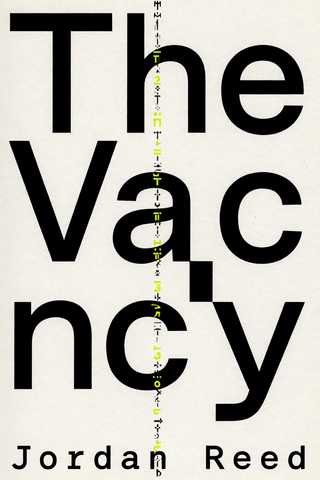
Read a preview
Chapter 1
Chapter One: Beacon
The Weyburn was nine days out of Ceres and smelled like every one of them.
Livia Pacht had long ago stopped noticing the ship's particular perfume — hot dust on the recirculators, the sour tang of the galley's protein cycler, the faint burnt-sugar smell that meant the number-three scrubber cartridge needed changing again. She noticed other things instead. The half-second hesitation in the port attitude thruster. The way the main drive's hum dropped a quarter-tone when the reactor ran cold. A sixty-meter hauler with forty-one years on her frame talked constantly, and Livia had learned her language the way other people learned a spouse's moods.
What she had not learned to ignore was silence where sound belonged.
"Say that again," she said.
Petar Drajic didn't look up from the navigation board. He was a narrow, gray-bearded man who sat in his chair the way water sat in a glass, entirely at rest, and he had flown belt routes since before Livia could read. "Beacon," he said. "Class-two emergency transponder. Bearing zero-four-one, high. Range about eleven thousand kilometers and closing slow."
"Out here?"
"Out here."
Livia leaned over his shoulder. The tactical plot was mostly empty, which was correct; they were nowhere. The Weyburn's fourteen-day circuit ran from the outer-belt processing platforms inward to Reservoir Station, the great water refinery hanging at Callisto's leading trojan point, and the middle of that circuit was as blank as space got. No lanes. No traffic. No reason for anything to be here.
The beacon pulsed on the plot, patient as a heartbeat.
"Manual activation," Petar said. "See the pattern? Automatic beacons come up on the collision profile — three short, long gap. This one's on the distress profile. Somebody keyed it by hand."
Behind them, the hatch to the engineering trunk banged open and Taz Winton came through it sideways, wiping her hands on a rag that had been beyond saving for a year. She was short and thick through the shoulders, her hair cropped to a dark fuzz, and she had the permanent squint of somebody who spent her life two feet from things that vibrated.
"Why are we throttling back," she said. It was not a question so much as an accusation.
"Distress beacon," said Livia.
Taz stopped. The rag went into her hip pocket. "How far off track?"
"Four hours of burn to match. Maybe five back to profile."
"We're carrying pressurized medical for the Callisto camps. Nine hours late means we eat the demurrage." Taz said it flatly, without argument in it. She was laying the cost on the table so nobody could pretend later that it hadn't been there.
"I know what it means."
"Twelve hundred, maybe fourteen."
"I know, Taz."
Taz nodded once and dropped into the third seat. "Then let's go look at it."
That was the thing about the three of them that Livia had never quite managed to say out loud in seven years. Nobody ever made her argue.
They burned. The Weyburn's main drive lit with a sound like a large animal clearing its throat, and Livia felt the deck press up into her boots at a comfortable third of a gee. She spent the four hours doing what she always did with dread — paperwork. She filed a diversion note with the Jovian Transit Authority relay, knowing the relay was six days behind on acknowledgments. She logged the fuel. She checked the medical containers' pressure seals twice, and then a third time, because her hands wanted something.
At three hours out, the beacon resolved on optical, and Petar made a small unhappy sound.
"That's not a ship," he said.
It was a box. A long rounded rectangle, matte gray, tumbling with a slow lazy roll along its own length — end over end once every ninety seconds, patient as a log in a river. Standing lights blinked along one edge. There were docking collars at both ends and a service airlock in the flank, and stenciled on the side in meter-high letters, half in shadow, was a name.
"ADELHEID," Livia read.
Petar sat forward for the first time in four hours.
"You know it," Livia said.
"Everybody knows it. Mid-tonnage ice freighter, Durak's boat, runs Callisto surface harvesters up to Reservoir. She went missing eleven days ago." He tapped the plot as though it had lied to him. "Between the harvester field and the station. Which is nowhere near here. This is forty million kilometers off her track."
"Forty," said Taz.
"Forty."
"That's not drift."
"No," Petar agreed. "That is somebody's engine."
Livia stared at the tumbling box. What she was looking at was a cargo module, one of the standard detachable spines a freighter carried on its dorsal rail — ninety tonnes of refined water ice, if it was loaded, and the Adelheid was always loaded. She was looking at somewhere between four and six million credits of the most valuable ordinary substance in the Jovian system, floating unattended in the dark, with its emergency beacon switched on by a human hand.
"Where's the rest of her?" Taz said.
"That," said Livia, "is the question I'd like not to be asking."
They took ninety minutes to match the tumble, Petar working the thrusters in small apologetic taps, killing the roll one axis at a time until the module hung dead still off the Weyburn's port beam and the standing lights strobed against the hull like a lighthouse. Livia suited up. So did Taz, over the usual objection that somebody ought to stay aboard, an objection which Petar ended by pointing out that he was the somebody and always had been.
The crossing was thirty meters of nothing. Livia had done a hundred of them and had never gotten used to the moment when her boots left the Weyburn's hull and Jupiter's distant unlit half filled a third of the sky, a smudge of banded shadow with the sun a hard white pinhole to one side. Cold came up through her gloves out of habit rather than physics.
The module's service lock had a manual crank. She got it turning.
"Pressure," Taz said, reading the gauge inside the outer door. "It's pressurized. Point-eight bar."
"Cargo's ice. Why would it be pressurized?"
"It wouldn't. Not for a run. You pressurize a module for loading inspection and then you pump it down for the transit, because pressure is mass." Taz's helmet turned. In the suit lights her face was all bone and shadow. "Livia. Somebody left the air in."
They cycled through. The inner door swung and their lights went down a corridor two meters wide, walled on both sides by the flanks of ice canisters stacked four high, each one frosted white and stenciled with the Callisto Harvesting Concession's rayed sunburst. It was very cold. Their breath hung and glittered.
Livia's air readout flashed amber. "Carbon dioxide's high in here. Way high."
"Scrubber pack." Taz's light found it — a portable life-support unit bolted to the bulkhead, the kind kept in every cargo module for the two hours a dockhand might spend inside. Its cartridge indicators were all in the red. Its run counter read two hundred sixty-one hours.
Two hundred sixty-one hours was eleven days.
Something moved at the far end of the corridor.
Livia had her hand on the cutting torch at her belt before she understood she'd reached for it. The movement came again — a shifting, a scrape of fabric on metal — and her light swung and caught, in the gap between two canister stacks, a nest.
That was the only word. Someone had dragged out thermal blankets and a survival bag and packed them into the crawlspace behind the cargo webbing, and had run a heater strip from the module's auxiliary bus, and had set a mess tin under a canister whose seal had been deliberately cracked so that a slow bead of meltwater dripped into it, one drop every few seconds. Ration wrappers, folded flat, were stacked in a neat pile weighted with a bolt. Eleven days of them.
In the middle of the nest was a boy.
He was fourteen at most, in a harvester camp coverall three sizes too big, and his lips were split white and his eyes were open and did not track. Heat came off him. Livia could see it in the way the frost had backed away from him in a ragged halo on the deck plate.
"Oh, hell," said Taz.
Livia went down on her knees. The boy's hand came up, slow, and closed on the wrist of her suit with surprising strength.
"Is it the station," he said. His voice was a hinge that needed oil. "Are we at the station."
"Not yet," Livia said. "Soon."
"I have to get to the station. My mother's at the station."
"All right."
"Don't let them dock," he said, and his eyes rolled, and his grip did not loosen at all. "Don't let them dock, don't let them dock, don't let them—"
And then he stopped talking, and his hand fell open, and Livia had him up off the deck and against her chest before Taz finished saying her name.