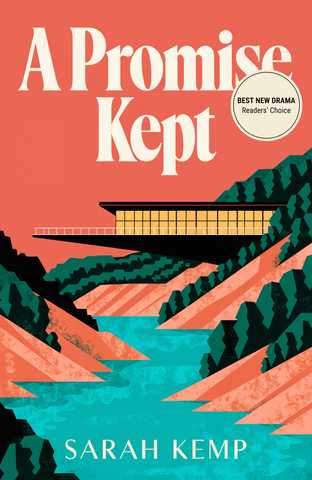
Read a preview
Chapter 1
Chapter 1: Square Footage
Calvin Roebuck could measure a kitchen to the quarter inch without a tape. It was a party trick that had stopped being funny around the time his marriage ended, though he still did it — standing in other people's homes, eyes half-closed, calculating the distance between countertop and cabinet like a man praying in a language only the bank understood.
Forty-one years old. Six-foot-one in the work boots he wore to every inspection because they made the floorboards creak in a way that reminded homeowners their houses were old, which reminded them they were grateful for any number he wrote down. He carried a clipboard because people trusted clipboards more than tablets. He wore glasses he didn't need because an appraiser in glasses looked like a man who read things carefully.
He didn't read things carefully.
He read them the way his clients needed them read.
The house on Ridgecrest — the one he was standing in now, Wednesday morning, February light cutting through blinds that hadn't been dusted since the Clinton administration — was worth three hundred and ten thousand dollars. Maybe three-fifteen if you were generous about the half-bath someone had installed in what used to be a pantry, the showerhead hovering over the toilet like a question nobody wanted to answer.
Cal wrote down four hundred and twenty thousand.
He photographed the kitchen from an angle that hid the water stain shaped like Florida. He noted "updated fixtures" because someone had replaced a doorknob. He described the backyard as "entertainer's patio" because there was concrete and it was outside.
This was his gift. This was his sin. He could look at a home where someone had raised children, buried dogs, argued about money, slow-danced to Anita Baker on New Year's Eve, and reduce it to a number designed to make a stranger rich.
The stranger, in this case, was Pinnacle West Capital Group, which was not a group and had no connection to the West beyond a post office box in Culver City. Pinnacle bought bungalows in Crenshaw Vista, refinanced them at Cal's inflated values, extracted the equity, made cosmetic improvements — barn doors, Edison bulbs, the word "artisan" applied to anything that wasn't moving — and sold them to young professionals who described the neighborhood as "up and coming" without ever asking where the previous residents had gone.
Cal knew where they'd gone.
Some had gone to Palmdale. Some to Lancaster. Some to the Inland Empire, which sounded like a place where empires went to retire. Some had simply gone — evaporated from the tax rolls, from the church directories, from the booths at Duke's Chicken & Waffles where Cal ate dinner four nights a week because the food was good and the guilt was better on a full stomach.
He finished the Ridgecrest appraisal in forty minutes. Locked the front door with the combination the listing agent had texted him. Stood on the porch and looked down the block.
Crenshaw Vista was not a neighborhood that announced itself. No gateway arch, no branded signage, no "historic district" plaques bolted to lampposts. It was twelve square blocks of postwar bungalows, dingbat apartments, a Baptist church, a liquor store that had been a pharmacy, a pharmacy that had been a barbershop, and Duke's, which had been Duke's since 1974 and would be Duke's until the sun consumed the earth or the lease expired, whichever came first.
Cal's grandmother, Pearl Roebuck, had moved here in 1962 with her husband, Leonard, and four hundred dollars in cash. They'd bought their house from a white family that was leaving because Black families were arriving, a transaction conducted with the quiet efficiency of a hostage exchange. Pearl had planted a magnolia tree in the front yard the day they moved in. The tree was still there. The house was still there. Pearl was still there, at eighty-three, though lately she was more often at city hall than at home.
Cal drove past her house on his way to the next appointment. The magnolia was blooming. Pearl's Oldsmobile was gone, which meant she was at the council meeting.
He should have stopped.
He didn't.
He had two more appraisals before lunch, both for Pinnacle, both on blocks where the original owners were being squeezed by rising taxes on homes that were suddenly, mysteriously, worth twice what they'd been worth five years ago.
Mysteriously.
Cal adjusted his unnecessary glasses and drove on.
---
Duke's Chicken & Waffles occupied the ground floor of a building that had survived the '92 uprising, two recessions, and a health inspection that the owner, Duke Henderson III, described as "a conversation." The booths were red vinyl. The jukebox was broken in a way that made it play only the first four seconds of any song before skipping to the next, creating an accidental avant-garde experience that Tavon Peete, the art student, called "a commentary on attention span" and everyone else called "annoying."
Cal slid into the back booth at seven-fifteen. His plate arrived without him ordering — two wings, a waffle, hot sauce, a look from the waitress that said she knew he'd been here yesterday and the day before and the day before that.
Odell Baines was already seated across from him, working through a plate of catfish with the methodical patience of a man who had sorted mail for thirty-one years and now sorted opinions with the same unhurried precision.
"They're voting on the upzoning next quarter," Odell said, not looking up from his fish. "Pearl's down there right now giving them the business."
"I know."
"You should be there."
"I had appointments."
Odell looked up. He was seventy-three, bald as a river stone, with hands that could palm a basketball and eyes that could palm a lie. "Appointments," he repeated, the way a doctor might repeat a patient's claim that they only drank socially.
"I'm working, Odell."
"Mm-hmm. For those Pinnacle people."
"For whoever pays."
"That's what I said."
Miss Vernell Satter arrived at seven-thirty, trailing the scent of pressing oil and moral authority. She was sixty-eight, five-foot-two, and had operated Vernell's House of Style on Crenshaw Vista Boulevard for forty-one years. She had done hair for three city council members, two state assemblymen, a gospel singer who'd opened for Patti LaBelle, and, once, in a story she told with varying levels of embellishment, Dionne Warwick's cousin's neighbor. She slid into the booth beside Odell and immediately began adjusting the salt shaker, the napkin dispenser, and the angle of Cal's plate, because Miss Vernell believed that disorder in small things predicted disorder in large ones.
"Pearl's speech is tonight," she said. "You coming?"
"He had appointments," Odell said.
"Appointments." Miss Vernell said it the same way Odell had. Cal was beginning to feel like a word being passed around a vocabulary quiz.
"The council meeting started at five," Cal said. "It'll be over by now."
"Pearl's slot is at eight. She requested extra time. Five minutes for the speech, five minutes for the Lord to move through the chamber."
Cal's phone buzzed. A text from Nia.
Nia Roebuck. Ex-wife. City planning clerk. The woman who had loved him with a ferocity that made him feel seen and then divorced him with a precision that made him feel appraised.
The text read: *Your grandmother is about to go off. You should be here.*
Cal stared at the message. He could picture Pearl at the podium — small, straight-backed, wearing the navy dress she saved for battles, her reading glasses on a chain, her notes on index cards she'd written in the careful penmanship of a woman who'd been taught that presentation was a form of resistance.
He should go.
He flagged the waitress for a to-go box.
His phone buzzed again.
Nia: *Never mind. Come now. Something's wrong.*
Then, thirty seconds later: *Cal. Come now.*
Then nothing.
He left the wings on the table and ran.