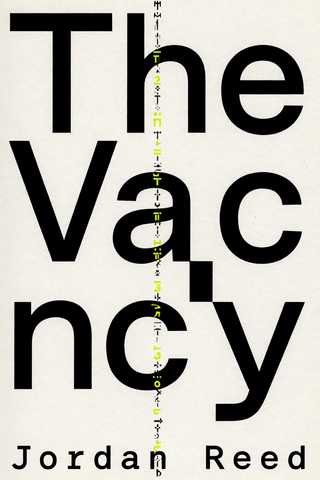
Read a preview
Chapter 1
Chapter One: The Circuit Rider
The wind pump at the Nykvist farm had been screaming for three days before Erik Sundqvist arrived to make it stop.
He heard it a kilometer out, riding the gravel road with his trailer rattling behind the bicycle — a high, dry shriek, rising and falling with the gusts off the water. Eero heard it too. The boy lifted his head from the handlebars of his own smaller bicycle and said, without any particular emotion, "Dry bearing. Upper thrust race. It'll seize inside a week."
"You can hear the race from here?"
"I can hear that it's dry." Eero pedaled two strokes and added, "You said the same thing about the Rautio mill in April. Then you said the bearing was a lie the machine told to hide a bent shaft."
Erik laughed. It came out as a cough; the wind had been in his face since dawn. "You remember everything I say, and most of it isn't worth remembering."
"I know which parts aren't worth it," Eero said. "I keep those separately."
The farm sat on a low rise where the pine gave way to rye fields, six houses grouped around a stone byre, and beyond them the flat gray glitter of the Gulf of Bothnia. Forty-one people lived there now, up from twenty-nine four years ago. Erik knew the numbers because Eero knew the numbers, and Eero had heard them once from a woman at a barter market in Vaasa and would carry them until he died.
Hilkka Nykvist met them at the gate with a hatchet in one hand and a rooster in the other, and she was so glad to see Erik that she nearly hugged him with both.
"Three days," she said. "Three days of that noise. My mother says it's the sound of a soul leaving."
"Your mother isn't wrong. It's the pump's soul." Erik leaned his bicycle against the fence and looked up at the tower — a lattice of welded scrap eight meters high, blades cut from a boat hull, the whole thing homemade and proud and screeching. "Do you have grease?"
"We have lard."
"Then we have grease."
He climbed. He was fifty-one and his knees announced it at every rung, but the climbing was the part he had come to like best about the work: the moment when the ground let go of him and the world spread out flat and unhurried in every direction. From the top of the Nykvist tower he could see eleven kilometers of coast. Not one aircraft contrail. Not one cell mast. Not one dish pointed at a sky that no longer answered.
Seven years, this autumn.
He worked the cap off the bearing housing with a screwdriver he had ground down himself, packed the race with rendered pig fat, shimmed the shaft with a strip cut from a tin of Danish butter cookies, and told Eero to remember the shim thickness, which Eero already had. The shrieking dropped to a grumble and then to a smooth low whirr, and down below, water began to slap into the trough.
Hilkka fed them boiled potatoes, salt herring, and a little butter, which was payment enough for a day's work in the ninth year of the world's long silence. Afterward, while the light went orange and level, Erik set his transceiver on the table and began to crank.
This was the part the children came for. Six of them crowded in the doorway to watch the strange man turn the handle on a green metal box the size of a bread loaf, wound with copper and patched with epoxy, until a hiss came out of it like the sea trapped in a jar. Erik walked the dial slowly. He had learned patience from a lifetime of listening to objects that took eleven thousand years to say one word.
"Four thousand six hundred and twenty-five," he said, and Eero repeated it back to him, and Erik wrote it in the notebook: 4625, then the date, then the bearing of the signal and its strength.
Out of the hiss came a woman's voice, reading numbers.
"Grain," said Eero. "That's Kokkola. She reads grain and diesel every second evening at half past six. Her voice goes up at the end of every fourth number, like she's asking permission."
The children laughed. Eero did not; he had not been making a joke. He simply reported what was true and let others do what they wanted with it.
They found a fisherman on 5320 warning of ice forming early in the northern bays. They found a man in Umeå, across the water, calling for a veterinarian for a horse with colic, over and over, with the patience of someone who had been calling for hours. Erik noted it all. Eleven years ago he had mapped the hydrogen in a spiral galaxy for a living, drawing lines between clouds of gas nobody would ever visit. Now he mapped voices. Who was still talking. Who had stopped. Where the silences were spreading.
That was how you knew a settlement had failed, these days. Not from news. From silence on a frequency that used to be busy.
"You should put your name on that," Hilkka said, nodding at the notebook. "Sell copies."
"I give copies," Erik said. "To anybody who'll keep them accurate."
"You'll die poor."
"I'll die owed favors in nine hundred kitchens." He closed the notebook. "It's a better pension."
They slept in the byre, in straw that smelled of last year's cows, and in the dark Eero recited. He did it most nights, quietly, the way other people prayed: the frequencies, in order, with their times and their owners. It had started as a game Erik invented in the boy's first winter, when Eero would not speak at all and Erik had needed to know whether the silence was damage or choice. It turned out to be neither. The boy simply had no reason to talk until he had something exact to say.
Erik had found him in an abandoned school outside Vaasa two winters earlier, in a classroom with the windows boarded and a stove made from a filing cabinet. Ten years old then. His family had gone south in the second year with a group of forty and had not come back, and Eero had waited in that school for eleven months, eating what he could trap, because his mother had told him to wait there and he was not a boy who disobeyed instructions. He had recited to Erik, in that first hour, everything his mother had said on the morning she left. All of it. Word for word, including the pauses.
Erik had never told anyone how long he had sat on the floor of that classroom afterward before he could stand up.
"Erik."
"Mm."
"How far to Korholm?"
"Two days on the road, if the bridge at Kaskinen is still standing. Then we take the boat down the coast."
A pause in the straw. "Doctor Wikström is at Korholm."
"She is."
"You were married to her for nine years and four months."
"I was, and I'd love to know who told you the months."
"You did," Eero said. "In Kristinestad, in the spring, when you had the schnapps that made your face red."
Erik lay looking up into the dark rafters. Somewhere a hen shifted and complained.
"Go to sleep," he said.
"Are we going there because the radio is broken, or because she's there?"
"The radio's broken."
"Both is allowed," Eero said, and rolled over, and was asleep in the time it took Erik to think of an answer.
—
The bridge at Kaskinen was standing. The road south had gone to grass in the middle and gravel at the edges, and twice they walked the bicycles around cars that had been sitting in the same place for seven years, hoods open, engines long since carried off. Rowan berries burned red in the ditches. Erik had learned to read a season the way a farmer did now, by berries and bird traffic and the smell of the water, because there were no forecasts anymore. That was the part people outside the work never understood. They mourned the internet, the flights, the films. What killed you was not knowing whether Thursday would bring a storm.
The Dimming had taken eleven days.
Erik had watched most of it from the control room at the Onsala observatory, on the Swedish side, with four colleagues and a coffee machine that kept working long after everything else stopped. A dead upper stage and a defunct communications platform had met over the South Atlantic at fourteen kilometers per second, and made nine thousand fragments, and those fragments had gone on to find other satellites, which made more fragments. Cascade. Kessler's old arithmetic, patient as a debt collector. By the fourth day, low orbit was a shooting gallery. By the seventh, the operators were burning their remaining fuel to dodge and hitting each other in the dodging. By the eleventh, there was nothing left up there but gravel going twenty-eight thousand kilometers an hour, and below it, four billion people staring at devices that had gone stupid all at once.
What followed was not the collapse anyone had rehearsed. Nobody nuked anybody. Power stations mostly kept running for a while, and then didn't, for boring reasons: parts, logistics, nobody to sign for the delivery. The first winter had taken more people than the debris ever did, and it had taken them quietly, in cold houses, of ordinary things.
It had taken Erik's brother, too. But that was a different chapter, and Erik had learned to keep it closed while he was on the road.
On the second evening they came over a rise and there was the archipelago spread out below in the low sun: a hundred islands of gray rock and black pine, channels running silver between them, and, on a spit of land with a stone breakwater curled around it like an arm, the fishing settlement of Korholm. Smoke from twenty chimneys. Nets on frames. Six boats at the quay, and one of them, Erik was pleased to see, was his own — the Kajava, a nine-meter wooden sloop with a patched red sail, which he had left in the care of the harbormaster in June.
Eero stood on the pedals to see.
"Two hundred and ten people," he said. "That's what the man in Kristinestad said. Two hundred and ten, and a doctor."
"Then let's go and be counted," said Erik, and they rolled down the long hill toward the sea.