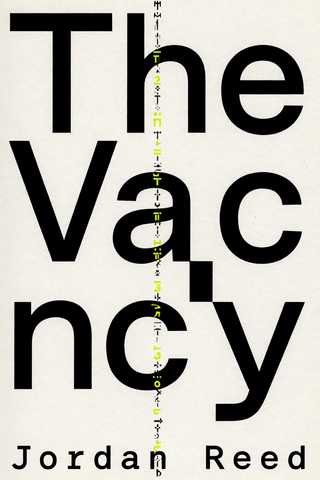
Read a preview
Chapter 1
Chapter One: Cold Cascade
The cascade had a voice, and Niko Trajan had learned it the way other men learned their children's.
Six drums, each the size of a shuttle bus, ran the length of Reclamation Bay Three in a welded rack that had been welded three times before. Inside them, membranes thinner than a fingernail strained the station's wastewater into something drinkable. When the drums were healthy, they made a low, even hum, like a person breathing in their sleep. When they were sick, they chugged.
They were chugging now.
"Number four," Niko said, without looking up from the pressure board.
Jubal Okeke was already halfway down the rack, moving hand over hand along the guide rail. Thetis Station spun, but not out here; the reclamation bays sat deep in the asteroid's original body, in the null-gravity core where the mass of nickel-iron could shield the water tanks from radiation. Jubal had grown up in the low decks and he moved in null-g the way inner-planet kids moved on a bicycle, thoughtlessly, beautifully.
"Differential's climbing," Jubal called back. "Feed side is at eleven point four."
"Bring it down to nine."
"That's below spec for output."
"Then we'll be below spec for output." Niko pushed off from the console and drifted after him. "Better thin than dead."
Jubal cranked the manual bypass. The chugging softened, hesitated, and settled into an uneven hum — not health, but a decent impression of it. Niko put his palm flat against the drum casing and felt the vibration travel up through the bones of his wrist. Forty-one years old, this cascade. It had been installed when Thetis was a company camp of four hundred rock-breakers living in inflatable modules. Now eleven thousand people drank what came out of it.
"Membrane stack," Niko said. "Not the pumps."
"You can hear the difference?"
"I can hear the difference."
Jubal wiped his hands on his coveralls, which did nothing, since his coveralls were dirtier than his hands. He was twenty-two, tall in the way people got when they were raised in three-tenths gravity, with an easy face that had not yet learned to hide anything. "So what do we do?"
"We write it down." Niko unhooked his slate. "Then we write it down again next quarter. Then the quarter after that."
"And then?"
"And then somebody who has never touched a membrane in their life decides whether eleven thousand people get to keep drinking."
He pulled the diagnostic log and ran the numbers a second time, because he had learned long ago that hope was a kind of measurement error and the only cure was doing the arithmetic twice. The osmotic cascade's membrane elements were rated for forty thousand service hours. Drum four was at sixty-one thousand. Drums one, two, and five were past fifty-five. He had been rotating them, cannibalizing the least-bad stacks, running the array at eighty percent to keep the pressure down, and it had bought him four years.
The curve on his slate had stopped being a curve. It was a cliff now, and it had a date on it.
"Ninety-two days," he said.
Jubal floated closer. "Ninety-two days until what?"
"Until the stack in drum four delaminates. Which spikes pressure into three and five, which are also past life, which delaminate within a week." He tilted the slate so the boy could see. "After that we're on flash distillation and emergency reserve. That's forty percent of demand. For eleven thousand people. On a rock eight hundred million kilometers from anyone who could help."
Jubal was quiet for a moment. Behind them the drums hummed their imperfect hum.
"You've been saying this for years," he said carefully.
"I've been saying *soon* for years. There's a difference between soon and Thursday." Niko closed the slate. "Go home. Eat something that isn't from a tube. I'll file it."
"You want me to come with you? To Administration?"
"No."
"Why not?"
Because I don't want you to watch, Niko thought. Because you still believe that if you explain a problem clearly enough, someone fixes it, and I would like you to keep believing that for another year or two.
"Because your mother will feed me if I show up with you and I don't have time," he said instead, and Jubal laughed, and that was that.
—
Thetis Station was not designed. It had accreted.
Bolted to a nickel-iron asteroid four kilometers across, in the trailing swarm of Trojans that shepherded Jupiter's orbit, the station had begun as a mining camp and grown outward in every direction that anyone had ever needed to grow. There was the Old Camp, buried in the rock. There was the Spin, a ring of habitat drums turning on a spoke assembly that squealed at one particular rotation rate and had squealed for nineteen years. There were the Refinery Arrays, hanging off the sunward face like the skeleton of an enormous fish, cracking ice and cold gas into water and oxygen and hydrogen for sale to the inner planets. There were the docks, the market galleries, the hydroponics decks, the clinic with its forty beds and its perpetual shortages, and the low decks where the original camp workers' grandchildren lived four to a compartment.
Eleven thousand people. Not one of them born to be here. All of them here.
Niko rode the spoke elevator up into the Spin and let weight come back into his body one floor at a time. By the fourth level he could feel his own feet again. By the seventh, Administration.
Deshi Mudaliar had been elected station administrator three times, which said something either about her or about the alternatives. Her office was small and stubbornly undecorated except for a framed water-rights charter from the founding of the camp, which she kept, she said, to remind herself what a document was worth when nobody enforced it. She was fifty-eight, gray at the temples, and had the particular exhaustion of a person who spent her days saying no to things she wanted.
She read Niko's report in silence. She read it twice, which he appreciated.
"Ninety-two days," she said.
"Assuming nothing else fails. Something else always fails."
"What do you need?"
"Fourteen full membrane stacks and four weeks of downtime on three drums. Or eight stacks and I do it dirty and we live at seventy percent output through the changeover, which means rationing." He sat down without being asked. "Deshi, I'm not asking for new hardware. I'm asking for consumables. Colvane manufactures these membranes. There are pallets of them at the refinery."
"For the refinery."
"For the *station*. The refinery filters brine. We filter people."
Mudaliar set the slate down and pressed her thumbs into her eye sockets. When she looked up, Niko already knew, and he felt something in his chest go flat and cold.
"There's no budget," she said.
"There is a life-support line in the operating charter—"
"There is a life-support line and Colvane has drawn against it under the discretionary clause." She turned her display so he could see. "Twelve million against Deep Space Division. Signed off in Earth orbit nine days ago. Every credit of station-side capital expenditure is frozen through the next fiscal cycle."
Niko read the authorization line. Then he read it again, because the words made grammatical sense and no other kind.
*CAPTURE OPERATION — LONG-PERIOD COMET C/2387 OLANTHE — DIVISION PRIORITY ALPHA.*
"A comet," he said.
"An inbound long-period comet. First perihelion passage in something like eleven million years. Ninety percent volatiles, effectively no crust hardening, and it's threading close enough to the Trojans that Colvane can put a capture rig on it and harvest it for two years before it gets away." Mudaliar's voice was flat with recitation. "It's the richest single volatiles body anyone has reached in forty years. Deep Space Division gets a bonus structure tied to delivered tonnage. Gregori Turov signed the diversion himself."
"Turov." Niko sat back. "Does Turov know that the water plant on the station where his employees live is ninety-two days from failure?"
"He knows. I sent him your last three quarterlies."
"And?"
"And he replied that the station's reclamation infrastructure has, quote, exceeded its projected service life through the diligence of local staff, and that Deep Space Division has full confidence in continued local ingenuity." She smiled without any warmth in it at all. "He complimented you, Niko. Personally."
Something in Niko's jaw ticked. He was not a shouting man. He had learned in fifteen years of keeping this system alive that shouting was a way of spending energy you would need later, and he had a long-standing personal rule about not spending anything he could not replace.
"If I go to the union," he said, "if I put this on the open feed—"
"Then Turov cancels the drilling contracts and the station dies in eighteen months instead of three." Mudaliar leaned forward. "You know how this works. Colvane owns the rigs. Colvane owns the arrays. Six thousand of my constituents draw a Colvane paycheck. I can't fight a corporation that could kill us by simply going away. I can only negotiate with it."
"Then negotiate."
"I am negotiating. It's slow. It's ugly. It works about one time in four." She handed the slate back. "Give me the eight-stack option. In writing. I'll take it to the quarterly review and try to have it reclassified as an operational expense instead of capital. That's a real path. It's just not a fast one."
Niko stood. At the door he stopped.
"Ninety-two days," he said again. "That's the day the water goes. Not the day it gets scary. The day it goes."
"I heard you the first time," Mudaliar said. "I hear you every quarter. That's the whole tragedy of my job, Niko. I hear everybody."
—
He took the long way back, through the observation gallery on the outer face of the Spin, where the station's oldest and least reliable pressure window looked out at the sky.
Jupiter hung there, small and banded and calm, sixty degrees ahead of them along the shared orbit, close enough to be a world and far enough to be a coin. Beyond it the stars did not twinkle. They never did out here. They sat in the black like nail heads.
And low near the ecliptic, a smudge with a tail — new, barely there, a scratch of light coming in from somewhere that had no name because nothing with a name went that far.
Comet Olanthe. Twelve million credits. His membranes.
Niko watched it for a while, unaware that he was looking at the thing that would end his career, nearly end his life, and change every calculation the human species had ever made about how alone it was. He was thinking about pressure differentials. He was thinking that he needed to go back tonight and re-torque the flange on drum four.
Then he went down to the reclamation bay and did exactly that.