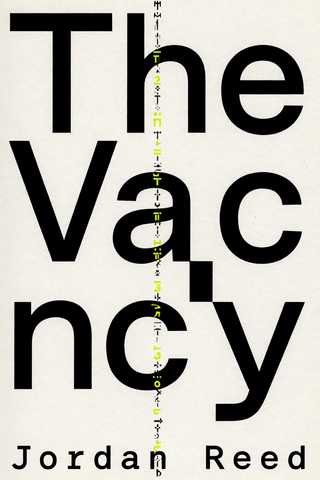
Read a preview
Chapter 1
Chapter 1: Coffin
The coffin was exactly two meters long, one meter wide, and seventy centimeters tall. Yuri Sasaki knew the dimensions because he'd measured them during his first week, back when he still cared about things like spatial orientation and the precise volume of the space in which he was slowly dying.
The Hotel Gwangbok was a stack of four hundred such capsules arranged in a brutalist honeycomb on the forty-third floor of a residential tower in Neo-Busan's Nampo District. Each unit came with a thin mattress, a ventilation fan that rattled like a dying insect, and a screen embedded in the ceiling that could display weather, news, or pornography in six languages. Yuri kept his turned off. The blue glow from the corridor seeped through the capsule's translucent door, painting everything in the color of drowned things.
He lay on his back with his eyes closed, feeling the familiar tremor in his left hand. It started in the fingers — a rapid, involuntary flutter, like something trying to escape from beneath his skin — and then crawled up through his wrist into his forearm. The tremor was getting worse. Three months ago it happened once a day. Now it happened every few hours, a reminder that the hardware fused to his nervous system was corroding, sending garbage signals into his motor cortex like a radio picking up stations from a country that no longer existed.
Yuri opened his eyes. The ceiling was close enough to touch without fully extending his arm. He reached for the injector on the shelf beside his head — a matte-black cylinder the size of a pen, loaded with Somadrine, a synthetic opioid that the street vendors in the Jagalchi markets sold for twelve thousand won a cartridge. He pressed it against his neck and felt the familiar cold kiss, then the warmth spreading through him like sunlight through dirty water.
The tremor subsided. His thoughts smoothed out. For a little while, the world was tolerable.
He'd been in the Hotel Gwangbok for eleven months. Before that, he'd spent three weeks in a trauma ward in Vladivostok after the Khenpo-Liang job went sideways — the run that was supposed to be his masterwork, the penetration of a Siberian mining consortium's financial architecture that would have netted him enough to retire. Instead, the consortium's intrusion countermeasures had been military-grade, far beyond what his intel had suggested, and they'd hit him with a neural feedback loop that cooked half the bioware in his skull before his failsafe disconnected him.
He'd woken up in the hospital with second-degree burns on his temples where the interface ports had overheated, a vocabulary reduced by approximately thirty percent, and the fine motor control of a man twice his age. The doctors told him the damage was progressive. The fried implants were leaking degradation products into his cerebrospinal fluid. Without full surgical extraction and replacement — a procedure that cost more money than he'd ever had — the decay would continue. His memories would fragment. His motor control would deteriorate. Eventually, his autonomic functions would begin to fail.
They gave him two years. That had been eighteen months ago.
So Yuri had crawled into the cheapest hole he could find in Neo-Busan, a city that didn't ask questions and didn't care about answers, and he'd started the process of waiting to die. He had enough money left for capsule rent and Somadrine, and if he was careful, he could stretch it out long enough to reach the finish line without too much suffering.
It was, he reflected, not much of a plan. But it was the only one he had.
The capsule's intercom crackled. "Sasaki-ssi. Visitor at the front desk."
Yuri frowned. He didn't get visitors. He didn't have anyone who would visit him. His parents were dead — his father from a stroke, his mother from the kind of slow despair that doesn't have a clinical name. He had no siblings, no partners, no friends who hadn't been professional contacts, and every professional contact he'd ever had thought he was either dead or useless, which in his line of work amounted to the same thing.
"Tell them wrong room," he said.
"She asked for you by name. Full name. Yuri Aleksandrovich Sasaki."
Nobody used his patronymic. It wasn't on any of his current identification. Whoever this was had done research — real research, not the kind you could buy from a data broker for pocket change.
The tremor started again in his left hand.
"Send her up," he said, and immediately regretted it.
He pulled himself out of the capsule and dropped to the corridor floor, steadying himself against the wall. He was thirty-four years old but moved like sixty. The corridor was narrow and fluorescent, lined with capsule doors on both sides, the air thick with the smell of recycled breath and cheap noodles. A man in the capsule across from his was watching something on his ceiling screen with the volume too high — the tinny sound of simulated gunfire leaked through the thin walls.
Yuri made his way to the common area at the end of the corridor. It was a cramped space with a table, two chairs, a water dispenser, and a window that looked out over the Nampo skyline — a vertical wilderness of neon and concrete stretching down to the harbor, where container ships the size of city blocks moved through water that hadn't been a natural color in decades.
She was already there.
The first thing he noticed was that she didn't belong. Everything about her was wrong for this place — the clean lines of her jacket, the precise cut of her hair, the way she stood with her weight evenly distributed, comfortable and alert, like someone who'd been trained to enter rooms full of strangers and own them. She was maybe thirty, East Asian and Latina by the look of her, with dark eyes that tracked him as he entered the way a targeting system tracks movement.
"Yuri Sasaki," she said. Not a question.
"Depends on who's asking."
"My name is Suki Reyna. I'd like to offer you a job."
Yuri almost laughed. It came out as a dry sound, more cough than humor. He lowered himself into one of the chairs, and the tremor in his hand made the table vibrate slightly when he rested his arm on it.
"I don't work anymore," he said. "I'm retired."
"You're dying. There's a difference."
He looked at her more carefully. She was carrying a slim briefcase — real leather, not synthetic — and wearing shoes that cost more than his rent for a year. But it wasn't the money that made him uneasy. It was the calm. She looked at him the way people look at tools — assessing function, gauging utility.
"Who sent you?" he asked.
"I represent a client who requires a specific skill set. Network infiltration at the highest level. Deep architecture penetration. The kind of work that only a handful of people in the world can do, and most of them are either dead, imprisoned, or working for governments."
"And you think I'm still on that list."
"I know you are. Or you were, before the Khenpo-Liang incident. Your reputation in certain circles is considerable, Sasaki-san. The Irkutsk Federal Reserve. The Mekong Pharmaceutical Collective. The Tashkent Incident."
He flinched at the last one. The Tashkent Incident wasn't supposed to be attributable to anyone.
"You've done your homework," he said.
"I've done more than that." She opened the briefcase and placed a tablet on the table between them. "I've had a full medical assessment compiled from your pharmacy records, your hospital discharge files from Vladivostok, and a neural degradation model built by a specialist in Hong Kong. You have approximately six months before the decay reaches your brainstem. After that, your autonomic nervous system begins to shut down. Breathing becomes difficult. Then impossible."
Yuri stared at the tablet. The medical data scrolled across the screen in clean, clinical graphics — decay rates, neural pathway degradation curves, projected timelines. It was thorough. It was accurate. And it was a death sentence rendered in high-resolution color.
"I know how long I have," he said quietly.
"Then you know you have nothing to lose." Suki leaned forward. "My client will pay for full neural reconstruction. Complete extraction of your damaged implants, replacement with current-generation bioware, repair of all degradation damage. The procedure will be performed by a top-tier surgical team in Singapore. Total cost: approximately fourteen million won."
Fourteen million. It was an absurd number. The kind of money that didn't exist in Yuri's world — the world of coffin hotels and street-corner pharmacies and neon-lit markets where you could buy anything except a future.
"In exchange for what?" he asked, though he already knew.
"One job. A single penetration. You go in, you extract what we need, you come out. After that, the surgery is yours."
"What's the target?"
Suki Reyna smiled for the first time. It was a precise smile, calculated to convey exactly the right amount of warmth without revealing anything.
"Narthex Dynamics," she said.
Yuri felt something cold settle in his stomach. Narthex Dynamics was not a corporation in the way that most people understood the term. It was closer to a nation-state that happened to make its money through technology — a sprawling, vertically integrated empire that controlled significant portions of the global net infrastructure, held defense contracts with half a dozen governments, and maintained a private security apparatus that rivaled most national militaries. Their headquarters was an orbital platform in low Earth orbit, physically inaccessible to anyone without clearance, and their data architecture was legendary in the infiltration community — not because it was impenetrable, but because no one who'd tried to penetrate it had ever come back to describe what they'd found.
"No," Yuri said.
"You haven't heard the details."
"I don't need to. Narthex Dynamics is a death sentence. Their intrusion countermeasures are military-spec. The last team that tried to crack their outer shell was a four-person crew out of Lagos — some of the best in the business. Two of them died on the wire. The other two are in a long-term care facility, brain-dead. And that was just the outer perimeter."
"Which is why I need you. Not a team. Not a crew. You. Because you're the only person I've found who's ever successfully navigated adaptive defensive architecture, and Narthex's systems are adaptive in ways that go beyond anything currently documented."
Yuri shook his head. "I'm flattered. The answer is still no."
Suki studied him for a long moment. Then she reached into her briefcase and produced a second tablet. She placed it beside the first.
"These are your current neural scans," she said. "Taken remotely, from the diagnostic systems in your capsule's health monitor. I had them analyzed by the same specialist in Hong Kong."
The images on the screen were of his brain. Even Yuri, who was not a medical professional, could see the dark patches — areas where the degradation had eaten through neural tissue like acid through paper. The specialist had annotated the images with clinical notes. Words like "irreversible" and "progressive" and "terminal" appeared with disturbing frequency.
"Six months," Suki said. "That's the optimistic projection. The realistic one is closer to four. And the last two months will not be pleasant. Cognitive function will deteriorate rapidly. You'll lose language first, then spatial reasoning, then motor control. By the end, you'll be conscious but unable to move, speak, or think coherently. You'll die aware that you're dying, and unable to do anything about it."
Yuri stared at the scans. His left hand trembled against the table.
"You're a real charmer," he said.
"I'm honest. Which is more than most people in my position would be." She stood up and placed a contact chip on the table — a tiny silver disc, no larger than a fingernail. "Think about it. You have forty-eight hours. After that, I find someone else, and you go back to your capsule and your Somadrine and your countdown."
She left. The door closed behind her with a soft click.
Yuri sat in the common area for a long time, looking at the two tablets and the silver chip on the table. Outside the window, Neo-Busan burned with its perpetual electric fever — millions of lights in millions of windows, the city's vast metabolism churning through another night.
He picked up the contact chip and held it between his thumb and forefinger. It was warm from her hand.
He thought about four months. He thought about losing language. He thought about dying in a coffin that was exactly two meters long, one meter wide, and seventy centimeters tall.
Then he thought about Narthex Dynamics, and the people who'd tried to breach their systems, and the various ways they'd ended up — dead, brain-dead, or simply gone, erased from existence as thoroughly as if they'd never been born.
He put the chip in his pocket.
He didn't sleep that night. He lay in his capsule with the ceiling screen off, listening to the building breathe around him — the hum of ventilation, the distant thrum of the city's power grid, the muffled sounds of four hundred people living their small lives in their small boxes. He thought about the runs he'd done in his prime, the feeling of slicing through corporate architecture like a blade through silk, the raw electric joy of it, the closest thing to flying that a human being could experience without leaving the ground.
He'd been brilliant once. The best. And now he was a trembling wreck in a coffin hotel, waiting for his brain to eat itself.
In the morning, he pressed the chip against his interface port and made the call.
"I'll do it," he said. "But I have conditions."