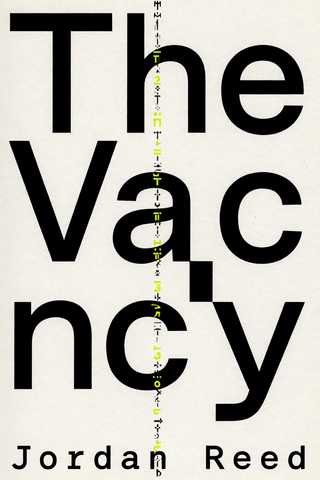
Read a preview
Chapter 1
Chapter 1: Arrival
The rain started the moment Anja Nygaard stepped off the airport shuttle, and she stood perfectly still on the sidewalk outside Portland International, letting it hit her face.
She had studied rain. She had watched thousands of hours of footage, read meteorological analyses, memorized the chemical composition of Earth's precipitation in dozens of geographic zones. She knew the average raindrop fell at terminal velocity of about twenty miles per hour. She knew the smell—petrichor, they called it, caused by geosmin released from soil bacteria—and she had even synthesized a version of it in her preparations.
But none of that had prepared her for the feeling.
The water struck her skin in tiny cold explosions, each one a miracle so casual that the humans around her hurried past with their collars turned up and their faces pinched with annoyance. A woman with a rolling suitcase muttered something unkind about the weather. A man in a business suit jogged toward the parking garage, holding a newspaper over his head.
Anja tilted her chin up and opened her mouth.
The taste was mineral and faintly metallic, nothing like the purified water she had consumed on her journey. It was better. It was alive.
"Ma'am?" A shuttle driver was watching her from the open door of his vehicle. "You need a ride somewhere? You're getting soaked."
Anja lowered her gaze and smiled the way she had practiced—mouth curved, eyes crinkling slightly at the corners, head tilted two degrees to the right. The research suggested this combination conveyed warmth and approachability.
"Yes," she said. "I need to go downtown. The Heathman Hotel, please."
Her English was excellent, colored by the faint Scandinavian accent she had cultivated during six months of linguistic preparation. The shuttle driver nodded and took her single bag—a hard-sided case that weighed more than it should have—and loaded it into the back.
She climbed in and watched Portland scroll past through rain-streaked glass. The city was green in a way that made her chest ache. Trees lined every street. Moss grew on rooftops. The Willamette River wound through the urban core like a silver vein, and beyond it, the forested hills rose into low clouds.
So much water. Everywhere, water.
On her world—she did not let herself think its name, not yet, not while she was still calibrating herself to this place—the last open body of water had evaporated eleven years ago. The atmospheric moisture harvesters kept people alive, but barely, and their efficiency declined every year as the particulate density in the upper atmosphere increased. The models were clear: without intervention, total population collapse within two generations.
She had volunteered for this mission knowing she would likely never return. The transit technology was one-way. The energy cost of sending a single person across the gap between their star systems was staggering—it had consumed the output of their last functioning fusion reactor for nine continuous days. There would be no second crossing.
So here she was. Anja Nygaard, climate scientist from the Bergen Water Research Institute, a small and deliberately obscure organization that existed only in carefully planted digital records and a rented office space in Norway that a paid associate maintained. She had papers, credentials, a publication history in minor journals, and a prototype technology that would make every desalination system on Earth look like a child's toy.
The shuttle pulled up to the hotel. She paid with a credit card linked to an account that had been funded through a complex series of cryptocurrency transactions—another preparation her people had managed remotely before her arrival.
"Welcome to Portland," the driver said.
"Thank you," Anja replied. She meant it more than he could possibly know.
Her room was on the seventh floor, overlooking the street. She set her case on the bed and opened it with a biometric lock keyed to her palm print—though her palm print was not quite what a human scanner would expect, running slightly warmer and with ridge patterns that were close to human but not identical. Close enough.
Inside the case, nested in custom foam, were three objects. The first was a device the size of a hardcover book, matte black, with no visible seams or controls. This was the transmitter. The second was a crystalline cylinder containing compressed data—the theoretical framework for the quantum desalination array, encoded in a format her people could read. The third was a small medical kit containing compounds that would help her body manage the physiological stress of living in Earth's atmosphere, which was richer in oxygen and heavier in pressure than what she was adapted to.
She injected herself with the first dose—a pale blue liquid that burned going in—and sat on the edge of the bed, waiting for the adjustment vertigo to pass.
While she waited, she reviewed her plan.
Phase one: establish credibility. Demonstrate the technology at a level impressive enough to attract funding but not so advanced as to provoke suspicion. Position herself as a brilliant but comprehensible innovator—someone pushing the boundaries of known science, not breaking them.
Phase two: build the full-scale array. This required resources, equipment, and expertise she did not possess alone. She would need human collaborators. Engineers, physicists, fabrication specialists. She would need to teach them enough to help her without teaching them enough to understand what they were truly building.
Phase three: transmit the completed schematics home. This was the part that frightened her. Each transmission through the quantum-entangled channel imposed enormous stress on the sender's nervous system. The device was not designed for repeated use by a single operator. Her people had warned her: more than a dozen transmissions would likely cause permanent neurological damage. More than twenty would likely be fatal.
She estimated she would need at least fifteen.
The vertigo faded. She stood, crossed to the window, and pressed her palm against the glass. Rain continued to fall, steady and indifferent, as if the sky had an inexhaustible supply.
She had sixty words in her native language for different types of atmospheric moisture. Fifty-eight of them were historical. The remaining two meant "memory of water" and "the sound water used to make."
Here, they simply called it rain, and they complained about it.
Anja pressed her forehead to the cool glass and allowed herself, for exactly thirty seconds, to feel the full weight of what she was doing. Then she straightened, smoothed her hair, and began preparing for her first meeting.
---
The venture capital firm of Greenleaf Partners occupied the top floor of a converted warehouse in the Pearl District. Anja had selected them carefully: mid-tier enough to be hungry, environmentally focused enough to be receptive, and led by a managing partner named Diana Ostrowski who had a reputation for backing unconventional founders.
Anja arrived fifteen minutes early, which her research indicated was the optimal window—punctual enough to signal professionalism, early enough to suggest eagerness without desperation. She wore a charcoal blazer over a white blouse, dark trousers, minimal jewelry. Her hair, which was naturally a shade of silver-blonde that humans found striking, was pulled back in a simple knot.
The receptionist offered her coffee. Anja accepted, though caffeine affected her differently than it did humans—it produced a mild euphoria followed by a headache rather than alertness. She had learned to drink it anyway. Refusing coffee in American business settings, she had observed, created more social friction than it was worth.
Diana Ostrowski was a tall woman in her fifties with sharp eyes and a firm handshake. She led Anja into a conference room where two associates sat with laptops open, ready to take notes.
"Dr. Nygaard," Diana said, settling into her chair. "Your preliminary materials were... unusual. You're claiming a desalination efficiency that's roughly ten times the current state of the art. I have to be honest—my technical advisors said it was impossible."
"They are correct that it is impossible with current methods," Anja said. "I am not using current methods."
She opened her laptop and connected it to the room's projector. The first slide showed a schematic that was, in truth, a dramatically simplified version of the actual technology—like showing a child's drawing of a jet engine to someone who had only ever seen propellers.
"Conventional reverse osmosis forces water through a membrane under pressure," Anja began. "The energy cost is enormous, and the membranes degrade. My approach uses quantum tunneling effects to separate water molecules from dissolved solids at the subatomic level. No membranes. No pressure. Energy consumption roughly one-fifteenth of current systems."
One of the associates—a young man with glasses—leaned forward. "Quantum tunneling for molecular separation? That's... the energy barriers alone—"
"Are manageable," Anja said, "if you restructure the tunneling probability field using a coherent entanglement lattice." She advanced to the next slide, which showed equations that were, she knew, about five years beyond anything published in human physics journals. Close enough to be tantalizingly plausible. Far enough ahead to be revolutionary.
Diana's expression had not changed, but Anja had learned to read human micro-expressions with considerable precision. The slight dilation of her pupils, the fractional forward lean—Diana was interested.
"I brought a demonstration unit," Anja said.
She had anticipated this moment for months. From her bag, she produced a device roughly the size of a shoebox, sleek and white, with a single input port and a single output port. She asked for a glass of tap water, which the receptionist brought.
"Portland tap water is already quite clean," Anja noted. "So for this demonstration, I've prepared something more challenging." From a sealed container in her bag, she produced a sample of seawater she had collected from the Oregon coast the previous day, along with a small bottle of motor oil and a vial of dissolved heavy metals. She combined them in a beaker, creating a murky, foul-smelling liquid.
"Seawater contaminated with petroleum hydrocarbons and heavy metals," she said. "This would defeat any portable filtration or desalination system currently in existence."
She poured the contaminated water into the device's input port. There was a soft hum—barely audible—and a faint blue glow from a seam in the casing. Three seconds later, clear water began flowing from the output port into a waiting glass.
Anja handed the glass to Diana. "You may have this tested by any laboratory you choose. You will find it exceeds WHO standards for drinking water purity. The device consumed approximately four watt-hours of electricity—roughly the same as charging a mobile phone for twenty minutes."
Diana held the glass up to the light. It was perfectly clear.
"And the contaminants?" she asked.
Anja opened a small compartment on the side of the device and withdrew a compressed pellet the size of a marble. "Separated and compacted. Metals can be recovered. Hydrocarbons can be safely disposed of or recycled."
The room was very quiet.
"Dr. Nygaard," Diana said slowly, "if this does what you say it does—"
"It does."
"—then you're not talking about a startup. You're talking about changing the world."
Anja allowed herself another practiced smile. "That is precisely what I'm talking about."
Greenleaf Partners invested twelve million dollars in seed funding within the week. Anja registered a company called Tidemark Systems and began hiring.
She needed an engineer. Not just any engineer—someone brilliant enough to help her build the full-scale array, skeptical enough to push back on her designs in useful ways, and ideally, someone who would not ask too many questions about things that did not concern them.
She found Thomas Ackerman on the third day of interviews.