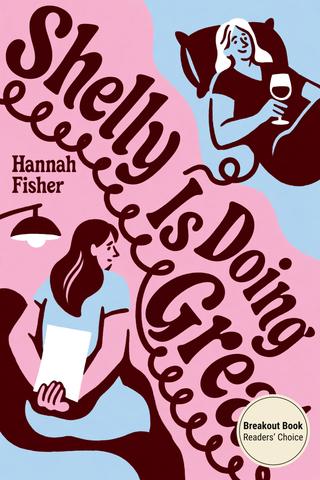
Read a preview
Chapter 1
Chapter 1: The Frequency of Nonsense
Naomi Swift had written the word "retrograde" four hundred and seventeen times in the past year, and she still wasn't entirely sure what it meant.
She knew what it meant in the astrological sense, of course — Mercury goes backward, your emails go haywire, your ex texts you at 2 a.m. about a dream they had where you were both dolphins. She'd written that column twice already, once in March and once in October, with slightly different dolphin metaphors. Nobody had noticed. Nobody ever noticed. That was the beautiful, terrible secret of horoscope writing: specificity was the enemy. You painted in watercolors so wide that every reader saw their own reflection.
Naomi sat in her apartment — a third-floor walk-up in Ballard with windows that rattled when trucks passed — and stared at her laptop screen. The cursor blinked patiently at the top of a blank document. She was supposed to be writing next month's Sagittarius forecast, but she'd gotten distracted by a 1957 Zenith Trans-Oceanic sitting on her workbench, its guts spread across a towel like a patient in surgery.
The radio had come from an estate sale in Tacoma. The old woman's grandson had called it "Grandpa's box of static" and wanted fifteen dollars for it. Naomi had paid twenty because the dial still turned smoothly and the leather case smelled like pipe tobacco and old libraries. She'd been rewiring the IF transformer for the past three evenings, and she was close — so close — to hearing whatever frequency the thing had last been tuned to in 1974.
Her phone buzzed. A text from Diane Okada, her editor at Pacific Luster Magazine.
*Staff meeting tomorrow 10am. Big announcement. Attendance mandatory, even for you.*
Naomi frowned. She'd been freelancing the horoscope column for Pacific Luster for four years, and in that time she'd attended exactly two staff meetings. The first had been to sign her contract. The second had been when the magazine switched from biweekly to monthly and everyone thought they were being fired. She'd shown up that day with a bottle of wine in her bag, just in case.
*I'm technically not staff*, she texted back.
*You're staff when I say you're staff. 10am. Wear shoes.*
Naomi looked down at her feet. She was wearing wool socks with foxes on them and no shoes. She was always wearing wool socks with foxes on them and no shoes. Diane knew this because Diane had once visited the apartment to pick up a late column and had found Naomi soldering a capacitor in her fox socks while a podcast about the Voyager missions played at full volume.
"You're the most confusing person I know," Diane had said, eyeing the wall of half-restored radios that lined Naomi's living room like a museum exhibit nobody had asked for. "You don't believe in astrology, but you write horoscopes. You don't have a science degree, but you can take apart a radio from the Eisenhower administration."
"I also don't believe in monogamy, but I've been exclusively dating my soldering iron for six months," Naomi had replied.
Diane had not laughed. Diane rarely laughed. She was a compact woman in her late forties with a silver streak in her black hair and the editorial instincts of a hawk circling a field mouse. She'd been running Pacific Luster for eight years, transforming it from a coupon circular with aspirations into a genuinely respected regional magazine. Naomi respected her enormously, which was why she showed up to things when Diane used the word "mandatory."
She set down the soldering iron and turned back to her laptop.
*Sagittarius*, she typed. *November 22 – December 21.*
*This month, the archer aims true — but the target keeps moving. You've been chasing a goal that seemed clear from a distance, and now that you're close, you realize it's not what you pictured. That's not failure; that's growth. Let the arrow land where it lands. You might be surprised by what you hit.*
She read it back. It was good. It was always good. That was the problem.
Naomi had stumbled into horoscope writing the way most people stumble into anything: rent was due, a friend knew someone, and the someone needed twelve paragraphs by Friday. She'd written the first batch as a joke, pulling from fortune cookies and therapy podcasts and the vaguely wise things her grandmother used to say while doing crossword puzzles. The editor at the time had called them "luminous." Readers had called them "life-changing." A woman in Kirkland had gotten the Libra forecast tattooed on her forearm.
Naomi had felt a complicated stew of emotions about this — pride, guilt, amusement, and a low-grade existential horror that she'd accidentally become a spiritual authority for people who organized their love lives around planetary alignments.
She didn't believe in astrology. She'd never believed in astrology. She'd grown up in a house where her mother read tarot cards for fun and her father, a retired electrician, would quietly leave the room whenever the conversation turned to anything he couldn't test with a multimeter. Naomi had inherited her father's skepticism and her mother's flair for narrative, which made her either the perfect or the worst possible person to write a horoscope column.
She saved the Sagittarius draft, closed her laptop, and went back to the Zenith.
The IF transformer was the heart of the radio's ability to receive signals — it took the raw input from the antenna and converted it to a frequency the rest of the circuit could process. This particular transformer had a cracked ferrite core, which meant the radio could hear the world but couldn't make sense of it. Naomi had ordered a replacement core from a guy in Portland who ran a vintage electronics shop out of his garage and communicated exclusively through handwritten letters mailed with commemorative stamps.
She fitted the new core into place, reconnected the winding wires, and plugged in the radio. For a moment, nothing. Then a soft hiss, like the ocean heard through a wall. She turned the dial slowly, moving through bands of static, and then — there. A voice. Faint but clear. A late-night jazz station out of Portland, playing Coltrane.
"There you are," she said to the radio.
The radio said nothing back, because it was a radio, and Naomi was a skeptic.
But she smiled anyway.
---
The Pacific Luster offices occupied the second floor of a converted warehouse in Fremont, wedged between a craft brewery and a store that sold exclusively mushroom-related products. The building still smelled faintly of hops and mycelium, a combination that Naomi had come to associate with professional obligation.
She arrived at 10:04 a.m., wearing shoes, and found the conference room already full. Pacific Luster operated with a lean staff — Diane, two associate editors, a photo director, a sales team of three, and a rotating cast of freelancers who drifted in and out like weather systems. The freelancers were all here today, which meant the announcement was either very good or very bad.
Naomi slid into a chair next to Benny Torres-Whitman, the food columnist, who was eating a croissant with the focused intensity of a man performing surgery.
"Any idea what this is about?" she whispered.
"Relaunch," Benny said through a mouthful of pastry. "I heard from Kiki in sales. Big redesign. New website. Corporate wants us to go national."
"We have corporate?"
"We have investors. Same thing, worse emails."
Diane walked in carrying a stack of folders and a coffee mug that read DEADLINES ARE JUST SUGGESTIONS in aggressive red lettering. She set both down, surveyed the room, and began without preamble.
"Pacific Luster is relaunching in January. New design, new digital platform, expanded distribution. The theme for the relaunch issue and the first quarter of content is 'Science Meets Wonder.' We're positioning the magazine at the intersection of curiosity and rigor. Smart but accessible. Evidence-based but not boring."
She paused. The room waited.
"Every section is getting a refresh. Food is doing a series on the chemistry of fermentation." She nodded at Benny, who raised his croissant in salute. "Travel is partnering with a marine biologist for a Pacific Northwest tide pool guide. And horoscopes..."
She looked at Naomi.
Naomi felt the specific dread of a person who knows their name is about to be followed by a sentence they won't like.
"Horoscopes are being co-written with a scientist."
"I'm sorry," Naomi said. "What?"
"We're pairing you with an astrophysicist from the university. Dr. Calvin Faulkner. He studies stars for a living, you write about them for a living — different definitions of 'stars,' same sky. The idea is to blend real astronomy with your horoscope format. Twelve columns, one per zodiac sign, running weekly over three months."
"Diane, I write horoscopes. I don't write science articles."
"Which is why you'll have a scientist."
"A scientist who will presumably think what I do is ridiculous."
"Probably. That's the tension. That's what makes it interesting." Diane opened one of her folders. "His department's publicist reached out to us. The university's had some bad press — there was that thing with the misallocated research funds — and they want to show their faculty engaging with the community. Dr. Faulkner has apparently been told this is non-negotiable."
"So he doesn't want to do it either."
"No. Which means you'll both be equally miserable, and in my experience, that's the foundation of all great creative partnerships."
Naomi stared at her. Diane stared back. Diane always won staring contests. It was one of her many editorial superpowers.
"When do I meet him?" Naomi asked.
"Thursday. Two o'clock. This conference room. Try to wear shoes that aren't held together with electrical tape."
Naomi looked down at her shoes. They were, in fact, held together with electrical tape.
"These are vintage," she said.
"They're a fire hazard," Diane said. "Thursday. Two o'clock. Be charming."
---
Naomi spent the next two days doing what she always did when she was anxious: she fixed things.
She finished the Zenith Trans-Oceanic, which now pulled in stations from as far as Vancouver with startling clarity. She recapped a 1962 Grundig Majestic that had been sitting in her closet for months, waiting for a shipment of electrolytic capacitors that had finally arrived from a supplier in Osaka. She rebuilt the tuning mechanism on a tiny Sony TR-63 that a college student had brought to her booth at the Ballard Sunday Market, claiming it had belonged to his grandfather and could she please make it work again.
She could. She always could. Radios made sense. They operated on principles that were knowable, testable, and consistent. A signal went in, a signal came out. If the signal was wrong, you found the broken component and replaced it. There was no ambiguity, no interpretation, no one writing in to say that your repair of their transistor had changed their entire outlook on love.
On Wednesday night, she Googled Calvin Faulkner.
He had a university faculty page with a photo that looked like it had been taken under fluorescent lighting by someone who actively disliked him. He was somewhere in his mid-thirties, with dark brown skin, close-cropped hair, and the expression of a man who had been told to smile and had produced something that was technically a smile in the same way that a rectangle is technically a shape. His research focused on stellar nucleosynthesis — the process by which stars forge heavier elements in their cores. His publication list was long and incomprehensible. His faculty bio ended with: "Dr. Faulkner believes in the power of science communication to combat misinformation."
"Oh, great," Naomi muttered. "He's going to love me."
She found a YouTube video of him giving a public lecture called "Why Your Zodiac Sign Is Not a Personality." It had forty thousand views and a comment section that was a war zone. She watched the first ten minutes. He was a good speaker — clear, precise, occasionally funny in a dry, academic way that made you feel smart for catching the joke. He also radiated the particular confidence of a person who had never once been told that being right wasn't the same as being kind.
"The idea that the position of distant stars at the moment of your birth determines your personality," he said in the video, leaning against a lectern with practiced ease, "is not just scientifically unfounded. It's a fundamental misunderstanding of what stars are, what they do, and how far away they are. Saying you're a Scorpio because of the stars is like saying you're Italian because you once looked at a map of Europe."
The audience laughed. Naomi did not.
She closed the laptop and went to bed, where she lay awake for an hour thinking about all the ways Thursday could go wrong.
Most of them, she would later reflect, turned out to be optimistic.