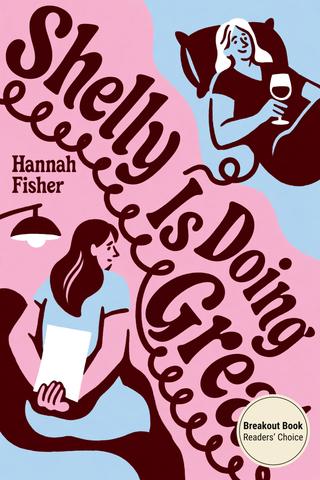
Read a preview
Chapter 1
Chapter One: The Tuesday
The HugWords corporate campus was a converted dental supply warehouse eleven miles outside Philadelphia, and on the morning Bette Shanahan was fired, the lobby smelled like carpet shampoo and someone's microwaved oatmeal.
She knew she was being fired the moment she saw the muffin.
Neil Henriksen, Vice President of Sentiment, only bought muffins when he intended to ruin someone's life. It was his one tell, and everyone in the building knew it. The muffin sat on a napkin on the corner of his desk like a small orange hostage.
"Bette," he said. "Sit. Do you want the muffin?"
"I've seen what the muffin means, Neil."
"It doesn't mean anything." He slid it an inch toward her. "It's cranberry."
She sat. Behind Neil's head hung the framed HugWords mission statement, which she had written six years ago under duress and which read: *We put the words in people's mouths so their hearts don't have to.* At the time she had thought it was funny. Now it hung on a wall in a Vice President's office in a fifty-dollar frame and she had to look at it while being terminated.
Neil turned his monitor toward her. "I want to show you some numbers."
"I'd rather you didn't."
"Sentiment Analytics ran your Q3 line through the panels." He clicked. A bar chart appeared, mostly red. "Do you know what our target emotional response is for a sympathy card?"
"Comfort."
"Mild comfort," Neil said. "Mild. We want the recipient to feel held. We do not want the recipient to feel *seen*."
"That's the same thing."
"It is absolutely not the same thing, Bette. Being held is a hug. Being seen is a police interview." He clicked again. Her card came up on the screen, blown to enormous size, the little embossed dove she'd fought for still in the corner. *Loss is a room you will live in forever, but eventually you will decorate.*
Bette looked at it. She was, privately, still proud of it.
"We tested this in Columbus," Neil said. "A woman in the panel cried for nineteen minutes. Nineteen minutes, Bette. The moderator had to get her a ginger ale. She said, and this is a direct quote from the transcript, she said, *'I have to call my sister and it's going to be a whole thing.'*"
"That sounds like it worked."
"It's a two-forty-nine card at a supermarket!" Neil pressed both palms flat on the desk. "It's not supposed to reorganize her family."
He went through the rest. The get-well card that said *Your body is a rented apartment and the landlord is asleep.* The retirement card: *You gave them forty years. They gave you a cake with your name spelled wrong.* The new baby card, which had gotten as far as printed proofs before someone in Legal caught it: *Welcome to the only party you will never remember.*
"That one's beautiful," Bette said.
"It's for a *baby shower*."
"Babies can't read, Neil. The card is for the mother, and the mother is exhausted and terrified and would like one single person in her life to acknowledge that something enormous has happened."
Neil sat back. He had the specific, damp expression of a man who had rehearsed a phrase in his car and was now going to use it.
"Your cards," he said, "have become too existential."
There was a pause in which the building's air handling system did something loud.
"Too existential," Bette repeated.
"Corporate's word. Not mine."
"Corporate said *existential*?"
"Corporate said, and I'm paraphrasing, that we're a greeting card company and not a Swedish film." He pushed the muffin all the way across the desk, an act of surrender. "You get eleven weeks of severance. Denise has the paperwork. And Bette — off the record — you're the best writer who ever worked here and you're going to be much happier somewhere that lets you be sad."
She took the muffin, because she wasn't an idiot, and stood up.
"Neil," she said at the door. "For what it's worth. The dove was mine."
"The dove stays with the company."
"I know. I'm just saying."
Denise from Legal had the paperwork ready in a folder with a little smiling sun on it, which was a HugWords product, which meant they had fired her with their own merchandise. Bette signed everything. She packed her desk into a copier-paper box: a jar of pens, a photograph of her mother in a lawn chair in 1986, a mug that said WORLD'S OKAYEST WRITER, which Shannon had bought her ironically and which she loved sincerely, and 4,100 index cards, rubber-banded in bricks, on which she had written every line she had ever thought of and not used.
Bryce from Sentiment Analytics stopped her by the elevator and said, "Hey — heard about the thing. Brutal. Hey, do you want to be in a Slack channel where we complain?"
"I'm no longer on Slack, Bryce."
"Right. Yeah. That's the whole tragedy of it, isn't it," said Bryce, who was twenty-six.
She made it to her car at 10:42 a.m. It was a gray March Tuesday, the kind where the sky looks like a stack of copy paper. She put the box in the trunk and sat behind the wheel and did not cry, which felt like a small managerial victory, and then her phone rang with a number so long it looked like an error message.
"Hello?"
"Am I speaking," said a man's voice, unhurried, exquisitely careful, "with Miss Bette Shanahan, daughter of Mr. Clive Shanahan?"
The voice was Belgian, she would learn later, but the English had been assembled almost entirely from British costume dramas. It had the aggressive politeness of a butler about to inform you the house is on fire and would you care for tea first.
"This is she," Bette said, and then hated herself, because who talks like that.
"My name is Lucien Devos. I am — I was — your father's friend. And his landlord. I am very much afraid, Miss Shanahan, that I have the most terrible duty to perform."
Bette looked at the HugWords sign across the parking lot, where the second G had been out for a year, so it said HUG ORDS.
"Okay," she said.
"Your father has died."
There is a thing that happens in the body that nobody puts on a card. It is not grief. Grief comes later, unpacking its bags, complaining about the room. What happens first is purely administrative: a hot clean feeling behind the sternum, and then a voice in your own head saying, with terrible calm, *well, that's happened now.*
"Where?" Bette said.
"In Bruges," said Lucien Devos.
"In — where?"
"Bruges. It is in Belgium."
"I know where Bruges is," Bette said. "I write cards. Wrote. I know a lot of geography. What was my father doing in Bruges?"
"He was living there," said Lucien, with a delicacy that suggested she'd asked something indecent. "For three years."
Out of the total silence that followed, Bette heard herself say, "Three *years*?"
"Above my son's chocolate shop."
"He lived above a chocolate shop in Belgium for three years."
"It is a very good shop," said Lucien Devos.
Bette put her forehead against the steering wheel, gently, the way you'd set down something breakable.
"How did he die?"
A pause. Not a long one. Later she would take that pause out and hold it up to the light and turn it over many times, but at the moment it registered only as the pause of a man who has been asked something sad.
"He went peacefully," said Lucien. "He had been very happy here. I want you to know this above all things, Miss Shanahan. He was very happy."
"Was he sick?"
"He was seventy-four," Lucien said, as though seventy-four were a diagnosis.
"Was there a doctor? Is there — I'm sorry, I don't know how this works, is there a body?"
"He has been cremated," said Lucien Devos, very quickly, the fastest he'd said anything. "According to his own written wishes, which were extremely specific. There is an urn. There are also papers, and an apartment, and certain personal effects that I believe you should see with your own eyes. Miss Shanahan — will you come to Bruges?"
Across the parking lot, the HUG ORDS sign flickered and gave up on the H.
"Yeah," Bette said. "I'm actually extremely available."